 how-to
Get a Residential Landscape Lighting Quote
Table of Contents
- What to Expect When Getting a Landscape Lighting Quote
- Questions to Ask Landscape Lighting Contractors
- Landscape Lighting Installation Price Factors
- Cost of Professional Outdoor Lighting Systems
- Preparing Your Property for a Site Survey
- Comparing Quotes and Understanding Warranty Coverage
- Frequently Asked Questions
Last Updated: October 2, 2026
What to Expect When Getting a Landscape Lighting Quote
Getting a residential landscape lighting quote is the first step toward transforming your outdoor space. When you contact a professional lighting designer, expect a comprehensive consultation that goes beyond simply naming a price.
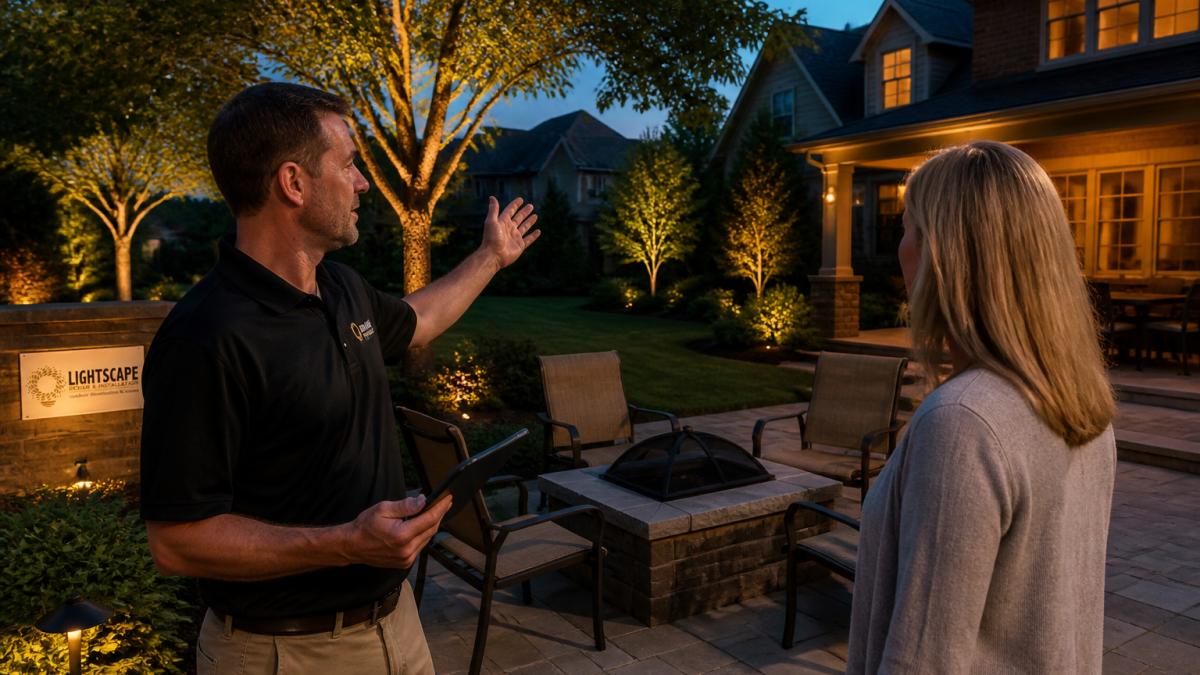
A quality landscape lighting quote starts with an on-site assessment. The contractor will visit your property to evaluate its unique characteristics: tree placement, architectural features, hardscape elements, and how your home sits relative to neighboring properties. This site survey typically takes 30-60 minutes and should be complimentary, at Lightscape Design & Installation, we provide this consultation at no cost to help you understand what's possible on your property.
During the survey, the designer will ask questions about your goals. Do you want to highlight architectural details? Improve safety along pathways? Create ambiance for entertaining? These priorities shape everything that follows. The professional will also discuss your preferred aesthetic, warm, glowing accent lighting differs dramatically from bright security-style illumination, and the distinction matters for both design and budget.
After the site visit, expect a written proposal. This document should detail the scope of work, fixture types and quantities, system components, installation timeline, and warranty terms. A professional quote gives you the information needed to make an informed decision, not just a price tag.
Questions to Ask Landscape Lighting Contractors
The right questions separate a thorough contractor from one who'll install fixtures and disappear. Ask these before signing any agreement.
What's your design process? A contractor should explain how they'll create a custom design for your property. Ask whether they use a design software or provide renderings so you can visualize the result before installation. Will they do a night-time demonstration to show how the lighting will look once installed?
What fixtures do you use? This matters more than most homeowners realize. Ask whether they install low voltage LED fixtures or line voltage systems. Request specific brand names and details about the fixture materials, copper, brass, or aluminum construction affects durability and appearance. Ask about the lumen output and color temperature of the bulbs. A professional should explain why certain fixtures suit your property better than others.
How do you handle voltage drop? This technical question reveals expertise. In low voltage lighting systems, voltage drop occurs when current travels through wiring over long distances, reducing brightness at distant fixtures. A knowledgeable contractor will explain how they size wiring gauge appropriately and position transformers to minimize this problem.
What's included in installation? Clarify whether the quote covers trenching, wiring, fixture mounting, and final aiming. Ask about weatherproofing measures and how they'll protect existing landscaping during installation. Understand what happens if they discover underground obstacles like utility lines.
What warranty do you offer? Service level agreements and warranty coverage vary widely. Ask about the length of the warranty, what it covers, and what happens if a fixture fails. A 20-year warranty signals confidence in both the fixtures and the installation quality.
How will you maintain the system? Ask whether they offer seasonal adjustments, bulb replacement, or system maintenance. As plants grow, lighting angles may need adjustment. Understanding ongoing support helps you plan for long-term care.
Can you show examples of similar projects? Request before-and-after photos or references from homeowners with comparable properties. This gives you confidence in their design sensibility and execution quality.
Landscape Lighting Installation Price Factors
Understanding what drives cost helps you interpret quotes intelligently. Several factors influence the final price.
Property size and complexity significantly affect cost. A small urban lot with minimal landscaping requires fewer fixtures and less wiring than a sprawling suburban property with multiple outdoor living areas. Contractors typically estimate based on square footage and the number of zones requiring illumination.
Fixture count and type determine a substantial portion of expense. Path lighting fixtures cost less than architectural accent lights designed for uplighting trees or walls. LED fixtures command a higher upfront cost than traditional bulbs. Low voltage systems typically cost less to install than line voltage systems, though line voltage may be necessary for larger properties.
Existing landscape features create installation challenges that affect pricing. Mature trees with dense canopies require careful fixture placement and aiming to avoid excessive shadowing, exactly the concern many homeowners raise. Hardscape elements like stone patios or raised beds may require drilling or special mounting techniques. Underground utilities, sprinkler systems, and existing electrical lines can complicate trenching and wiring routes.
Wiring and transformer requirements add to the project cost. Low voltage systems need transformers sized appropriately for the total wattage of all connected fixtures. The location of the transformer, the length of wiring runs, and the gauge of wire required all influence the final bill. A professional will calculate voltage drop to ensure adequate power reaches the most distant fixtures.
Call to schedule a consultation →
Site accessibility matters for labor costs. A property with easy access to all areas costs less to install than one requiring equipment to navigate steep slopes or navigate through dense vegetation. Contractors factor labor time into their estimates, and difficult terrain increases labor hours.
Smart lighting integration and controls add capability but also cost. Basic systems use photocells to turn lights on at dusk and off at dawn. More sophisticated setups include timers, dimmers, or smart home integration. These features enhance convenience and energy management but represent an additional investment.
Cost of Professional Outdoor Lighting Systems
Professional landscape lighting systems are categorized primarily by voltage type, and each approach has distinct advantages and cost implications.
Low voltage systems operate at 12 volts and represent the most common choice for residential properties. These systems include a transformer that converts standard household current (120 volts) to low voltage, then distribute power through buried or surface-mounted wiring to individual fixtures. Low voltage systems are safer to install and cost less to operate. The fixtures themselves are typically smaller and more subtle than line voltage alternatives. Installation labor is generally lower because wiring is less dangerous to work with.
Line voltage systems operate at standard household voltage (120 volts) and require licensed electrician installation. These systems power larger, more strong fixtures and can illuminate expansive properties without the voltage drop limitations of low voltage systems. Line voltage is necessary for very large properties where low voltage wiring would need to be prohibitively thick to deliver adequate power. However, the electrical complexity and licensing requirements increase both installation cost and ongoing maintenance considerations.
The choice between low voltage and line voltage depends on property size, desired fixture types, and budget. Most residential properties benefit from low voltage systems, which deliver excellent results at reasonable cost. Larger commercial properties or estates may justify the additional investment in line voltage systems.
Professional fixtures from reputable manufacturers typically cost more than online discount alternatives. USA-made fixtures with proper weatherproofing and quality construction last longer than imported budget options. A professional contractor will specify fixtures rated for outdoor use with appropriate IP ratings for wet environments.
Preparing Your Property for a Site Survey
Proper preparation ensures the site survey yields the best possible design. A few simple steps make the process more efficient and help the designer understand your vision.
Document your outdoor space. Take photos of your home's exterior from multiple angles, especially in evening light if possible. Capture the patio area, entryways, landscape features, and any problem areas where you want improved visibility. These photos help the designer understand your property before arriving.
Identify priority areas. Make a list of spaces you use most: patio seating areas, walkways, entryways, pool decks, or architectural features you want highlighted. Communicate whether you're focused on safety, ambiance, security, or a combination of these goals.
Note existing utilities and obstacles. Mark the location of underground sprinkler lines, electrical conduits, or gas lines if you know them. This information helps the contractor plan wiring routes and avoid costly mistakes during installation.
Clear sightlines. Trim back vegetation that might obstruct the designer's view of your home's architecture or landscape features.
| Preparation Task | Purpose | Timeline |
|---|---|---|
| Document with photos | Help designer understand property layout | Before survey |
| Identify priority areas | Clarify design goals and focus | Before survey |
| Note utility locations | Prevent installation complications | Before survey |
| Clear sightlines | Enable accurate feature assessment | Before survey |
| Discuss vegetation | Inform lighting placement decisions | During survey |
| Provide measurements | Support accurate wiring estimates | Before survey |
| Schedule evening timing | Observe natural light transition | Before survey |
Comparing Quotes and Understanding Warranty Coverage
When you receive multiple quotes, comparing them requires more than looking at total price. Quality, scope, and warranty terms vary significantly.
Frequently Asked Questions
What information do contractors need to provide a landscape lighting quote?
Professional contractors need details about your property layout, including square footage of outdoor areas, tree locations and heights, existing structures (patios, decks, pools), architectural style, and your intended use (entertaining, safety, accent lighting). They'll also ask about your preferences for brightness levels, color temperature, and whether you want smart controls or timer integration. A site survey allows them to assess voltage drop requirements, transformer capacity needs, and wiring routes to give you an accurate estimate.
Should I get multiple quotes for outdoor lighting installation?
Yes, obtaining multiple quotes helps you understand the range of design approaches and pricing in your market. However, focus on comparing the design philosophy and warranty terms rather than selecting solely on price. A lower quote may use lower-quality fixtures or inadequate transformer capacity. Compare fixture quality, LED technology, warranty length, and the contractor's experience with properties similar to yours.
How much does landscape lighting add to an electric bill?
LED landscape lighting systems consume significantly less energy than traditional halogen or incandescent fixtures. Most residential systems use low voltage (12V) transformers with LED fixtures rated between 3-10 watts per fixture. A typical 20-fixture system running 5 hours nightly has an electricity cost that depends on local rates and fixture wattage. Integrated LED technology with no bulb replacement ensures consistent energy efficiency over the system's 20-year lifespan.
What's the difference between low voltage and line voltage landscape lighting?
Low voltage systems (12V) use a transformer to step down standard household current, making them safer for wet environments and easier to install. They're ideal for accent lighting, path lighting, and residential applications. Line voltage (120V) systems deliver more power and brightness but require professional installation and present greater shock hazards in damp conditions. Most residential landscape lighting uses low voltage for safety and design flexibility, while line voltage may be chosen for large commercial properties or areas requiring high lumen output.