 how-to
Outdoor Lighting Warranty: Why Coverage Matters
Table of Contents
- Why Outdoor Lighting Warranty Matters for Your Investment
- Common Causes of Outdoor Lighting Failure
- Understanding Outdoor Lighting Fixture Lifespan and Durability
- What Outdoor Lighting Warranty Coverage Actually Includes
- Outdoor Lighting Warranty Exclusions and Limitations
- How to File an Outdoor Lighting Warranty Claim
- Step 1: Document the Failure Immediately
- Step 2: Gather and Organize Your Warranty Documentation
- Step 3: Verify the Failure Is Within the Warranty Period and Not Excluded
- Step 4: Contact Your Installer or the Manufacturer
- Step 5: Follow the Manufacturer's Claim Process Exactly
- Step 6: Track Claim Status and Maintain Communication
- Step 7: Appealing a Denied Claim
- Documentation Checklist for Claim Success
- Warranty Length vs. Real-World Outdoor Lighting Durability
- How Regular Maintenance Protects Your Warranty
- Frequently Asked Questions
Last Updated: October 11, 2026
Why Outdoor Lighting Warranty Matters for Your Investment
An outdoor lighting warranty protects you against unexpected failures and repair costs after installation, giving you peace of mind that your investment is covered.
Most homeowners overlook warranty coverage until something breaks, then face repair bills that could have been avoided. A strong outdoor lighting warranty protects against defects, environmental damage, and workmanship issues.
Outdoor fixtures endure rain, humidity, temperature swings, and UV exposure year-round. Without clear warranty protection, a single failure can cost hundreds or thousands to repair. Understanding what your outdoor lighting warranty covers is essential to protecting your investment.
Common Causes of Outdoor Lighting Failure
Moisture damage is the leading cause of outdoor fixture failure. Water infiltrates connection points, corrodes internal components, and creates electrical faults that disable circuits.
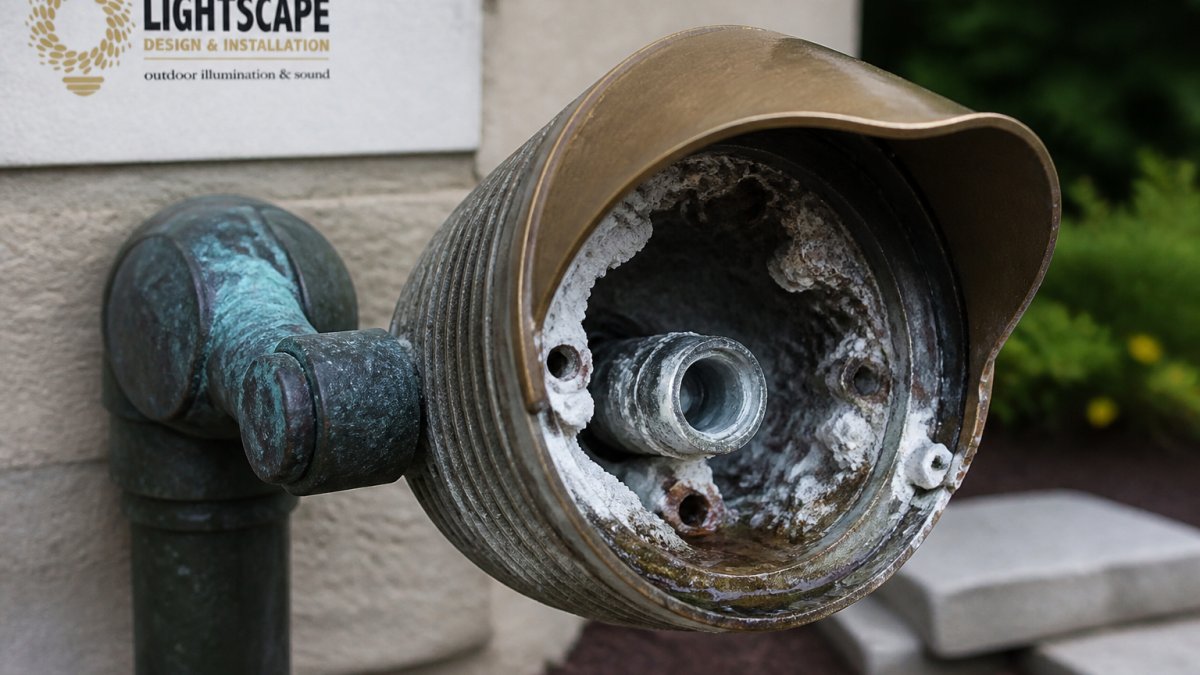
Improper installation causes loose connections, inadequate sealing, and incorrect transformer settings, leading to intermittent operation or shutdown. Unprotected wiring deteriorates rapidly.
Poor maintenance accelerates decline. Dirt and debris trap moisture and reduce output, while corrosion spreads across the network.
Understanding Outdoor Lighting Fixture Lifespan and Durability
LED fixtures typically last 25,000 to 50,000 hours (10-15 years of residential use), but actual lifespan depends heavily on environmental conditions and maintenance. Fixtures in protected locations outlast those exposed to constant moisture and salt air.
Premium USA-made fixtures offer superior durability compared to imported alternatives, with quality materials resisting corrosion better and precision manufacturing reducing failures. The difference often appears within 2-3 years.
Your outdoor lighting warranty typically covers 2-10 years, separate from the fixture's actual lifespan. A fixture might last 15 years but warranty coverage may expire after 5 years. Understanding this distinction prevents disappointment.
What Outdoor Lighting Warranty Coverage Actually Includes
Outdoor lighting warranties vary dramatically. Evaluate coverage across four dimensions: components covered, remedies offered, exclusions, and proof required for claims.
Component-by-Component Coverage
Warranties should explicitly state coverage for each system element. Fixture housing and lens are almost universally covered for defects in materials and workmanship, typically for 2-5 years. LED elements and bulbs are often covered separately, sometimes with a shorter term (1-3 years) because LEDs degrade gradually rather than fail suddenly. Transformers and power supplies typically receive 2-10 years of coverage, though some manufacturers exclude transformer failures caused by power surges or improper wiring. Wiring, connectors, and conduit coverage varies widely: premium warranties include these components for the full term, while standard warranties may exclude wiring failures unless they result from a manufacturing defect in the fixture itself.
Request a written component list with specific coverage periods for each. This prevents discovering a transformer was only covered for 2 years when it fails after 4.
Remedy Options: Replacement vs. Repair vs. Credit
What the manufacturer will actually do matters more than the coverage period. Full replacement (new fixture, free shipping) is most consumer-friendly. Repair takes 4-8 weeks and may return a refurbished unit. Store credit requires you to pay the difference, least favorable.
Ask explicitly what remedy applies and get the answer in writing. Premium warranties guarantee replacement; budget warranties often reserve the right to repair or offer credit.
Labor and Installation Coverage
Full labor coverage includes removal and installation ($200-$500 per fixture). Partial labor coverage includes one or the other. No labor coverage means you pay all costs out of pocket.
With 10 fixtures, the difference between full labor coverage and none can exceed $1,000. Ask whether labor covers both removal and installation, conduit adjustments, and difficult-to-access fixtures.
Exclusions and Limitations Checklist
Create a checklist of key exclusions:
- Moisture and corrosion: Excluded if caused by improper installation? Excluded in coastal environments?
- Maintenance requirements: Required frequency and proof needed?
- Installation method: Professional installation required?
- Environmental limits: Temperature, humidity, or UV exposure limits?
- Modifications: Void if you add fixtures or alter design?
- Proof of purchase: What documentation required?
- Claim deadline: Typically 30-90 days to file?
Compare exclusions across options. A warranty covering moisture but requiring annual maintenance may cost more upfront but protect you better than one excluding corrosion entirely.
Creating a Warranty Comparison Table
Create a comparison table with coverage period, components, labor inclusion, replacement policy, moisture coverage, maintenance requirements, and claim deadline. A warranty costing $300 more upfront with 10-year coverage and full labor may save $1,500-$2,000 over 15 years versus a cheaper 2-year warranty with no labor.
Outdoor Lighting Warranty Exclusions and Limitations
Moisture Damage and Corrosion
Most outdoor lighting warranty policies exclude moisture damage from improper installation or maintenance. However, manufacturer defects allowing moisture infiltration despite proper installation are usually covered. Documentation of maintenance practices is critical for moisture-related claims.
Salt air corrosion in coastal environments may be excluded or covered. If your property is near the ocean, verify whether your outdoor lighting warranty addresses corrosion explicitly.
Improper Installation and Maintenance
Warranties exclude failures from incorrect installation. Professional installation preserves eligibility. Lack of maintenance voids coverage; maintain records of cleaning and inspections. Modifications (adding fixtures, using non-approved components, altering wiring) can void coverage.
How to File an Outdoor Lighting Warranty Claim
Filing a warranty claim requires building a documented case proving the failure is covered. Most denials result from insufficient documentation or not following the manufacturer's process. Understanding the full claim lifecycle prevents delays and rejections.
Step 1: Document the Failure Immediately
Document immediately: photograph the fixture from multiple angles, capture model and serial numbers, and record the exact date and description of failure. If intermittent, video-record the behavior. Document any preceding events (rain, power surge, storm). If no cause is apparent, state that clearly.
Step 2: Gather and Organize Your Warranty Documentation
Locate purchase documentation, installation invoice, and warranty paperwork. If missing, contact your installer or manufacturer for copies. Organize into a single folder: purchase receipt, installation invoice, warranty document, maintenance records, photographs, and correspondence.
This organized package accelerates claim processing and demonstrates that you take the warranty seriously.
Call to schedule a consultation →
Step 3: Verify the Failure Is Within the Warranty Period and Not Excluded
Confirm eligibility by calculating the warranty period. Review exclusions: moisture damage (was installation proper?), maintenance requirements (do you have records?), modifications (disclose any changes), and improper installation (was a professional used?).
If you believe the failure is covered, proceed to the next step. If you are uncertain whether an exclusion applies, contact the manufacturer before submitting a formal claim and ask for a preliminary assessment.
Step 4: Contact Your Installer or the Manufacturer
Contact your original installer first; they often handle claims and can advocate for you. If unavailable, contact the manufacturer directly by phone if possible to explain the failure and ask clarifying questions.
Provide: fixture model and serial number, installation date, failure date, description, visible damage, maintenance history, and proof of purchase. Ask the manufacturer to confirm eligibility in writing before proceeding.
Step 5: Follow the Manufacturer's Claim Process Exactly
Follow the manufacturer's specific procedures exactly. Common steps: return the failed fixture (ask for prepaid shipping), provide photographs, complete claim forms thoroughly, and provide proof of purchase.
Follow these instructions precisely. If the manufacturer asks you to return the fixture and you instead submit only photographs, your claim may be delayed or denied. If the manufacturer requests a claim form and you simply email a description of the problem, your claim may not be processed.
Step 6: Track Claim Status and Maintain Communication
Request a claim number and timeline. Follow up every 2 weeks. Respond promptly to requests for additional information. If approved, the manufacturer will ship a replacement or authorize pickup. If denied, you have the right to appeal.
Step 7: Appealing a Denied Claim
Request a detailed written explanation. Common denial reasons: outside warranty period (verify calculation), excluded cause (provide evidence of proper installation), insufficient proof (provide alternative documentation), or late filing (provide evidence of timely submission).
Submit your appeal in writing, referencing your claim number and providing new evidence or clarification. Address each reason for denial point by point. If the manufacturer denies your appeal, you may have recourse through your state's consumer protection agency or small claims court, depending on the claim amount and your state's laws.
Documentation Checklist for Claim Success
Before submitting your claim, verify that you have:
- ☐ Photographs of the failed fixture from multiple angles
- ☐ Fixture model number and serial number
- ☐ Installation date and warranty coverage period
- ☐ Original purchase receipt or proof of purchase
- ☐ Warranty document or certificate
- ☐ Maintenance records (if applicable)
- ☐ Written description of the failure and any visible damage
- ☐ Claim number from the manufacturer
- ☐ Written confirmation that the claim is eligible for coverage
- ☐ Copies of all correspondence with the manufacturer
Maintaining this documentation throughout the claim process protects you if the claim is disputed and ensures you can provide any information the manufacturer requests quickly.
Warranty Length vs. Real-World Outdoor Lighting Durability
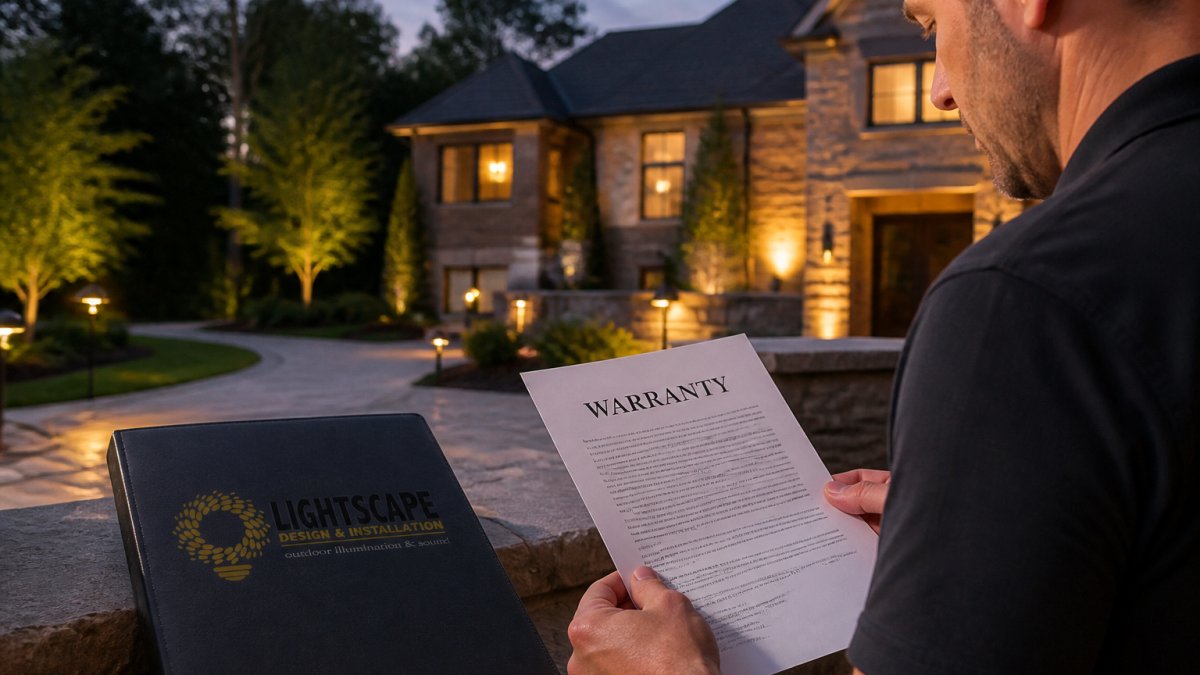
A typical outdoor lighting warranty covers 2-5 years, though premium systems like those from professional installers often extend to 10-20 years. Lightscape Design & Installation provides a 20-year warranty, reflecting confidence in both fixture quality and professional installation.
The warranty period doesn't match the fixture's actual lifespan. A fixture might operate reliably for 12-15 years in the field, but warranty coverage expires after 5 years. This gap means you're self-insuring against failures after the warranty ends.
Environmental conditions dramatically affect real-world durability. Fixtures in protected locations last significantly longer than those exposed to constant moisture, salt air, or extreme temperature swings.
Premium USA-made fixtures consistently outlast budget alternatives by 50-100% in outdoor conditions. The initial investment in quality fixtures reduces long-term replacement costs and warranty claim frequency. Over a 15-year period, investing in durable fixtures typically costs less than replacing cheaper fixtures multiple times.
How Regular Maintenance Protects Your Warranty
Regular maintenance directly supports your outdoor lighting warranty eligibility. Cleaning fixtures quarterly removes debris and prevents moisture accumulation.
Inspecting connections annually catches loose wires, corroded terminals, and water infiltration before they cause failures. Tightening loose connections and resealing compromised areas prevents warranty claim denials based on lack of maintenance.
Proper drainage around fixtures prevents water pooling and foundation moisture issues that accelerate corrosion. Ensuring landscape grading directs water away from fixtures and transformer locations extends system life significantly.
Seasonal checks before winter and after spring storms catch damage early. If a fixture shows signs of water infiltration or corrosion, addressing it immediately prevents secondary damage to adjacent fixtures.
Professional maintenance from your original installer ensures work meets manufacturer specifications. Any repairs or adjustments performed by professionals maintain warranty eligibility, while DIY modifications might void coverage.
Your outdoor lighting system is a long-term investment in your property's beauty, safety, and value.
Frequently Asked Questions
What should an outdoor lighting warranty cover?
A comprehensive outdoor lighting warranty should cover materials and workmanship defects, fixture replacement or repair, and ideally labor for covered repairs. Check whether your warranty includes the entire system (transformer, wiring, connections) or just individual fixtures. Some warranties cover parts only, while others include professional service. Always verify whether labor and installation are included, as this significantly affects your protection against unexpected repair costs.
How long do outdoor lighting fixtures typically last?
Quality outdoor lighting fixtures with LED technology can last 15-25 years or more under normal conditions, though actual lifespan depends on fixture quality, installation, maintenance, and climate exposure. LED fixtures generally outlast traditional halogen or incandescent options. However, warranty periods often run shorter than realistic fixture lifespan, typically 5-20 years. This gap means you may still have functioning equipment after warranty expires, so understanding what warranty duration means for your specific investment is important for long-term planning.
Can weather damage void an outdoor lighting warranty?
Most outdoor lighting warranties exclude damage from extreme weather events, severe storms, or acts of nature. However, normal moisture exposure and seasonal weather changes should be covered if the fixture is properly installed and maintained. Poor installation that allows water infiltration into connections or wiring may void coverage. Regular maintenance, including clearing debris and checking connections, helps preserve warranty eligibility. Always review your warranty's specific exclusions regarding weather and environmental exposure before assuming coverage.
How do I file a warranty claim for outdoor lighting?
Start by documenting the problem with photos and gathering proof of purchase and original installation documentation. Contact your lighting provider with details about the failure and when it occurred. Most providers will request information about maintenance history and installation conditions. They may ask you to perform troubleshooting steps or schedule an inspection. Keep records of all communications.