 how-to
Commercial Outdoor Lighting for Restaurants: A Design Guide
Table of Contents
- Why Commercial Outdoor Lighting Matters for Restaurants
- Restaurant Patio Lighting Ideas: Creating Layered Ambiance
- Outdoor Restaurant Lighting Fixtures: Selection by Zone
- Restaurant Walkway Lighting: Safety and Visibility
- Restaurant Exterior Lighting Design: Balancing Brightness and Glare
- Controls, Dimming, and Operating Schedules
- Installation Budget and Long-Term Maintenance
- Frequently Asked Questions
Last Updated: October 9, 2026
Why Commercial Outdoor Lighting Matters for Restaurants
Commercial outdoor lighting for restaurants isn't a luxury, it's a business essential. When the sun sets, your dining space either becomes an inviting destination or an empty parking lot. The right lighting transforms your patio, entrance, and walkways into spaces guests want to occupy after dark.
At Lightscape Design & Installation, we understand what makes outdoor spaces feel welcoming versus what turns guests away. Poor lighting creates safety concerns. It hides the beauty of your property. It signals neglect. Strategic commercial outdoor lighting for restaurants does the opposite: it extends your operating hours, improves guest safety, and makes your property memorable.
The difference comes down to intentional design. Layered lighting, combining ambient, task, and accent elements, creates depth and atmosphere. This approach works whether you're lighting a small patio or a full dining courtyard. The goal is always the same: make guests feel comfortable, keep staff safe, and showcase your restaurant's character after dark.
Restaurant Patio Lighting Ideas: Creating Layered Ambiance
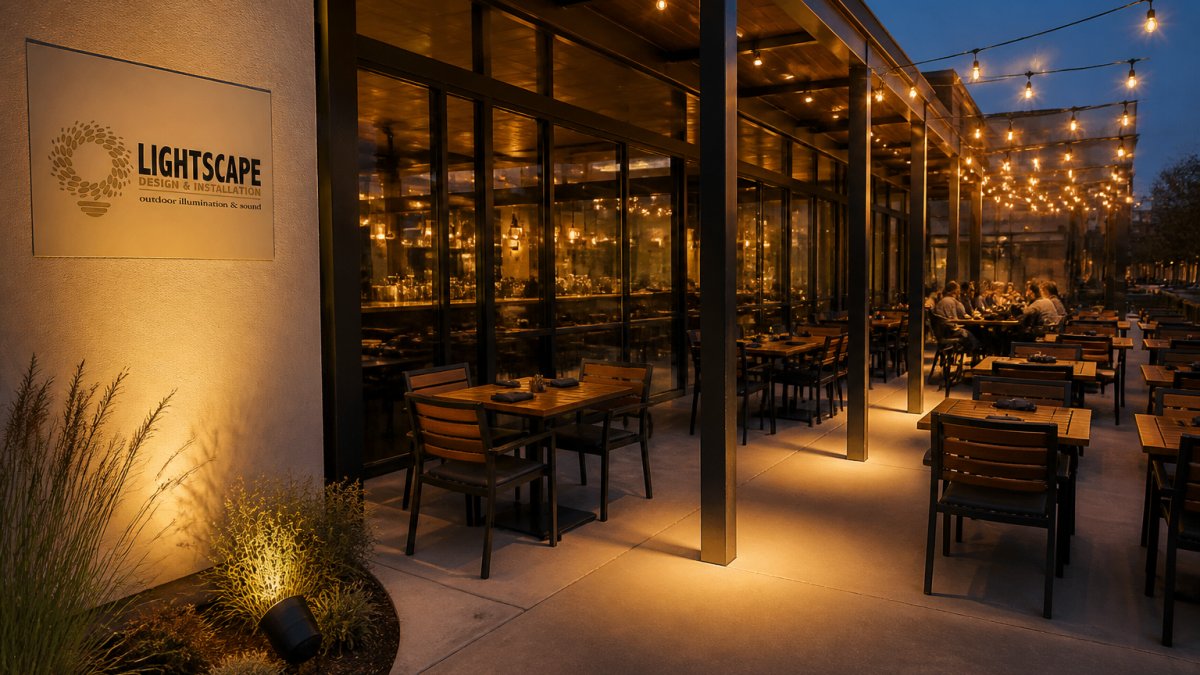
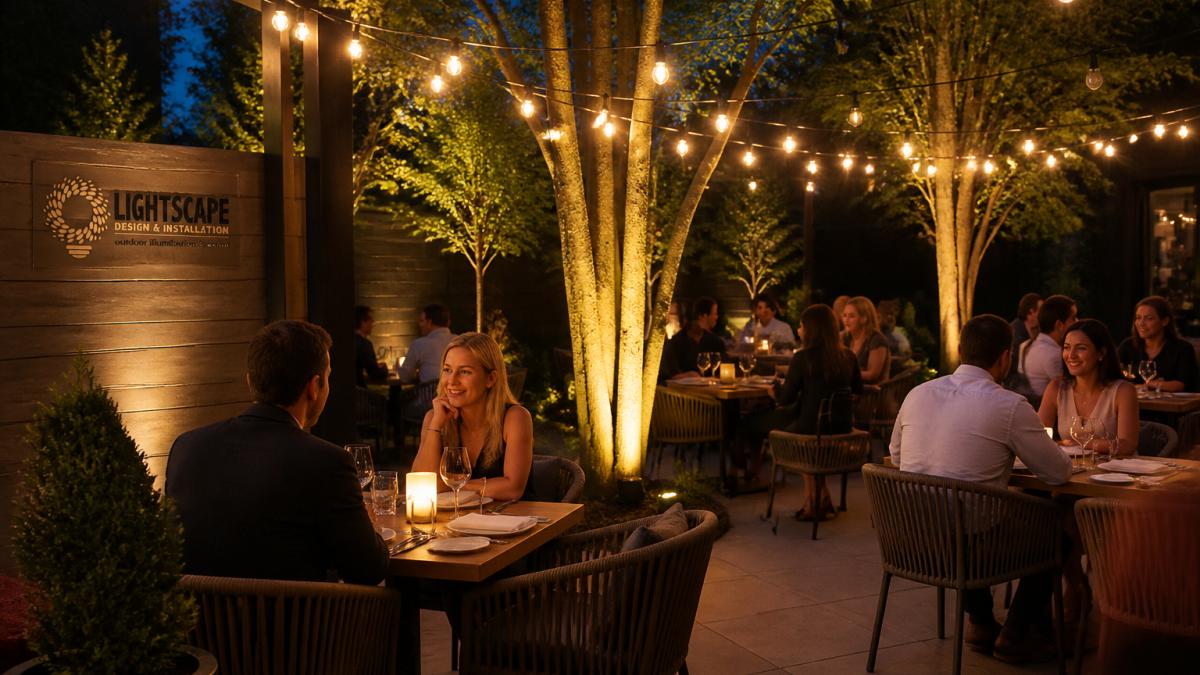
The most inviting restaurant patios use three distinct lighting layers working together. Each layer serves a purpose. Together, they create an experience that feels both sophisticated and warm.
Ambient Lighting for Warmth and Invitation
Ambient lighting sets the overall mood. It's the foundational layer that makes guests feel welcome the moment they step outside. Without it, a patio feels cold and institutional. With it, the space becomes an extension of your dining room, warm, inviting, designed for lingering.
String lights are a popular choice for ambient lighting on patios. They create visual interest while distributing light evenly across the space. Overhead fixtures, whether mounted to pergolas, beams, or cables, work well for larger dining areas. The key is choosing warm color temperatures that complement skin tones and food presentation.
Ambient lighting should be bright enough to navigate safely but not so bright that it creates glare or washes out the atmosphere. Most restaurant patios benefit from lighting levels that are enough to see clearly without harshness. This is where professional design matters: too dim and guests feel unsafe; too bright and the space loses its intimacy.
Task Lighting for Dining and Service
Task lighting ensures guests can read menus and staff can move safely. It's focused, directional light placed where people actually need it: at dining tables, along service pathways, and in food preparation areas.
Downlights mounted above tables work well for task lighting. Recessed or adjustable fixtures let you control where light lands. Wall sconces near service areas provide visibility without overwhelming the ambient layer. The goal is functional light that doesn't compete with the atmosphere you've created.
Task lighting should be slightly brighter than ambient light. It should also be flicker-free. LED technology makes this easier: quality commercial-grade LEDs eliminate the flicker that cheaper bulbs produce, which matters for guest comfort during a meal.
Accent Lighting for Architectural Character
Accent lighting reveals the bones of your property. It highlights architectural details, landscaping, and focal points that make your restaurant unique. This layer separates a basic lit patio from a designed space.
Uplighting on trees creates drama and depth. Accent lights on building facades or rooflines emphasize your restaurant's character. Landscape lighting around planters or water features adds visual interest. Accent lighting uses less overall light than ambient or task layers but creates outsized visual impact.
The color temperature of accent lighting matters. Warm white light (2700K) feels inviting on most architectural elements. Cooler tones (4000K or higher) work for modern or contemporary spaces. The key is consistency: mixing color temperatures across your patio creates visual confusion rather than sophistication.
Outdoor Restaurant Lighting Fixtures: Selection by Zone
Different zones of your restaurant property need different fixtures. Choosing the right fixture for each zone ensures durability, performance, and the aesthetic you're after.
Overhead and String Lighting for Dining Areas
String lights and overhead fixtures dominate dining areas because they work. String lights create visual interest and distribute light evenly across tables. They're also relatively forgiving: they work in casual farm-to-table settings and upscale fine dining equally well.
When selecting overhead fixtures, look for commercial-grade construction. Fixtures rated for wet locations handle rain and humidity without degrading. Stainless steel or powder-coated aluminum resists corrosion. Integrated LED systems eliminate the need to replace bulbs, a major advantage when fixtures are mounted 12+ feet overhead.
Spacing matters. Overhead fixtures spaced too far apart create pools of light with dark zones between them. Fixtures too close together create harsh overlapping shadows. Professional design accounts for mounting height, beam spread, and table placement to distribute light evenly. This is one area where DIY approaches often fall short: online calculators can't account for your specific patio layout, furniture arrangement, or architectural features.
Bollard and Path Lights for Navigation
Bollard lights and pathway fixtures serve a practical function: they guide guests safely from the parking lot to your entrance and around your patio. They also add visual interest at ground level.
Bollard lights work well along walkways and around perimeter areas. They provide downward-facing light that illuminates the ground without creating glare at eye level. Pathway lights recessed into steps or ground surfaces serve the same function with a more integrated aesthetic.
Commercial-grade bollards are built to withstand foot traffic, weather, and seasonal temperature swings. Look for fixtures with durable lens materials and sealed electrical connections. LED bollards consume minimal power and run cool, important when fixtures are placed near guest areas or vegetation.
Tree and Landscape Lighting for Depth
Tree lighting and landscape accents create the visual depth that transforms a basic patio into a designed space. Uplighting on mature trees creates a canopy effect. Ground-level accent lights on plantings add layers.
Landscape lighting fixtures need weather resistance and durability. Brass, stainless steel, and high-quality aluminum handle moisture and temperature changes. LED technology is essential here: it lets you run landscape lighting all evening without excessive energy consumption.
Fixture placement is critical. Lights positioned too close to tree trunks create harsh shadows. Lights too far away don't effectively illuminate the canopy. The angle of light matters too: uplighting creates drama, while side-lighting reveals texture in bark and foliage. This is where professional design and installation make a visible difference.
Restaurant Walkway Lighting: Safety and Visibility
Guest safety depends on clear visibility along walkways, steps, and transitions between spaces. Poor walkway lighting creates liability and poor guest experience. Professional walkway lighting prevents both.
Pathway lighting should illuminate the ground clearly without creating glare. Spacing between fixtures is important for walking surfaces. Steps need additional attention: edge lighting or step-mounted fixtures prevent trips and falls. Transitions between lit and unlit areas should be gradual, sudden darkness creates disorientation.
Call to schedule a consultation →
Staff safety is equally important. Service areas, loading zones, and back-of-house pathways need adequate visibility. This often means brighter, more utilitarian fixtures than front-of-house areas. The goal is consistent visibility across all pedestrian areas, from guest entry to kitchen door.
Weather-resistant fixtures rated for wet locations are non-negotiable. Stainless steel, sealed connections, and durable lens materials ensure walkway lights function reliably through seasons of rain, snow, and temperature fluctuation.
Restaurant Exterior Lighting Design: Balancing Brightness and Glare
The difference between beautiful lighting and harsh, uncomfortable lighting comes down to brightness levels and glare control. This is where many DIY approaches fail: more light doesn't equal better design.
Color Temperature and Guest Comfort
Color temperature, measured in Kelvin, dramatically affects how guests perceive your space and how food looks. Warm white light feels inviting and flatters skin tones. Neutral white works for casual restaurants and contemporary spaces. Cool white feels clinical and is rarely appropriate for dining areas.
Consistency matters. Mixing color temperatures across your patio creates visual discord. If your overhead ambient lighting is a certain color temperature, your task lighting should also be consistent. Accent lighting can shift slightly warmer for dramatic effect, but the overall palette should feel cohesive.
Light quality also affects guest perception. Commercial-grade LEDs with high color rendering index reveal true colors. This matters for restaurants: food should look appetizing, and guests should look their best in photos they'll likely post on social media.
Lighting Levels and Code Compliance
Lighting levels are measured in foot-candles, the amount of light falling on a surface. Different areas need different levels:
Local building codes may specify minimum lighting levels for safety. Professional designers understand these requirements and design systems that meet code while achieving your aesthetic goals.
Glare is the enemy of good lighting design. Direct light in guests' eyes creates discomfort and reduces visibility. Fixtures with diffusers, shields, or recessed designs prevent glare while distributing light effectively. This is why fixture selection matters: a poorly chosen fixture creates glare problems that can't be fully solved by adjusting brightness.
Controls, Dimming, and Operating Schedules
Modern commercial outdoor lighting systems include controls that let you adjust brightness and timing without manual intervention. This flexibility improves guest experience and reduces energy consumption.
Dimming systems let you adjust ambiance throughout the evening. Early dinner hours might call for brighter lighting; later hours can shift to lower, more intimate levels. Dimming also extends fixture life and reduces energy use.
Scheduling controls turn lights on and off automatically based on sunset and sunrise times. Astronomical timers adjust automatically as day length changes seasonally. This eliminates manual switching and ensures consistent lighting every evening.
Motion sensors in service areas and back-of-house spaces reduce energy consumption by activating lights only when needed. Occupancy sensors work well for parking areas and secondary pathways.
Smart controls let you manage multiple zones independently. Your patio lighting might operate on one schedule while accent lighting runs on another.
Installation Budget and Long-Term Maintenance
Commercial outdoor lighting requires upfront investment in fixtures, design, and installation. Understanding the cost structure helps you make informed decisions.
Quality commercial-grade fixtures cost more than consumer-grade alternatives, but they last longer and perform better. A professional-grade LED fixture will function reliably for years of nightly use.
Installation complexity affects total cost.
Maintenance costs are minimal with quality LED systems. LEDs don't require bulb replacement, a major advantage for fixtures mounted high or in difficult-to-access locations.
Long-term durability depends on fixture quality and installation. Cheap fixtures corrode, develop water intrusion, and fail within a few years.
Your restaurant's outdoor spaces represent a significant investment in your property and your guests' experience. Strategic commercial outdoor lighting for restaurants transforms those spaces into destinations.
The right approach combines thoughtful design, quality fixtures, and professional installation. Lightscape Design & Installation brings all three to every project.
Frequently Asked Questions
How do you light an outdoor restaurant patio without creating harsh shadows or glare?
Layered lighting is key. Use ambient overhead or string lights for general illumination, task lighting directly over dining tables at controlled brightness, and accent lights on landscape features to create depth. Position fixtures to avoid shining directly into guests' eyes, use warm color temperatures, and consider dimmers to adjust brightness as the evening progresses. This approach balances visibility with comfort and atmosphere.
What type of commercial outdoor lighting fixtures work best for restaurant entrances and walkways?
Bollard lights and low-level path lights guide guests safely without overwhelming the entrance. Pair these with directional wall lights or uplighting on architectural features near the entry to draw attention and create an inviting threshold. Ensure fixtures are weather-resistant and rated for outdoor commercial use. Task lighting above the entrance door should provide enough brightness for staff to see guests clearly and for security purposes.
How much does commercial outdoor lighting for a restaurant typically cost to install?
Installation costs vary widely based on the size of the dining area, number of fixtures, electrical infrastructure, and complexity of the design. Budget depends on whether you're lighting a small patio or a large multi-zone property. For an accurate quote tailored to your restaurant's layout and needs, schedule a complimentary on-site consultation where a lighting specialist can assess your space and provide detailed pricing.
What makes weather-resistant outdoor lighting important for restaurants, and how do I choose fixtures that last?
Restaurant outdoor lighting faces constant exposure to rain, temperature swings, and UV radiation. Look for fixtures rated for weather protection and made from corrosion-resistant materials like marine-grade aluminum or stainless steel. LED fixtures with integrated drivers eliminate the need for separate ballasts, reducing failure points. USA-made commercial-grade fixtures often come with longer warranties and better long-term durability than consumer-grade alternatives, protecting your investment over years of operation.