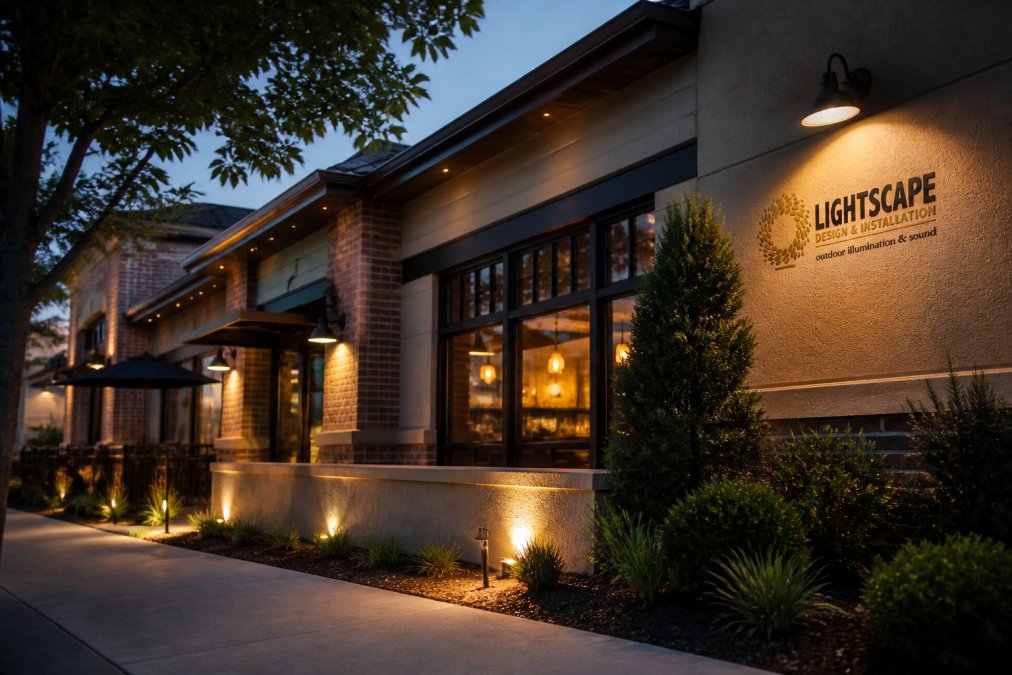
 ultimate-guide
Commercial Restaurant Exterior Lighting Design
Table of Contents
- Why Commercial Restaurant Exterior Lighting Matters
- Layered Lighting Strategy for Restaurants
- Restaurant Patio Lighting Design Essentials
- Architectural Lighting for Restaurants
- Outdoor Lighting Safety Standards for Restaurants
- Fixture Types and LED Technology for Commercial Use
- Energy Efficiency, ROI, and Long-Term Costs
- Smart Lighting and Automation Controls
- Frequently Asked Questions
Last Updated: September 21, 2026
Why Commercial Restaurant Exterior Lighting Matters
The difference between a restaurant that feels inviting after dark and one that feels closed-off comes down to one thing: intentional lighting design. Your exterior is the first impression customers have when they arrive. Poor lighting makes your entrance feel unwelcoming, creates safety concerns in parking areas, and signals that you don't care about the details. Strategic restaurant exterior lighting transforms this dynamic entirely.
For restaurant owners and managers, exterior lighting isn't a luxury, it's infrastructure that directly impacts customer experience and safety. A well-lit entrance and patio extend your operating hours into the evening, create the atmosphere that keeps guests comfortable, and build trust through visibility. Proper illumination also protects your business from liability issues and reduces the risk of accidents on your property.
Lightscape Design & Installation understands how layered lighting strategies create spaces where guests want to spend time. The best designs balance aesthetic appeal with practical functionality. This guide walks you through the principles, fixture types, and technical considerations that separate a thoughtful lighting plan from one that falls flat.
Layered Lighting Strategy for Restaurants
Professional restaurant exterior lighting always relies on three distinct layers working together: ambient, task, and accent lighting. This approach ensures visibility, safety, and visual interest without creating harsh or unwelcoming spaces.
Ambient Lighting for Overall Visibility
Ambient lighting provides the baseline illumination that makes your entire exterior visible and navigable. This is your foundation, without it, everything else fails.
The goal with ambient lighting is to eliminate dark zones while maintaining a warm, welcoming feel. Most restaurants achieve this through a combination of recessed downlights positioned along pathways, parking areas, and open seating zones. The key is balancing brightness with color temperature. Cooler light (5000K and above) feels clinical and institutional. Warmer light (2700K to 3000K) feels inviting and comfortable, this is what keeps guests from feeling like they're in a parking garage.
Lumens matter here, but context matters more. A small patio needs far less illumination than a large parking lot. A good starting point is 10-20 foot-candles of ambient light in dining areas, and 5-10 foot-candles in circulation zones. These numbers ensure visibility without overexposure. Your lighting designer will adjust based on your specific layout and existing environmental light.
Task Lighting for Entrances and Exits
Task lighting serves a specific functional purpose: it illuminates areas where guests need to see clearly to complete an action. Entrances, exits, stairs, and payment areas all require dedicated task lighting.
This is where safety and code compliance intersect. Entrances need enough light that guests can see the door, read signage, and navigate steps without stumbling. A common mistake is treating the entrance as an afterthought, it deserves focused attention. Wall-mounted sconces flanking your door or recessed fixtures above it create clear sightlines and signal "this is where you enter."
Exit lighting must meet building codes. According to NFPA 101 Life Safety Code requirements, emergency exits require specific illumination levels and must remain visible and accessible. Your lighting plan should integrate these code-required fixtures in a way that doesn't compromise your design aesthetic.
Accent Lighting for Architectural Features
Accent lighting highlights the distinctive elements of your building, architectural details, landscaping, signage, or unique structural features. This is where personality enters your design.
Uplighting on stone columns, architectural detailing on your facade, or specimen trees creates visual interest and draws the eye upward. Accent lighting typically uses 25-50% of the light output of ambient fixtures, which keeps it subtle and refined rather than theatrical. The goal is to reveal character, not to turn your restaurant into a billboard.
Restaurant Patio Lighting Design Essentials
Your patio is where guests spend the most time after dark. The lighting here sets the mood for their entire experience, it either invites them to linger or makes them eager to leave.
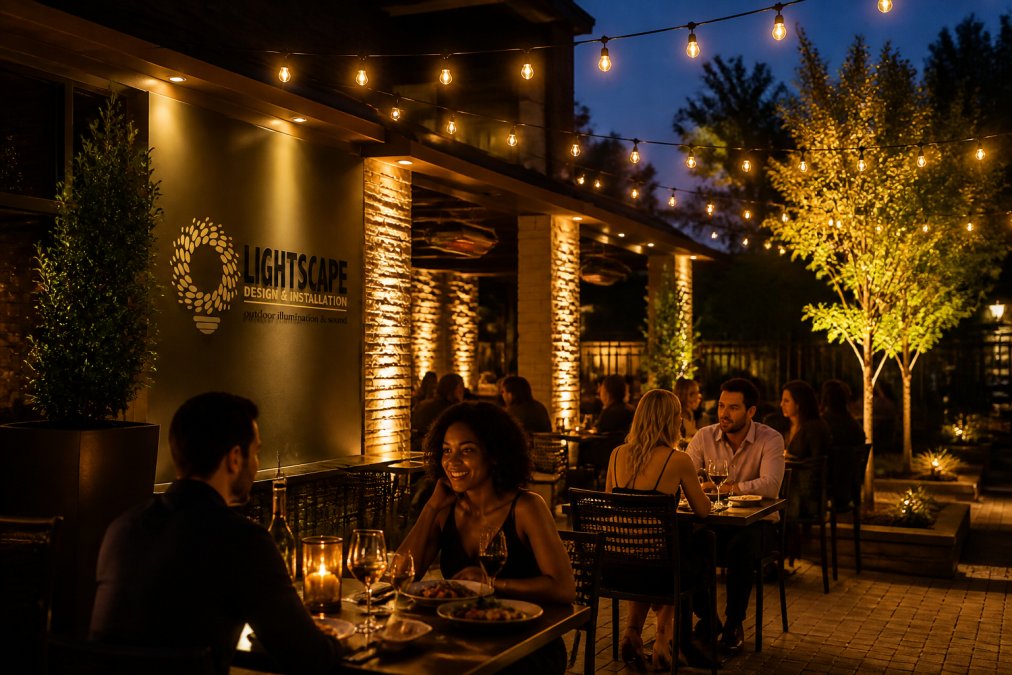
A well-designed patio uses layered lighting to create multiple focal points. String lights overhead add warmth and visual interest, while recessed downlights provide functional visibility for dining. Accent lighting on architectural elements or landscaping adds depth and prevents the space from feeling flat.
The challenge with patio lighting is controlling glare. Guests should never look up and see bright bulbs or harsh light sources directly in their line of sight. This is where fixture selection and aiming become critical. Shielded fixtures and careful positioning ensure that light falls where you need it without creating uncomfortable brightness.
Dimming controls transform your patio from daytime to evening mode.
Call to schedule a consultation →
Architectural Lighting for Restaurants
Architectural lighting reveals the bones of your building. It's the discipline of using light to emphasize form, texture, and spatial relationships.
Outdoor Lighting Safety Standards for Restaurants
Safety standards exist for good reason, they prevent accidents, reduce liability, and ensure your lighting system is reliable.
Fixture Types and LED Technology for Commercial Use
The fixtures you choose determine how your light distributes, how long your system lasts, and how much you spend on maintenance and energy.
Recessed Downlights and Sconces
Recessed downlights are the workhorse of professional exterior lighting. They mount flush with the ceiling or soffit, creating clean lines and directing light downward where you need it. For patios and covered areas, recessed fixtures provide functional illumination without the visual clutter of visible hardware.
Uplighting and String Lights
Uplighting positions fixtures low, aiming upward at trees, columns, or architectural features. This technique creates dramatic shadows and reveals texture in ways that downlighting cannot. Uplighting is particularly effective for specimen landscaping or architectural details you want to showcase.
Integrated LED Benefits
Integrated LED fixtures eliminate the need to replace bulbs. The LED is built into the fixture and lasts as long as the fixture itself, typically 50,000 hours or more.
Energy Efficiency, ROI, and Long-Term Costs
A common objection to professional lighting is the perceived cost. The reality is that well-designed LED lighting systems pay for themselves through energy savings and reduced maintenance.
Smart Lighting and Automation Controls
Modern exterior lighting systems can respond to time of day, ambient light conditions, and even occupancy. Automation makes your lighting system smarter without requiring manual adjustments.
| Lighting Layer | Primary Purpose | Typical Fixtures | Color Temperature |
|---|---|---|---|
| Ambient | Overall visibility and navigation | Recessed downlights | 2700K-3000K |
| Task | Functional illumination for specific areas | Sconces, directional fixtures | 2700K-3500K |
| Accent | Architectural emphasis and visual interest | Uplights, spotlights | 2700K-3000K |
Frequently Asked Questions
How do you light a restaurant exterior for safety and ambiance?
Use a three-layer approach: ambient lighting for overall visibility, task lighting at entrances and exits for safety, and accent lighting to highlight architectural features and create mood. Warm color temperatures (2700K-3000K) enhance ambiance while providing adequate brightness. LED fixtures with integrated controls allow you to adjust lighting levels based on time of day and customer flow, balancing safety with the welcoming atmosphere that encourages guests to linger.
What makes restaurant patio lighting design different from general outdoor lighting?
Restaurant patio lighting must balance aesthetics with functionality. It needs to be bright enough for guests to see their food and navigate safely, yet warm and flattering enough to encourage lingering and repeat visits. Glare reduction is critical, harsh shadows and bright spots detract from the dining experience. String lights, sconces, and uplighting create layers that define the dining zone while architectural elements draw attention to the restaurant's unique character and increase curb appeal.
What outdoor lighting safety standards apply to restaurants?
Restaurants must comply with local building codes for electrical safety and standards for fixture installation and weatherproofing. Parking areas typically require specific illumination for safety. Fixtures should have appropriate IP ratings to protect from moisture and dust. Consult local zoning and health department regulations, as some jurisdictions impose specific requirements for nighttime visibility and glare control near residential areas.
How much does commercial restaurant exterior lighting cost?
Pricing depends on the size of the space, number and type of fixtures, complexity of the design, and whether automation is included. A small patio may cost significantly less than a full parking lot and entrance package. Premium, USA-made fixtures with integrated LED technology and long-term warranties represent a higher upfront investment but eliminate bulb replacement costs and offer better durability. Contact Lightscape Design & Installation for a complimentary on-site consultation and detailed quote tailored to your restaurant's specific needs.
Why is LED technology important for restaurant lighting?
LED fixtures consume 75-80% less energy than traditional halogen or incandescent bulbs, significantly lowering operating costs over time. Integrated LED technology means no bulbs to replace, reducing maintenance labor and downtime. LEDs produce consistent color temperature and brightness, creating a professional appearance that enhances the dining experience. They generate less heat, improving comfort in outdoor dining areas, and last typically 50,000 hours or more, making them ideal for commercial applications where reliability and long-term cost savings matter.
How can smart lighting controls improve restaurant operations?
Dimming controls and automation allow you to adjust lighting intensity based on time of day, seasonal daylight, and customer occupancy. Morning and evening shoulder hours can use lower levels to save energy when the space is less busy. Automated scheduling ensures lights turn on and off on a consistent schedule, improving safety and reducing manual labor.
How do I ensure my restaurant lighting looks professional and not like a gas station?
Avoid harsh, overly bright white light (6000K+) and excessive glare from poorly aimed fixtures. Instead, use warm color temperatures (2700K-3000K) with layered lighting that creates depth and visual interest. Uplighting on trees and architectural features, string lights for ambiance, and low-profile recessed downlights for task areas work together to create a sophisticated atmosphere. Professional design considers fixture placement, aiming, and intensity to enhance your restaurant's unique character while maintaining safety. A complimentary on-site consultation helps identify the best approach for your specific space.