 ultimate-guide
Outdoor Lighting for Seasonal Patio Use: A Design Guide
Table of Contents
- Understanding Outdoor Lighting for Seasonal Patio Use
- Fixture Types and Lighting Layers for Patios
- How to Calculate Transformer Wattage for Landscape Lighting Layout
- Weatherproof Outdoor Lighting Standards and IP Ratings
- LED Landscape Lighting Maintenance Guide
- Transitioning Your Patio Lighting Seasonally
- Frequently Asked Questions
Last Updated: September 20, 2026
Understanding Outdoor Lighting for Seasonal Patio Use
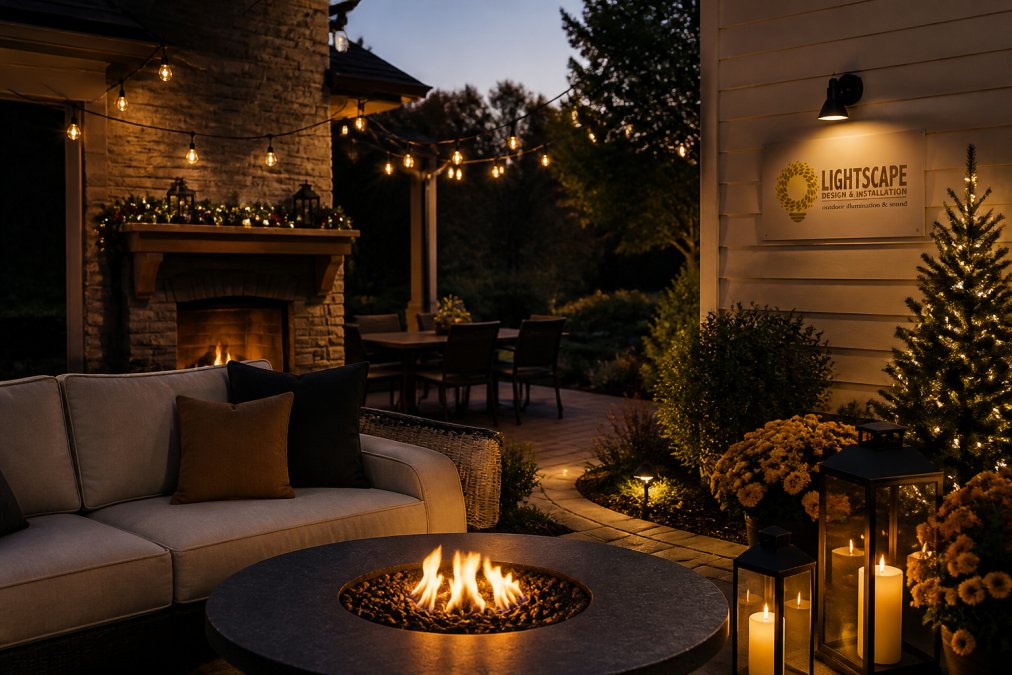
Outdoor lighting for seasonal patio use transforms how you experience your outdoor living space throughout the year. Thoughtful lighting design extends usability from spring through fall and into winter evenings by layering different types of light to create depth, safety, and ambiance that adapts to changing weather and daylight patterns.
What separates a well-lit patio from an ordinary one comes down to intentional layering. You need ambient glow for general visibility, task lighting for functional areas like dining tables, and accent lighting to highlight landscape features or architectural details. This layered approach works year-round, but the intensity, color temperature, and fixture placement shift with the seasons.
Many property owners struggle with patio lighting that disappears when trees leaf out in summer or becomes harsh in winter. Understanding transformer wattage, weatherproof IP ratings, and seasonal maintenance ensures consistent results.
Fixture Types and Lighting Layers for Patios
Creating effective outdoor lighting for seasonal patio use requires understanding how different fixture types work together.
Ambient and String Lighting
Ambient lighting provides foundational glow through string lights and soft overhead fixtures. Warm white lights (2700K) create an intimate atmosphere, while cooler tones (4000K or higher) feel more clinical. String lights are particularly effective in spring and fall when entertaining outdoors.
Pair string lights with low-voltage pathway lights along the patio edge for definition and safety. Proper spacing runs 8-10 feet between fixtures, with bulbs just above eye level when seated.
Choose fixtures designed specifically for exterior use. LED string lights are standard because they run cooler, last longer, and consume far less energy than incandescent alternatives.
Task and Accent Lighting
Task lighting illuminates dining tables, cooking areas, or seating zones functionally. Accent lighting highlights features like trees, walls, or architectural details for visual interest. Task lights must be bright enough to be functional; accent lights are purely aesthetic.
For dining areas, hang overhead fixtures or pendant lights 7-8 feet above the table with diffused light to avoid harsh shadows. Angle accent lights at 45 degrees toward landscape features for dramatic, natural-looking illumination.
Motion sensor fixtures activate for pathways or entry points when movement is detected, reducing energy waste while maintaining safety during seasonal transitions.
Solar and Smart Lighting Options
Solar-powered fixtures offer flexibility without wiring requirements, ideal for temporary seasonal installations. The trade-off is performance: they're less reliable during winter or cloudy periods.
Smart lighting systems let you adjust brightness, color temperature, and scheduling from your phone. For seasonal patio use, program lights to activate at dusk, adjust intensity by season, or create different scenes for entertaining versus quiet evenings.
Smart systems handle seasonal transitions automatically: activating later in spring as daylight extends, earlier in fall as days shorten.
How to Calculate Transformer Wattage for Landscape Lighting Layout
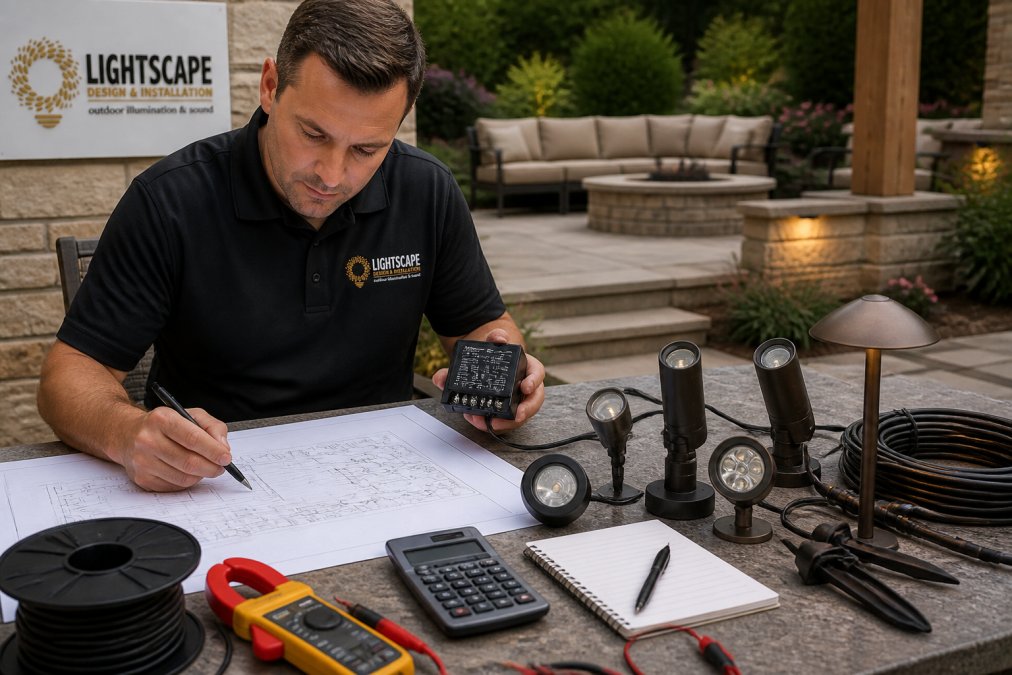
A transformer steps down household voltage (120V) to low voltage (typically 12V) for safer outdoor installations. Calculating correct wattage prevents undersized systems that flicker or fail, and oversized systems that waste energy.
Start by listing every fixture you plan to install and noting its wattage. Most outdoor fixtures are labeled clearly. Add up the total wattage of all fixtures. For example: eight path lights at 5 watts each (40W), four accent spotlights at 20 watts each (80W), and string lights at 30 watts equals 150 watts total.
Here's the critical step: select a transformer rated for 20-25% more than your total load. In the example above, a 200-watt transformer is appropriate for 150 watts of fixtures. This headroom prevents the transformer from running at maximum capacity continuously, which shortens its lifespan and can cause voltage drop, making distant fixtures dimmer than nearby ones.
Voltage drop becomes an issue on longer runs. If your transformer is 100 feet from your farthest fixture, the voltage may drop significantly. Most landscape lighting professionals use thicker gauge wire (10 or 8 AWG instead of 12 AWG) for runs longer than 50 feet to compensate. The longer and heavier the load, the thicker the wire needed.
Call to schedule a consultation →
For seasonal installations, you might use a smaller transformer in winter when you're using fewer fixtures, then upgrade or add a second transformer in spring when you expand your lighting. This flexibility is one advantage of low-voltage systems, they're modular and relatively easy to adjust.
Weatherproof Outdoor Lighting Standards and IP Ratings
Not all outdoor fixtures are created equal. The IP rating system tells you exactly how well a fixture resists water and dust intrusion. IP stands for Ingress Protection, and the rating consists of two digits. The first digit (0-6) rates dust protection; the second digit (0-9) rates water protection.
For patios, you want fixtures rated IP65 at minimum. This means complete protection against dust and water jets from any direction. Fixtures rated IP67 offer temporary immersion protection, they can handle being submerged briefly. IP68 fixtures withstand continuous immersion, which is overkill for most patios but appropriate for pool-side or fountain-adjacent lighting.
The weatherproof rating becomes especially important during seasonal transitions when temperature swings and moisture levels fluctuate dramatically. A fixture rated IP44 might survive a light rain but fail during spring snowmelt or fall freezing rain. Materials matter too. Stainless steel and powder-coated aluminum resist corrosion far better than bare metal. Gaskets and seals degrade over time, so even a well-rated fixture needs periodic inspection.
Lightscape Design & Installation specifies USA-made fixtures with integrated LED technology because they combine durability with longevity. The sealed design means no bulbs to replace, and the integrated electronics are protected from moisture. A 20-year warranty on professional fixtures reflects confidence in weatherproofing standards.
When selecting fixtures for seasonal use, consider where they'll be stored off-season. A fixture rated IP65 still benefits from being brought inside during winter if it's portable. String lights, for example, should be carefully coiled and stored in a dry location rather than left exposed to ice and snow.
LED Landscape Lighting Maintenance Guide
LED fixtures require far less maintenance than incandescent alternatives, but they're not maintenance-free. Proper seasonal care extends fixture life and maintains consistent light output.
Spring and Summer Care
Spring is when you should inspect your entire system after winter dormancy. Check for debris, leaves, dirt, or pollen, accumulation on fixture lenses. A soft brush and mild soap solution clean lenses without scratching them. Inspect gaskets and seals for cracks or deterioration. If a gasket is hardened or cracked, replace it before the summer rainy season.
During spring setup, verify that all connections are tight. Winter freeze-thaw cycles can loosen fasteners. Test each fixture individually to ensure it's operating at full brightness. LED fixtures should maintain consistent color and intensity; dimming or color shift indicates a problem with the driver (the electronic component that powers the LED).
Summer maintenance is minimal if your system is properly installed. The main task is ensuring that growing vegetation doesn't block accent lights or create unintended shadows. Trim back branches or foliage that obstruct light paths. Check that string lights aren't sagging due to heat expansion, they should maintain slight tension for safety and appearance.
Fall and Winter Storage
As daylight decreases in fall, you'll likely use your patio less frequently. This is when many homeowners shut down their systems entirely. Before you do, document what worked and what didn't. Take photos of your patio lighting at dusk so you can reference the layout next spring.
For fixtures you're storing, disconnect them carefully. Coil wiring neatly to avoid kinks that could damage insulation.
Transitioning Your Patio Lighting Seasonally
The transition between seasons is where intentional design pays dividends. Rather than an all-or-nothing approach, think about how your patio use changes and adjust your lighting accordingly.
Frequently Asked Questions
What are the best types of outdoor lights for seasonal patio use?
String lights and ambient fixtures work well for summer entertaining, while solar pathway lights and motion-sensor fixtures enhance safety during shorter daylight hours. LED options with dimmable controls let you adjust brightness for different seasons. Choose weather-resistant fixtures rated IP65 or higher to handle rain, snow, and temperature swings. Low-voltage systems are safer and more energy-efficient than line-voltage alternatives, making them ideal for patios you use intermittently throughout the year.
How do I calculate transformer wattage for my landscape lighting layout?
List every fixture you plan to install and its wattage rating. Add all wattages together to get total demand. Select a transformer rated 20-30% higher than your total to avoid overloading. For example, ten 10-watt LED path lights plus five 15-watt spotlights equals 125 watts; choose a 150-200 watt transformer. Always verify fixture voltage (12V is standard for landscape lighting) matches your transformer output. Undersizing causes flickering and fixture failure; oversizing wastes energy but protects your system.
How do I protect outdoor lighting fixtures from harsh weather conditions?
Check IP ratings before purchase, IP65 handles rain and dust, IP67 allows brief submersion. Install fixtures under eaves or use weatherproof junction boxes for exposed connections. Drain low-voltage lines before winter to prevent ice damage. Use outdoor-rated sealant on any gaps where wires enter fixtures. For seasonal storage, disconnect solar panels and store indoors to extend battery life. Inspect wiring annually for cracks or corrosion, especially before spring and fall transitions when temperature and moisture fluctuate.
What should I do with outdoor lighting when I'm not using my patio seasonally?
Before storing fixtures, drain all water from low-voltage lines and disconnect the transformer. Clean lenses and remove any debris from sockets. Store solar panels separately in a cool, dry space to preserve battery capacity. Keep string lights and delicate fixtures indoors to prevent UV degradation and weather damage. Label all wiring and connections before disconnecting so reinstallation is straightforward. If fixtures remain installed year-round, reduce usage during off-seasons and inspect for ice buildup on lenses during winter months.