 ultimate-guide
The Complete Guide to Modern Outdoor Lighting Design Trends
Last Updated: October 25, 2026
Quick Summary
Modern outdoor lighting design trends favor restraint: fewer fixtures, cleaner lines, and light aimed with intent. Homeowners now choose screened path lights, tree uplighting, grazing washes, and hardscape lighting in warm, consistent color temperatures, so the fixture disappears and the effect remains.
- Screened lenses hide the LED source so you see warm pools of light, not bright dots.
- Grazing fixtures sit a few inches from the wall, aimed nearly parallel to reveal texture.
- Layer ambient, task, and accent light, and control each layer separately with zoning and scheduling.
- Low voltage systems allow many small, precisely aimed fixtures instead of a few powerful ones.
- Powder-coated aluminum and solid brass resist corrosion better than painted steel in outdoor conditions.
Table of Contents
- Modern Outdoor Lighting Design Trends: What Homeowners Are Choosing Now
- Modern Landscape Lighting Ideas That Define 2026
- Layered Landscape Lighting: Ambient, Task, and Accent Working Together
- Architectural Outdoor Lighting: Revealing the Bones of the House
- Low Voltage Landscape Lighting: The Backbone of a Modern System
- Pathway, Patio, and Hardscape Lighting: Safety and Ambiance
- Planning a Layout: Fixture Spacing, Zones, and Glare Control
- Schedule a Complimentary Lighting Consultation
- Frequently Asked Questions
Modern Outdoor Lighting Design Trends: What Homeowners Are Choosing Now
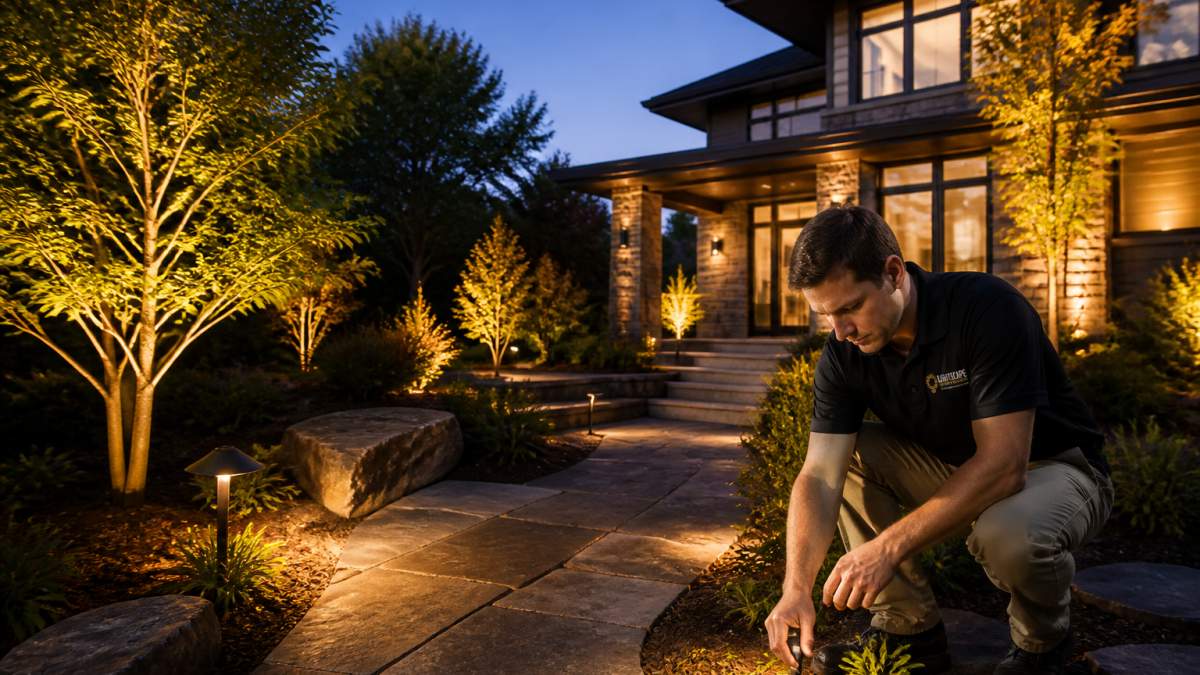
Modern outdoor lighting design trends have shifted decisively toward restraint: fewer fixtures, cleaner lines, and light aimed with intent rather than scattered across a yard. At Lightscape Design & Installation, we see the same request repeated across St. Louis County and St.
Why Lighting Design Has Moved Beyond a Few Path Lights
A path light every few feet along a walkway used to count as a lighting plan. It doesn't anymore. Homeowners now ask for depth: a soft wash on stone, a tree canopy glowing from below, a step edge that reads clearly without a visible source. The Illuminating Engineering Society publishes the professional standards that separate deliberate design from guesswork, and the difference shows up most at night.
Modern Landscape Lighting Ideas That Define 2026
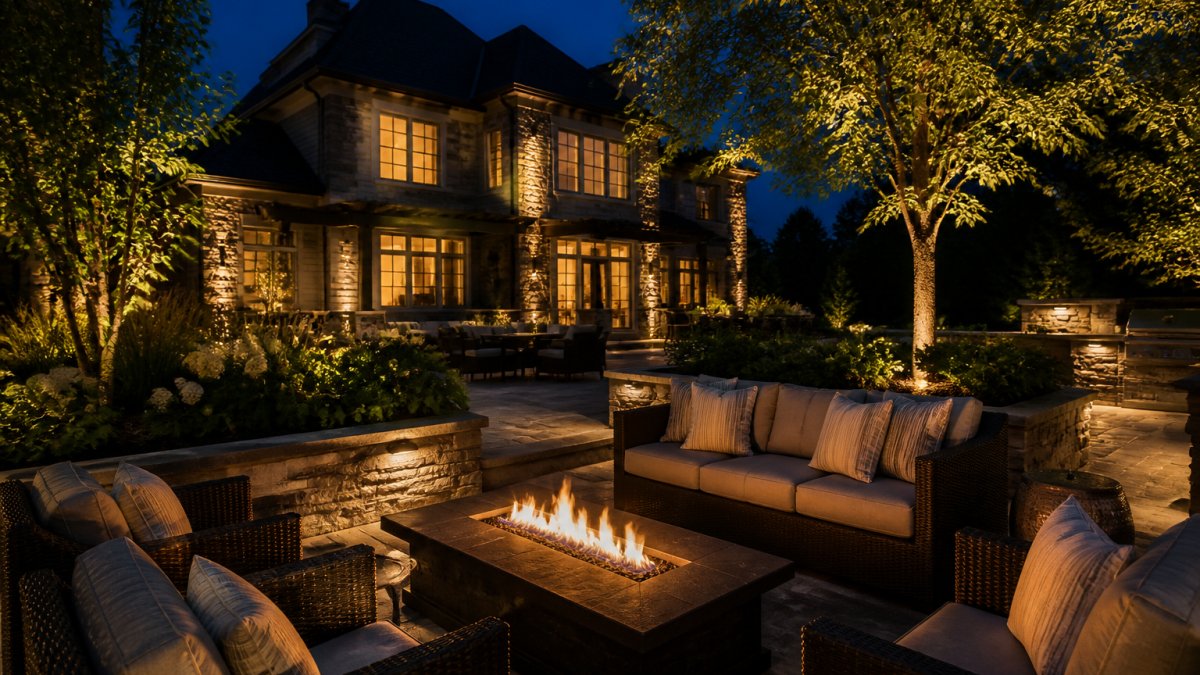
The strongest modern landscape lighting ideas share one trait: the fixture disappears and the effect remains. Screened lenses hide the LED source from view, so you see a pool of warm light on foliage rather than a row of bright dots.
What separates a trend that still looks current five years from now from one that dates a property is not the fixture shape, it is whether the idea solves a real viewing problem. Here are the ideas we specify most often, with the practical detail that makes each one work.
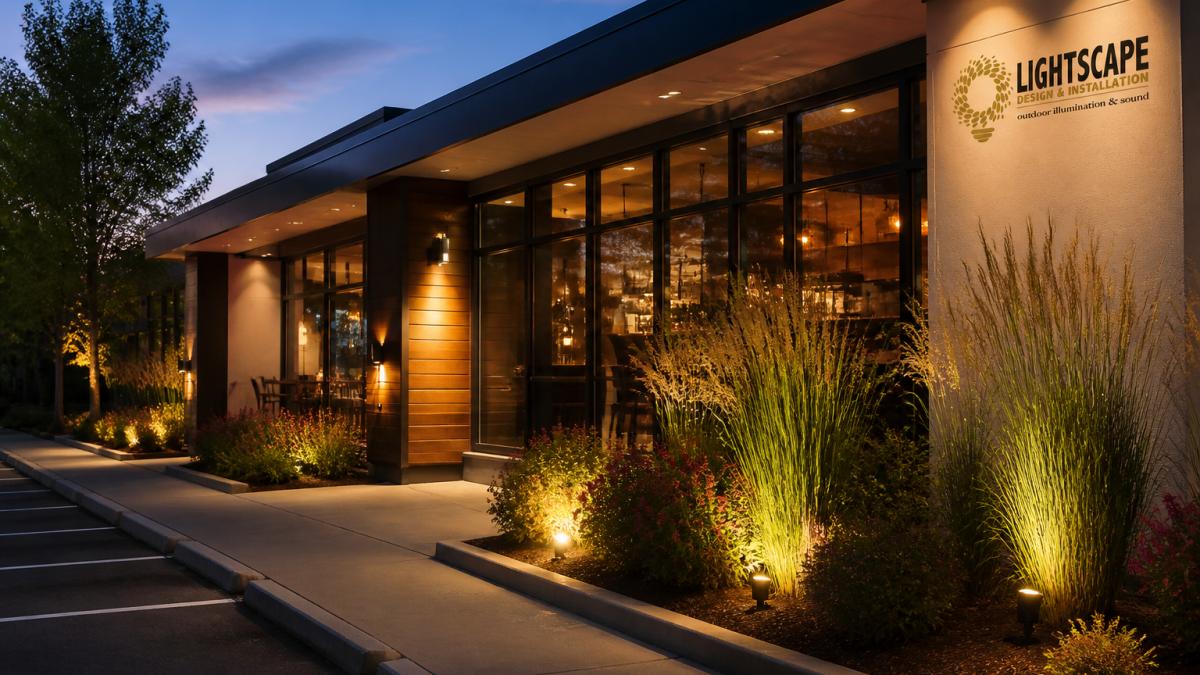
- Tree uplighting that grazes trunks and reaches into canopies. Narrow-beam uplights placed close to the trunk read as a column of light; wider beams set farther back open the canopy. The trade-off is glare: the closer and narrower the beam, the more the source can catch a sightline from a window or patio, so shielding matters as much as aiming.
- Grazing washes across brick, stone, and siding textures. A grazing fixture set a few inches from the wall and aimed nearly parallel to the surface rakes across the material and reveals relief that flat frontal light erases. Spacing is tighter than most homeowners expect because the beam must overlap to avoid scalloping.
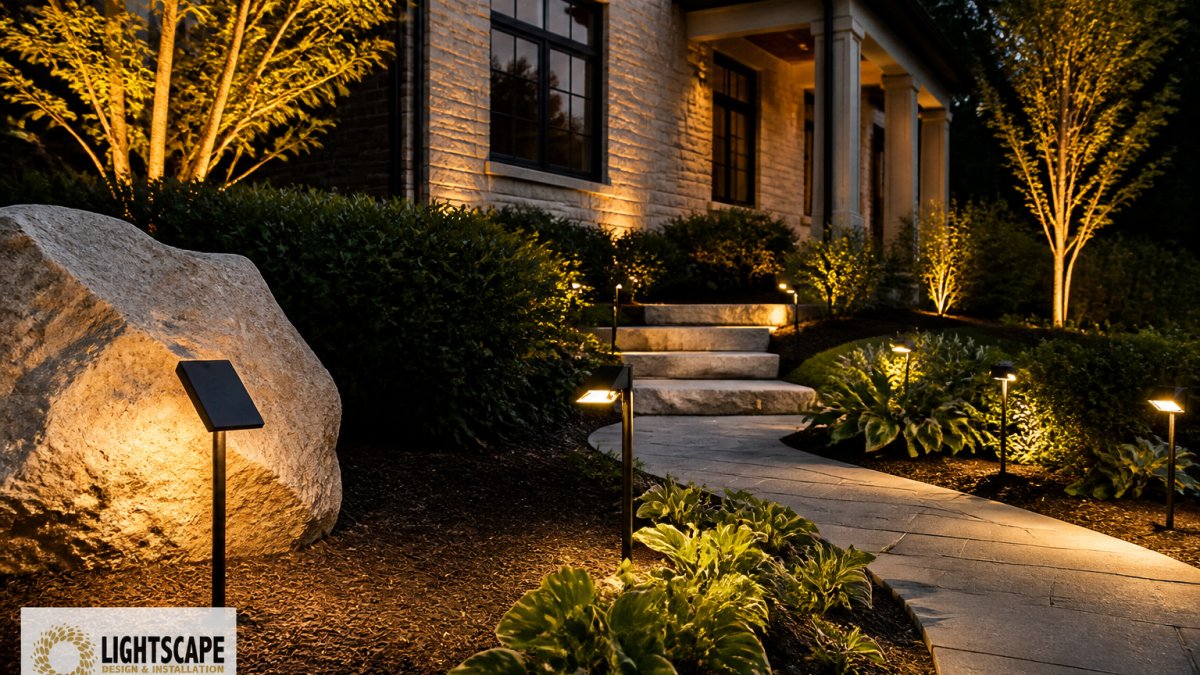
- Screened path lights that mark walkways without glare. The source sits below the shield and throws light down onto the walking surface. The test is simple: stand at the start of the path and look down its length, if you can see a bright point, the fixture is aimed or shielded wrong.
Durability is the quiet half of any trend. Outdoor fixtures live in rain, freeze-thaw cycles, and summer heat, so the housing material and finish decide whether the look survives. Powder-coated aluminum and solid brass resist corrosion far better than painted steel, and a fixture rated for wet locations with a sealed lens keeps water and insects out of the optical chamber. A fixture that runs hot will dim and shift color long before its advertised life, which is why thermal design matters as much as the LED itself. Our USA-made fixtures pair integrated LED technology with that kind of build quality, backed by a 20-year limited fixture warranty.
Want to see how these ideas look on properties like yours? Browse our gallery of installed projects across the area.
Here are the landscape lighting ideas we specify most often, with the practical detail that makes each one work.
| Idea | What it does | Key practical detail |
|---|---|---|
| Tree uplighting | Grazes trunks and reaches into canopies | Narrow beams close to trunk; shielding matters as much as aiming |
| Grazing washes | Reveals relief in brick, stone, and siding | Fixture a few inches from wall, aimed nearly parallel |
| Screened path lights | Marks walkways without glare | Source sits below the shield, throws light down |
| Hardscape lighting | Turns steps and seat walls into features | Sits inside masonry, adds no daytime clutter |
| Warm color temperatures | Flatters stone and wood rather than bleaching them | Consistent color across every fixture |
Layered Landscape Lighting: Ambient, Task, and Accent Working Together
Layered landscape lighting is the practice of combining three distinct roles: ambient light for overall soft illumination, task lighting for safety along paths and steps, and accent lighting for trees, architecture, and garden features. Each layer uses different fixture types, wattages, and beam spreads, and that variety is what creates depth. A yard lit only with accent spots looks theatrical. A yard lit only with path lights looks flat.
The part most trend articles skip is how to actually plan the layers so they cooperate instead of competing. A workable sequence looks like this:
- Map the zones first. Divide the property into entry, path, patio, garden, and architecture, and decide what each zone needs to do after dark. A garden bed may need only accent; a step run needs task; a patio needs comfortable ambient light for conversation.
- Assign a role to every fixture. If a fixture's job cannot be stated in one sentence, graze this wall, mark this step, open this canopy, it probably does not belong in the design.
- Set the accent layer first, then fill in. Accent light establishes the composition and the focal points. Ambient and task light then fill the gaps without washing out the accents. Doing it in the reverse order is how yards end up uniformly bright.
- Control the layers separately. Zoning and scheduling let the accent layer run on its own in the evening and the task layer stay available for late arrivals. A single switch for the whole system gives up most of the benefit of layering.
Spacing follows the job rather than a fixed rule. Path lights sit close enough that their pools of light overlap without doubling brightness, while uplights space out to graze a facade evenly.
Glare control is the quiet test of a layered design. Aim fixtures away from sightlines, shield and screen the sources, and keep light below eye level where possible.
For a deeper look at how these layers come together on a home's exterior, read our residential architectural lighting design tips.
Request a Lighting Consultation Today →
Architectural Outdoor Lighting: Revealing the Bones of the House
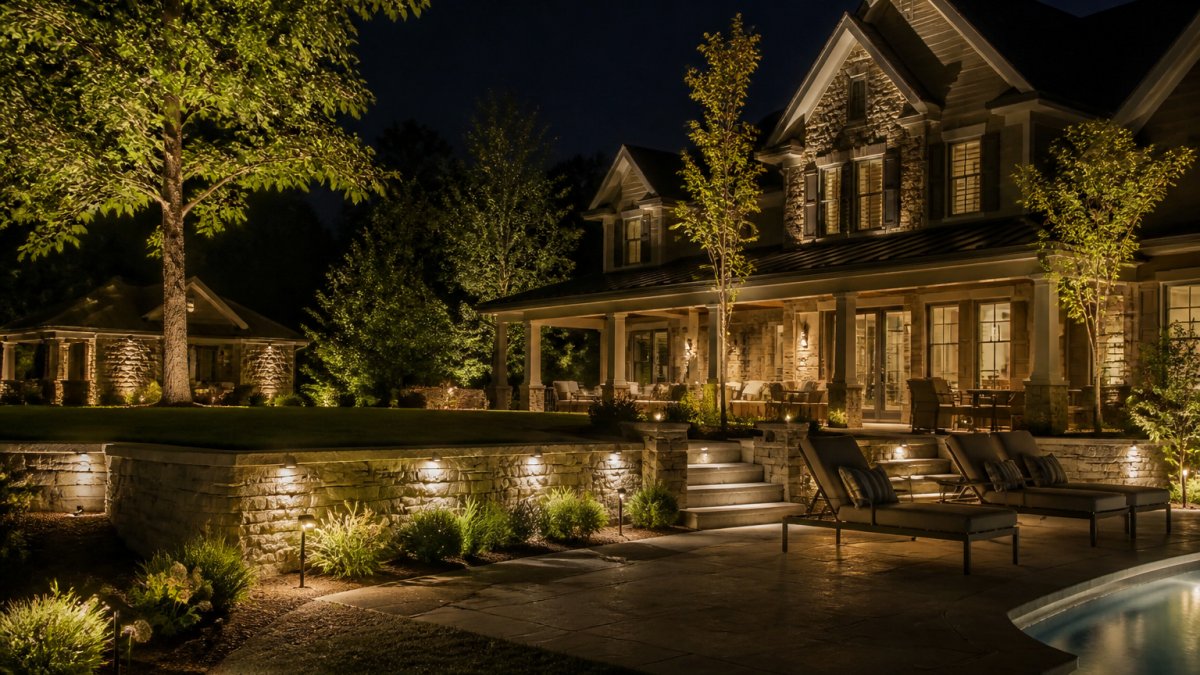
Architectural outdoor lighting treats the house itself as the subject. Uplights graze columns and chimneys, wash walls to reveal texture, and outline rooflines without turning the facade into a wall of light. The goal is to show the bones of the house, its mass, materials, and proportions, not to flood it. Customized beam spreads matter here more than anywhere: a narrow beam on a tall column and a wide wash on a brick wall call for different optics, and getting that wrong is what produces the harsh, artificial look many homeowners fear.
Low Voltage Landscape Lighting: The Backbone of a Modern System
Low voltage landscape lighting is a system that runs fixtures on a stepped-down electrical current, typically through a transformer, which makes it safe to install near soil, stone, and water while keeping energy use modest. It is the backbone of nearly every residential design we build because it allows many small, precisely aimed fixtures instead of a few powerful ones. Our low voltage landscape lighting buyer's guide walks through fixtures, transformers, and wire gauge before you commit.
Energy Use, Operating Costs, and Integrated LED Technology
Integrated LED fixtures draw a fraction of the power of older halogen systems, and because the LED is built into the fixture rather than swapped as a bulb, output and color stay consistent over time. Lower draw means a smaller transformer and lighter load on your electrical service. Operating costs depend on fixture count and run hours, so we design systems that can be zoned and scheduled rather than left on all night.
Pathway, Patio, and Hardscape Lighting: Safety and Ambiance
Pathway lighting does two jobs at once: it guides footsteps and it shapes how a garden reads after dark. The best path lights cast light downward onto the walking surface, with the source screened from view, so guests see the path and not the fixture. Patio lighting extends outdoor living into the evening with overhead string or bistro lights, wall washes, and low-level ambient glow that keeps conversation comfortable.
Planning a Layout: Fixture Spacing, Zones, and Glare Control
Good outdoor lighting design starts on paper, not in a fixture catalog. We divide a property into zones, entry, path, patio, garden, and architecture, and assign each zone a role and a schedule. Spacing follows the job: path lights sit close enough to overlap their pools of light without doubling brightness, while uplights space out to graze a facade evenly. Our guide to avoiding harsh outdoor lighting glare covers shielding, aiming, and low-glare fixture choices in detail.
Schedule a Complimentary Lighting Consultation
The fastest way to see what modern outdoor lighting would do for your property is to watch it happen at dusk. Our landscape lighting services begin with a complimentary on-site consultation and nighttime demonstration, where we aim real fixtures at your trees, walkways, and architecture so you can judge the effect in person rather than on a spec sheet. We design with USA-made fixtures, integrated LED technology, customized wattages and beam spreads, and consistent color temperature, all backed by a 20-year limited fixture warranty.
Frequently Asked Questions
What is the rule of thumb for outdoor lighting?
A simple starting point is to light what matters and leave the rest dark. Aim for layers: ambient light for patios, task light for paths and steps, and accent light for trees and architecture. Keep fixtures spaced so pools of light overlap slightly, and use shielded or screened fixtures to direct light downward. For a home, a typical plan includes path lights every 6 to 8 feet, uplights on two or three key trees, and wall wash or soffit lighting on the facade. Professional design tailors spacing to your property.
How do you layer outdoor landscape lighting?
Layered landscape lighting combines three functions: ambient light for overall visibility, task light for safety on paths and steps, and accent light for trees, shrubs, and architectural details. Start with ambient fixtures on the patio or deck, add path lights along walkways, then use uplights and spotlights to highlight focal points. Keep color temperature consistent (typically 2700K to 3000K) and use a single control system so all layers work together. This approach avoids flat, overly bright scenes and creates depth.
How can you light trees and architectural features without creating glare?
Glare comes from seeing the light source directly. To avoid it, use fixtures with shielded or screened lenses, aim them so the beam hits the target and not the viewer's eye, and place uplights close to the trunk so the light grazes the bark and canopy. For architecture, wall wash or soffit lighting with a wide beam and low output works better than spotlights. Dark-sky friendly design also means keeping light on the property and using timers or dimmers to reduce output after peak hours.
What color temperature is best for residential outdoor lighting?
Most residential outdoor lighting looks best between 2700K and 3000K, which produces a warm, welcoming glow without the blue tint of cooler LEDs. Consistency matters more than the exact number: mixing 2700K and 4000K fixtures on the same facade looks disjointed. For trees and foliage, 3000K often brings out green tones, while 2700K flatters stone and brick. Integrated LED fixtures from a professional line hold their color temperature over time, unlike some replaceable-bulb products that shift as they age.
Why choose low voltage landscape lighting over line voltage?
Low voltage landscape lighting (typically 12V) is safer to install, easier to run through gardens, and more flexible for adding fixtures later. It pairs well with integrated LED technology, which uses less energy and lasts for years without bulb changes. A professional low voltage system includes a transformer sized for the load, proper connections, and fixtures built for weather resistance. This is the standard for modern residential and commercial landscape lighting because it delivers controlled, consistent light with lower operating costs.
How much does a modern outdoor lighting system cost?
Pricing depends on the number of fixtures, the complexity of the design, and the property's layout. Rather than quoting a generic range, a professional designer will walk your property, recommend a fixture count, and provide a detailed proposal. For an accurate estimate, schedule a complimentary on-site consultation with Lightscape Design & Installation.
Your property already has the bones of a striking nighttime scene; it just needs light placed with intent. Lightscape Design & Installation designs and installs custom landscape and architectural lighting for homeowners and businesses across the St. Louis area, from Wildwood and Chesterfield to Ladue and Kirkwood. Get started with Lightscape Design & Installation and see your home the way it deserves to look after dark.