 how-to
7 Ways Landscape Lighting Adds Value to Your Home
Last Updated: October 30, 2026
Quick Summary
Landscape lighting adds value mainly as perceived value rather than a guaranteed dollar-for-dollar return at resale. It can increase home value through stronger curb appeal, safety, and nighttime first impressions, but the return depends on design quality, your market, and how the project is executed. Treat lighting as one part of a broader curb appeal strategy, not a standalone money printer.
- Perceived value is what a buyer feels; measurable resale value shows up in appraisals and final sale price.
- Design in buyer sequence: entry and door first, then path and steps, architecture, then landscape.
- Consistent warm light reads as inviting, while mixed color temperatures look chaotic.
- Integrated LED fixtures have no bulbs to replace, which reduces recurring maintenance.
- Our USA-made fixtures are backed by a 20-year limited warranty.
Table of Contents
- Does Landscape Lighting Add Value? What the Evidence Actually Shows
- Does Outdoor Lighting Increase Home Value? A Realistic Look at ROI
- Landscape Lighting Benefits That Buyers Notice First
- Lighting Design Choices That Affect Buyer Appeal
- Common Landscape Lighting Problems That Undermine Value
- Landscape Lighting Maintenance and Long-Term Ownership Costs
- Schedule a Nighttime Lighting Demonstration Before You List
- Frequently Asked Questions
Does Landscape Lighting Add Value? What the Evidence Actually Shows
Does landscape lighting add value? Yes, but mostly as perceived value rather than a guaranteed dollar-for-dollar return at resale.
Here is the honest version most articles skip. Outdoor lighting's effect on resale value is difficult to quantify precisely, so any precise percentage return should be treated with caution.
That does not make lighting a bad investment. It makes it a perception investment. You are not adding square footage.
Below, we break down what lighting actually does, where the value shows up, and how to judge whether it makes sense for your home.
Perceived Value vs. Measurable Resale Value
Perceived value is what a buyer feels about a property before any paperwork. Measurable resale value is what shows up in an appraisal or a final sale price.
Lighting moves the first one strongly and the second one indirectly. A well-lit home looks cared for. A dark one looks neglected, even when it is not. That gut reaction can influence how a buyer ranks your home against others on the same street.
- Perceived value: first impressions, emotional pull, listing photos
- Measurable value: appraisals, comparable sales, negotiated price
- The bridge: better perceived value can support a stronger asking position
The takeaway: treat lighting as one part of a broader curb appeal strategy, not a standalone money printer.
Does Outdoor Lighting Increase Home Value? A Realistic Look at ROI
Outdoor lighting can increase home value, but the return depends on design quality, your market, and how the project is executed. A thoughtful system tends to help a home stand out; a poorly aimed one can hurt it.
Return on investment for exterior lighting is rarely a clean number. It can show up as:
- Faster buyer interest when the listing photographs well
- Fewer "what's wrong with it" questions during showings
- A property that feels safer and more finished
Design quality plays a large role in the outcome. Two homes can spend similar amounts and get very different results, depending on whether the lighting is layered and glare-free or made up of a row of bright spots.
How to Estimate Payback Before You Buy
You cannot calculate exact payback without a sale, but you can build a sensible estimate. Start with professional cost expectations, then weigh them against the appeal you gain. The goal is not a precise percentage, it is a defensible decision.
Use this simple framework:
- Set your goal. Is this for selling soon, or for enjoying the property for years? A seller-focused scope is narrower than a long-term enjoyment scope.
- Scope the design. Focus on entries, paths, and two or three feature trees or architectural details. Restraint reads as quality; overlighting reads as commercial.
- Get a real quote. Pricing depends on fixture count, property size, and design complexity. For current pricing or a quote tailored to your property, contact Lightscape Design & Installation through our website.
- Estimate the appeal gain. Ask a local agent how lighting affects listings in your neighborhood, and treat any perception-based feedback as a signal rather than an appraisal line item.
- Compare against alternatives. New paint or landscaping may deliver more measurable value per dollar. Lighting often wins on perception per dollar, but it is not the only lever.
A worked example helps. Imagine a homeowner preparing to list in a few months.
Two caveats matter. First, perceived value is not appraised value, so do not expect a line-item bump. Second, design and installation quality are the variables you control.
For a deeper look at the value question, read our full breakdown on whether outdoor lighting increases property value.
Landscape Lighting Benefits That Buyers Notice First
Buyers often notice warmth, safety, and depth. The benefits that register fastest are the ones tied to how the property feels when someone pulls up after dark.
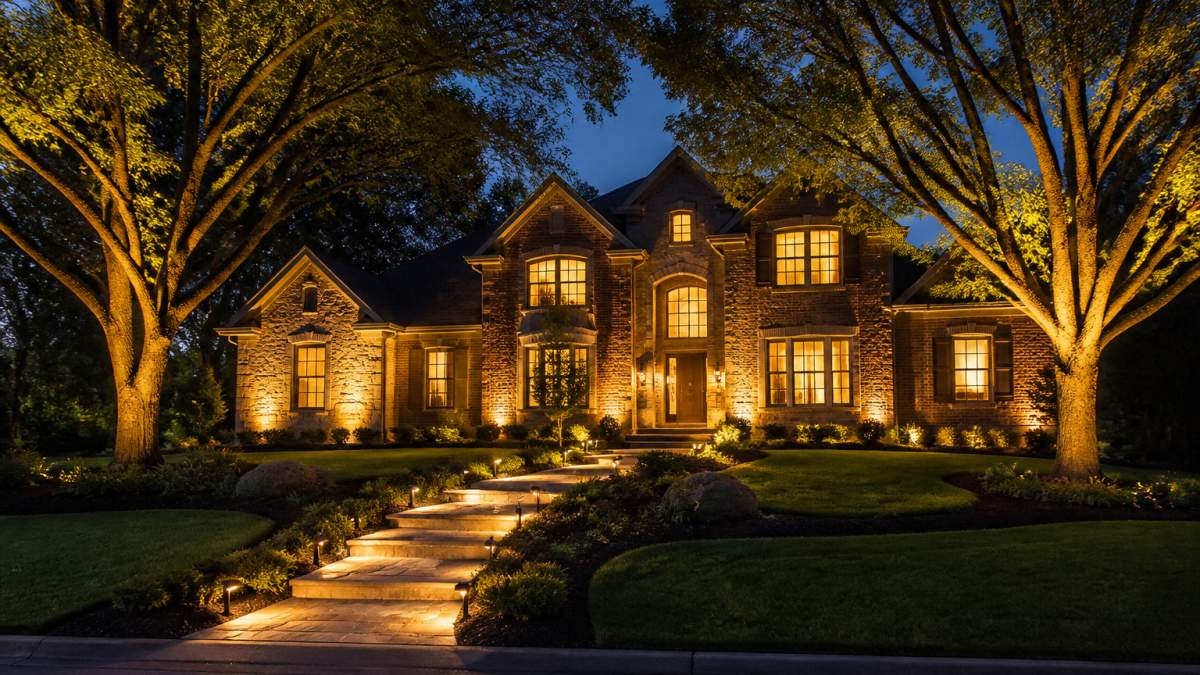
The landscape lighting benefits that matter most to buyers:
- A welcoming entry that signals the home is cared for
- Clear paths and steps that read as safe
- Depth and dimension that make the yard feel larger
- Highlighted architecture and trees that add drama
Curb Appeal and the Nighttime First Impression
Curb appeal does not end at sunset, since many people see a home in the evening before they ever book a showing.
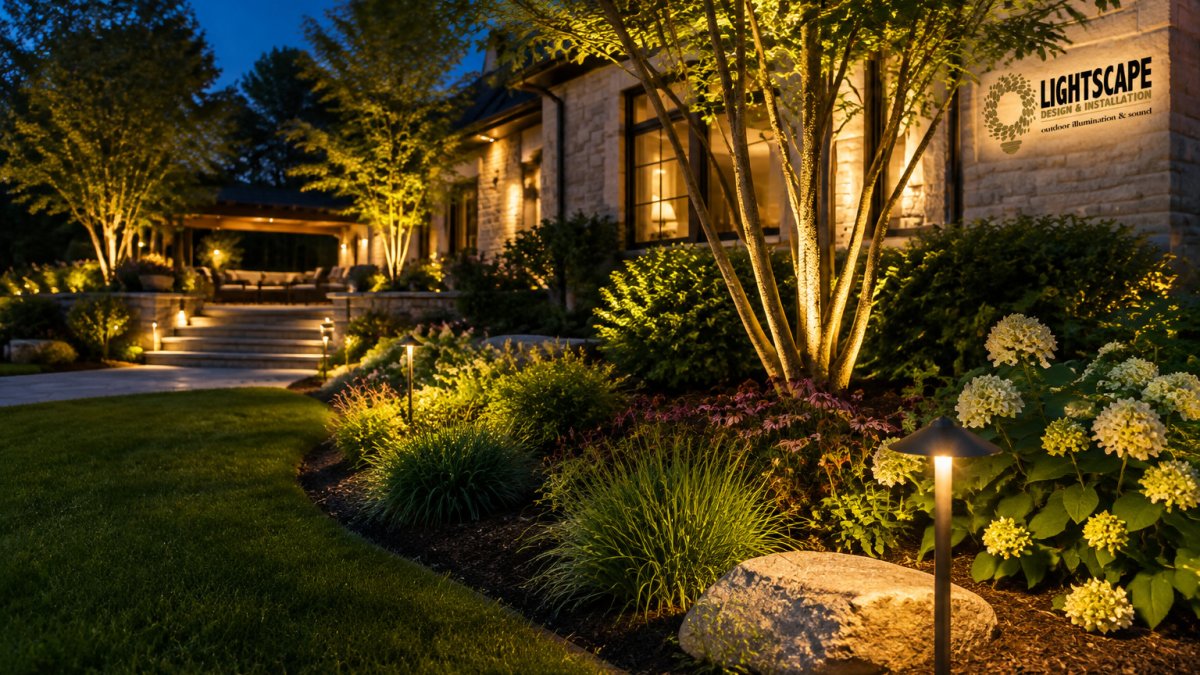
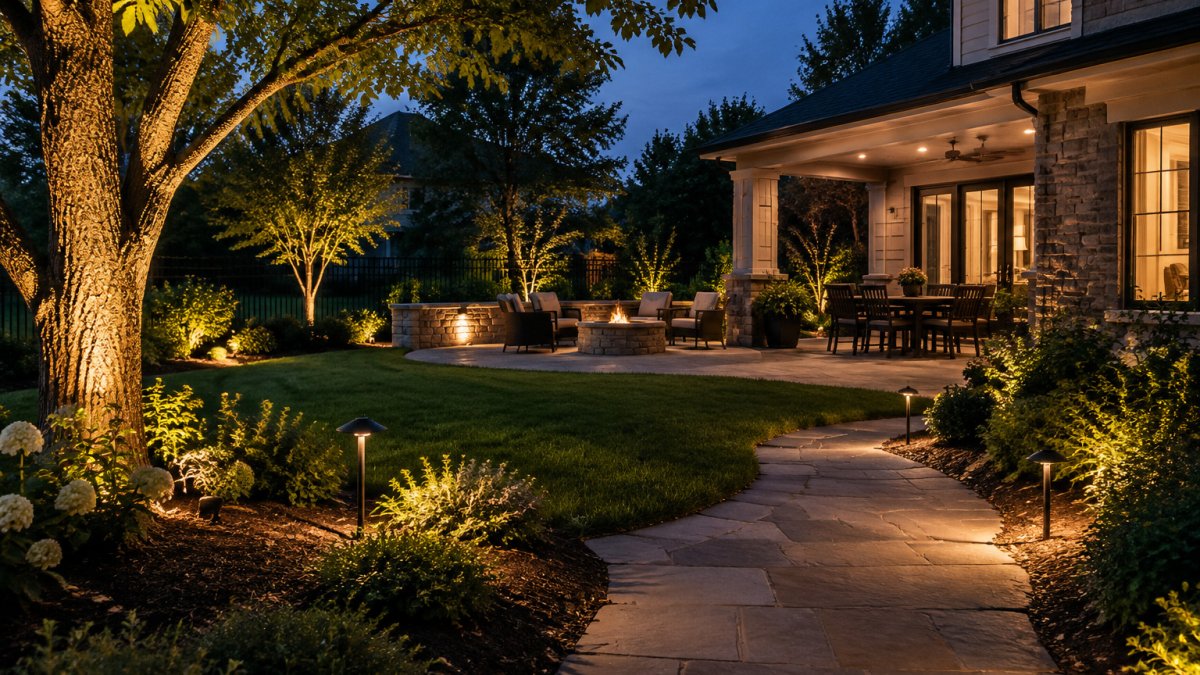
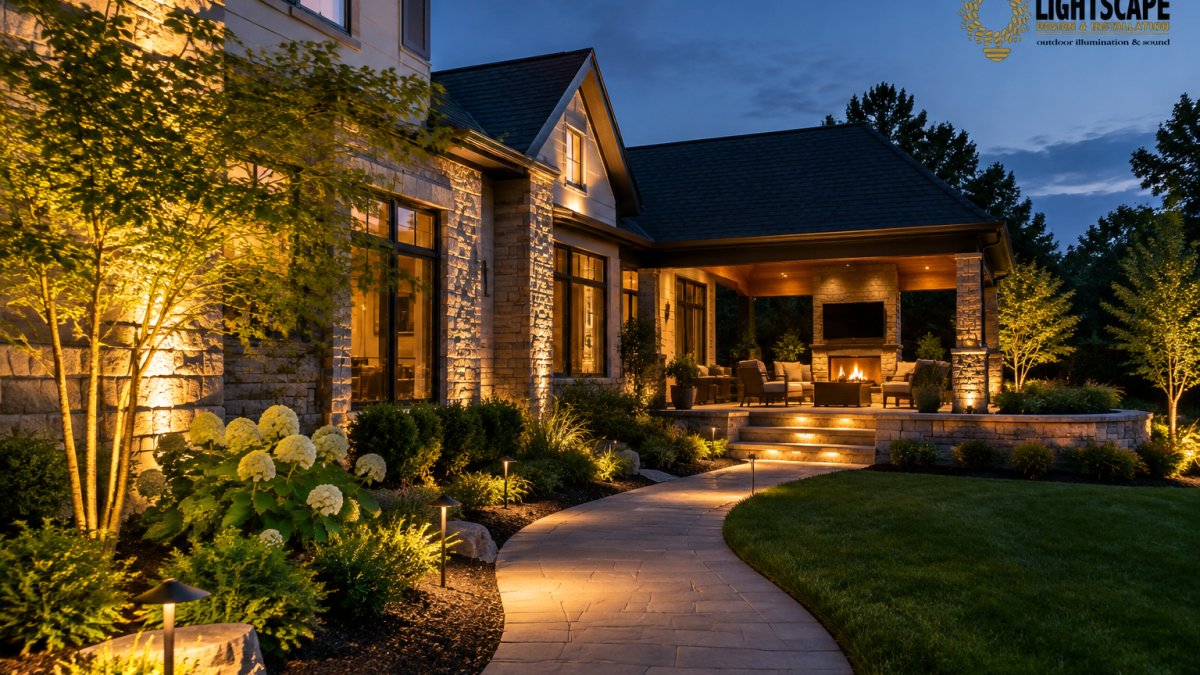
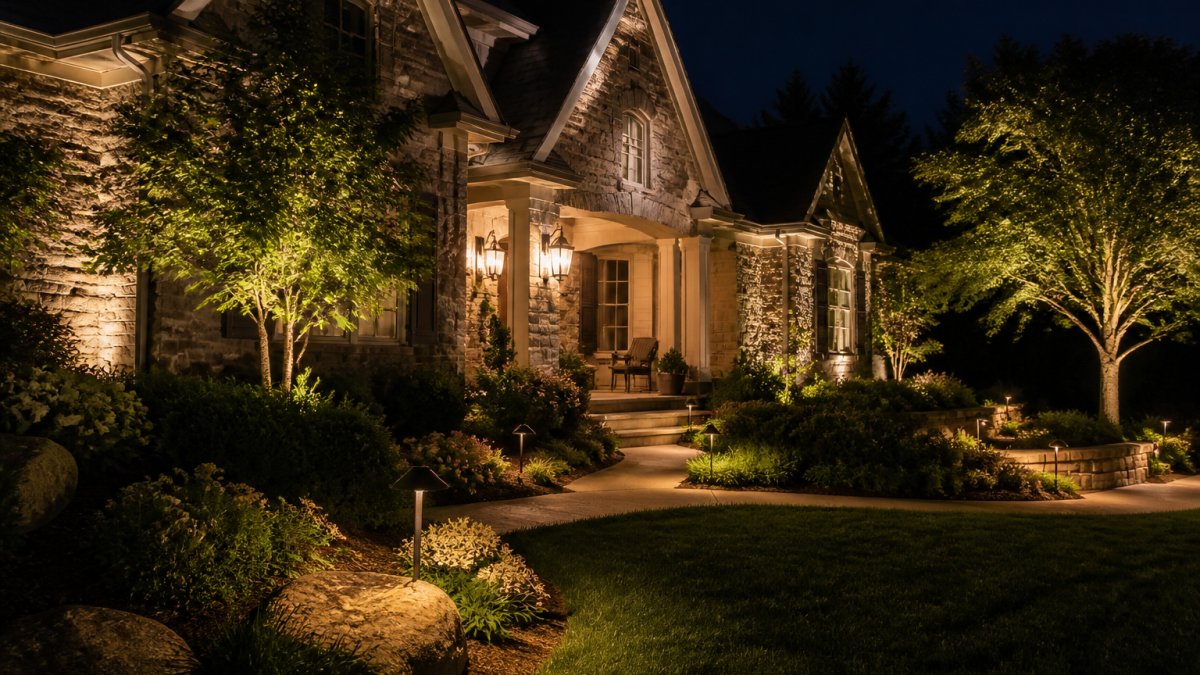
Strategic placement does the heavy lifting. Uplighting a mature tree, washing a stone facade, and lighting the walkway creates a scene instead of a spotlight. For a step-by-step approach, see our guide to landscape lighting for curb appeal.
Security, Safety, and Extending Your Outdoor Space
Security lighting and safety lighting are not the same as beauty lighting, but they overlap. Soft, even illumination around entries and paths improves visibility without the harsh glare of motion floodlights.
Lighting can extend the usability of outdoor space, since a patio or pool area that goes dark at dusk can become usable again into the evening.
Request a Lighting Consultation Today →
Lighting Design Choices That Affect Buyer Appeal
Design choices decide whether lighting helps or hurts. The difference between elegant and artificial comes down to a few decisions, and to the order in which you make them.
- Color temperature: consistent warm light reads as inviting; mixed colors look chaotic
- Beam spread: narrow beams accent; wide beams wash; matching them to the feature matters
- Glare control: shielded fixtures keep light on the target, not in eyes
- Layering: combine path, accent, and architectural light for depth
- Restraint: fewer, well-placed fixtures beat a yard full of spots
Professional design helps ensure each fixture is aimed so the light lands on the intended tree, wall, or step.
How to Prioritize Features Like a Designer
Buyers read a property in a sequence: the entry first, then the path, then the architecture, then the landscape. Design in that order.
- Entry and door. The front door should be the brightest, warmest point of arrival. A shielded fixture or two, aimed to graze the door and sidelights, signals welcome and care.
- Path and steps. Pathway and step lighting is a safety feature and a perception feature. Low, glare-free fixtures that mark the route without spotting the lawn read as thoughtful.
- Architectural details. Soft wash on a stone facade, brick, or columns adds depth. The goal is texture, not a flat spotlight.
- Feature trees. Tree uplighting creates drama and vertical scale. Two or three well-chosen trees beat a dozen evenly spaced spots.
- Hardscape and outdoor living. Hardscape lighting and a little outdoor audio extend the perceived living space, which buyers respond to.
Restrained vs. Overdone: What Buyers Actually See
A restrained, layered system reads as quality. An overdone one reads as commercial. The contrast is concrete:
- Restrained: warm, consistent color; light grazing surfaces; dark sky above; fixtures hidden or minimized; paths and steps clearly marked.
- Overdone: mixed color temperatures; glare in the eyes; light spilling onto neighbors; fixtures visible and misaimed; every shrub lit.
Glare can make a space feel smaller, and light spilling onto a neighbor's property can be a nuisance. Overlighting can flatten texture, while restraint can create depth and guide the eye.
Installation quality also matters. Integrated LED fixtures with customized wattages and beam spreads, consistent light color, and careful aiming support a layered look.
If you want to see the difference on your own property, a nighttime demonstration is the fastest way to compare restrained and overdone side by side.
Here is how the key design decisions separate a system that reads as quality from one that reads as commercial.
| Design choice | What works | What hurts |
|---|---|---|
| Color temperature | Consistent warm light reads as inviting | Mixed colors look chaotic |
| Beam spread | Narrow beams accent; wide beams wash | Mismatching beam to feature |
| Glare control | Shielded fixtures keep light on target | Glare in the eyes |
| Layering | Combine path, accent, architectural light | Every shrub lit |
| Restraint | Fewer, well-placed fixtures | Yard full of spots |
Common Landscape Lighting Problems That Undermine Value
Bad lighting can cost you appeal. The common landscape lighting problems we see most often are fixable, but they do damage until they are corrected.
- Fixtures aimed too high, creating glare and light trespass
- Mixed color temperatures across the yard
- Buried or damaged wiring that causes flickering
- Cheap fixtures that fade, corrode, or fail within a few seasons
- Overlighting that makes a home look commercial
Buying on price alone can be a costly mistake, since lower-cost fixtures may fail early and a patchwork of replacements can look worse than no lighting. Quality fixtures and thoughtful placement help protect the investment.
Landscape Lighting Maintenance and Long-Term Ownership Costs
Long-term cost matters as much as the install. Landscape lighting maintenance is modest when the system is designed well, but it is not zero.
Integrated LED fixtures have no bulbs to replace, which reduces recurring maintenance. Occasional cleaning, checking connections, and seasonal adjustments are typical upkeep.
Ownership costs to plan for:
- Periodic fixture cleaning and re-aiming
- Transformer checks and connection inspections
- Occasional repairs from landscaping or weather
A quality system with a strong warranty lowers the risk. Our USA-made fixtures are backed by a 20-year limited warranty.
Schedule a Nighttime Lighting Demonstration Before You List
The best way to judge value is to see it. A nighttime demonstration shows exactly how your home reads after dark, before you commit to anything. You can book a professional outdoor lighting consultation to schedule your demonstration and learn what to expect.
At Lightscape Design & Installation, we design and install custom landscape and architectural lighting for homeowners across the St. Louis area, from Wildwood and Chesterfield to Ladue and Kirkwood.
If you are preparing to sell, or simply want to enjoy your outdoor space more, contact Lightscape Design & Installation to schedule a consultation at https://lightscapestl.com/contact-us.
Frequently Asked Questions
Does landscape lighting increase a home's resale value?
It can help, but treat it as a curb-appeal and desirability upgrade rather than a guaranteed dollar-for-dollar return. A well-designed system can make listing photos and evening showings more appealing. The honest answer is that landscape lighting adds value most reliably when it is professionally designed, correctly aimed, and well maintained, because those are the systems that still look good on the day of a showing.
What are some common landscape lighting problems that hurt the investment?
The usual culprits are glare from badly aimed fixtures, mismatched color temperatures between old and new fixtures, visible wiring, and trees or shrubs that have grown over the lights. Cheap fixtures also fail early, which turns a value upgrade into a repair project. Placement and aiming matter as much as the hardware.
Does outdoor lighting increase home value enough to justify professional installation?
Professional installation protects the value you are trying to add. Correct aiming, consistent light color, and fixtures rated for years of outdoor use are what make a system look intentional instead of improvised. A professionally designed system with integrated LED technology has no bulbs to replace. Compare quotes that include design, aiming, and warranty coverage, not just fixture counts, and ask what maintenance is included.
How much landscape lighting maintenance does a system need?
Less than most people expect, if it was installed correctly. Integrated LED fixtures avoid bulb replacements, so routine care is mostly trimming plants away from fixtures, checking that aim points have not shifted, and clearing debris from path and step lights. A brief seasonal walkthrough before listing season catches most issues. Systems with a long fixture warranty and a local installer can be easier to keep in showing condition.
The challenge is simple: most homes look their best in daylight and disappear after dark. Lightscape Design & Installation can change that with a complimentary consultation, a nighttime demonstration, and a design built around your property. Get started with Lightscape Design & Installation and reveal your home's character after sunset.