 how-to
Does Outdoor Lighting Increase Property Value?
Last Updated: October 23, 2026
Quick Summary
Outdoor lighting can increase property value by improving curb appeal, shortening time on market, and making a home feel cared for, but there is no credible study proving a specific dollar-for-dollar return on exterior lighting. Treat it as a curb-appeal investment that pays back in enjoyment first and resale second.
- A dark facade reads as neglected to buyers, even when the house is in perfect shape.
- Evening showings and twilight listing photos help a home stand out and can mean fewer days on market.
- Path and step lighting improve safety, targeted illumination improves security, and lit patios extend usable living space.
- Plan lighting by area: entry and facade, walkways and steps, trees and beds, patios, and rear and side yards.
- A few well-aimed fixtures with controlled beam spreads look more expensive than a dozen floodlights and cost less to run.
Table of Contents
- Does Outdoor Lighting Increase Property Value? The Honest Answer
- How Outdoor Lighting Curb Appeal Shapes First Impressions
- Professional Landscape Lighting Benefits Beyond Resale
- A Practical Lighting Plan by Property Area
- Landscape Lighting Installation: Costs, Payback, and DIY Versus Professional
- Fixture Specifications, Energy Use, and Lighting Quality
- Outdoor Lighting Maintenance and Long-Term Performance
- Frequently Asked Questions
Does Outdoor Lighting Increase Property Value? The Honest Answer
Outdoor lighting can increase property value, but not in the way most online articles claim.
At Lightscape Design & Installation, we have designed and installed landscape lighting across Wildwood, Chesterfield, Ladue, and Kirkwood long enough to see the pattern repeat.
Below, we'll show you exactly how outdoor lighting affects value, where the honest limits are, and how to plan a system that pays you back in enjoyment first and resale second.
How Outdoor Lighting Curb Appeal Shapes First Impressions
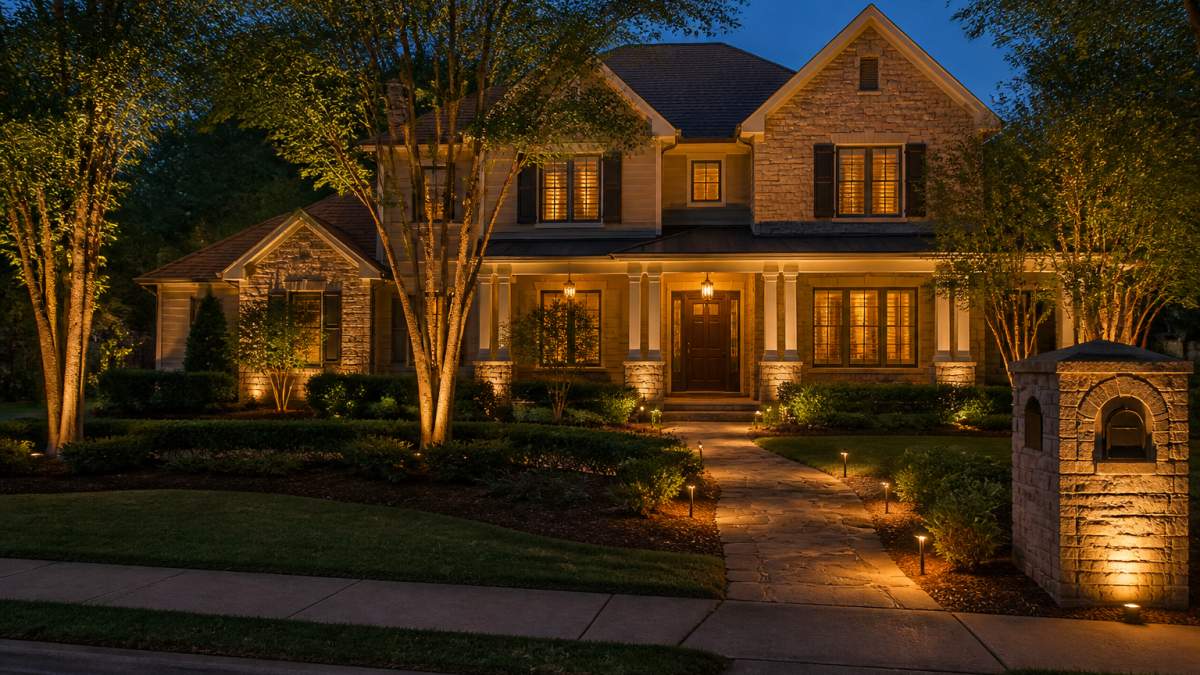
Curb appeal is the visual impression a property makes from the street, and lighting extends that impression into the evening hours when many buyers first drive past a listing. A home that looks warm and finished at night signals pride of ownership before a buyer ever steps inside.
What Buyers Notice in the First Thirty Seconds
Buyers form an impression fast. In the first moments of a drive-by or a listing photo, they register whether the home looks welcoming or dark and closed off.
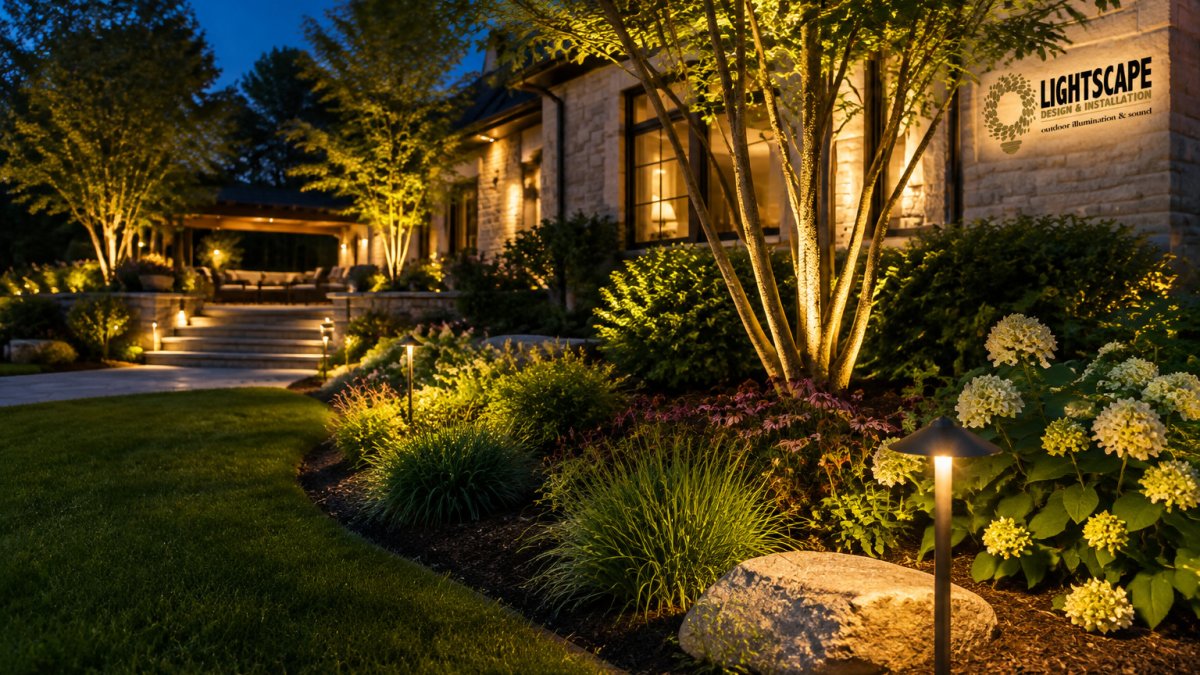
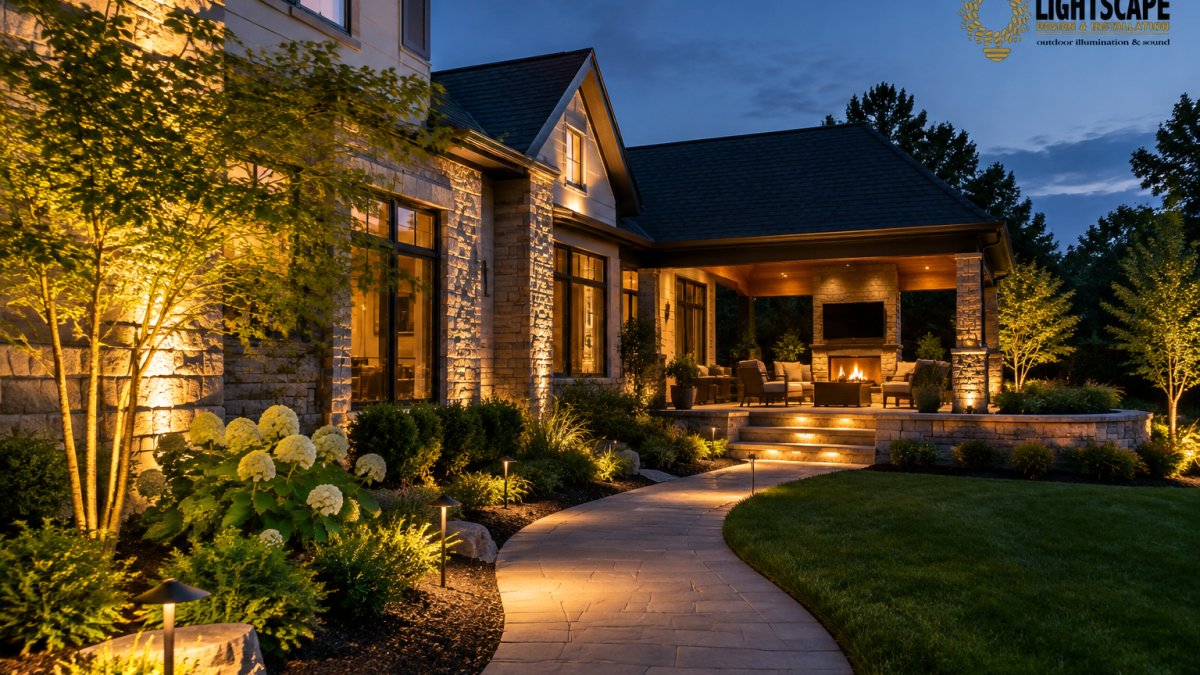
Path lighting along a walkway, soft washes on the architecture, and a few uplit trees change that read entirely. The home looks occupied, intentional, and safe.
Listing Photos, Evening Showings, and Days on Market
Most listing photos are shot in daylight. That leaves a gap: buyers browsing in the evening see a dark exterior, or worse, a blown-out phone photo with harsh security lights.
Professional landscape lighting solves this. Evening showings become possible, twilight photos look magazine-ready, and the listing stands out in a crowded feed. Fewer days on market often follows, because the home makes a stronger first impression than comparable listings nearby.
Professional Landscape Lighting Benefits Beyond Resale
Resale gets the headlines, but the everyday benefits of professional landscape lighting are what most homeowners actually notice first. You live in the home long before you sell it.
Safety, Security, and Outdoor Living After Dark
Good lighting does three jobs at once:
- Safety: pathway and step lighting reduce trips and falls on walkways, stairs, and hardscape edges.
- Security: targeted illumination removes dark pockets around entries, garages, and side yards without the harsh glare of floodlights.
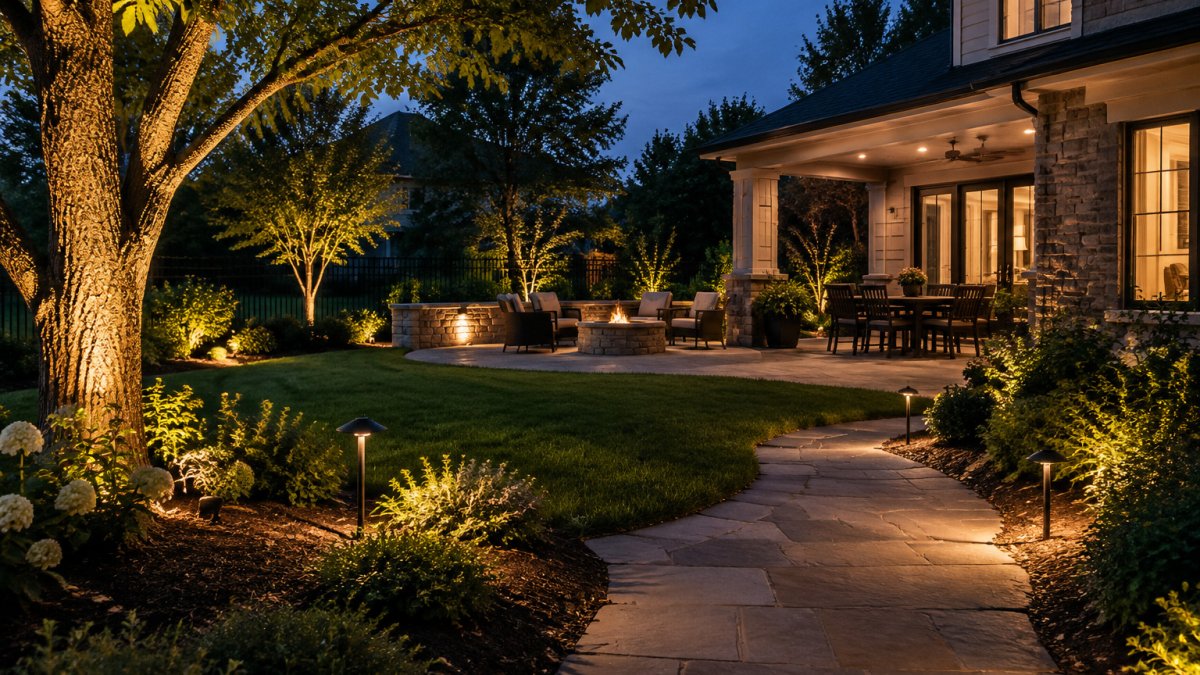
- Usability: patios, pools, and outdoor kitchens become usable into the evening, extending your living space without adding a single square foot.
That last point matters for value. A backyard you actually use feels like a bigger home, and buyers sense that when they tour a property after dark.
A Practical Lighting Plan by Property Area
A lighting plan should follow how people move through a property, not how fixtures happen to be spaced. Here is how we approach the main areas.
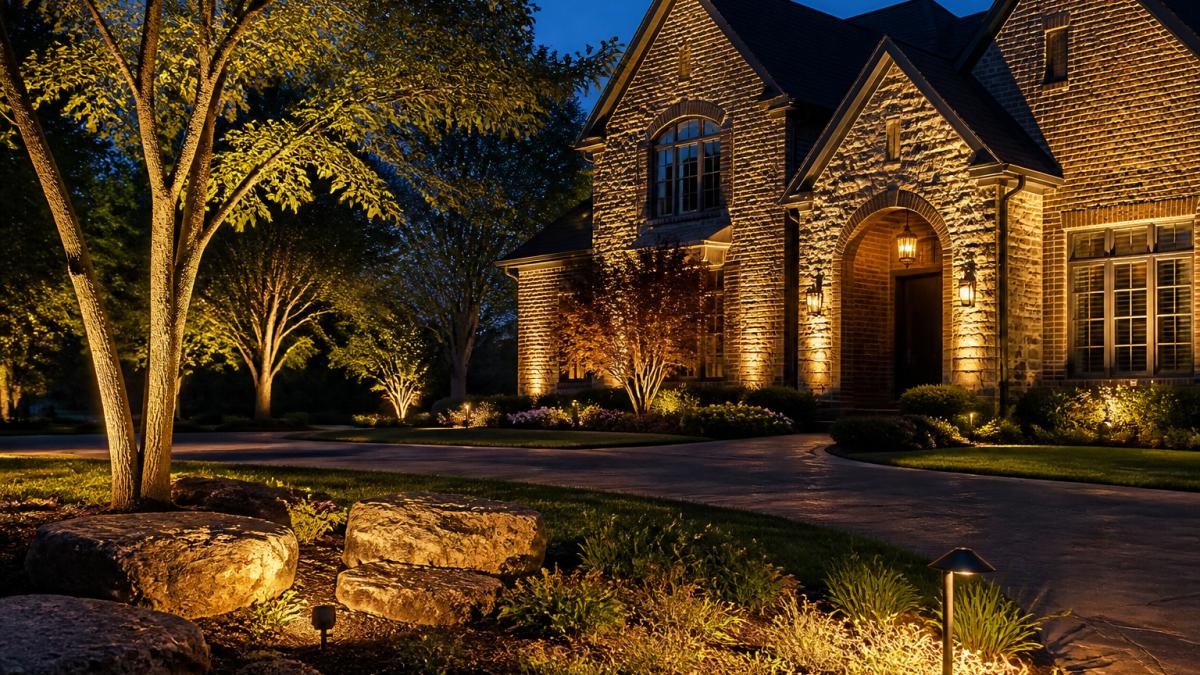
- Entry and front facade: architectural washes and a lit door surround create the first impression.
- Walkways and steps: low-glare path lights and step lights guide movement safely.
- Trees and garden beds: uplighting on mature trees adds depth and drama to the yard.
- Hardscape and patios: integrated hardscape lighting defines seating and cooking areas.
- Rear and side yards: softer coverage for security without harsh spill.
| Area | Lighting Type | Main Goal |
|---|---|---|
| Entry and facade | Architectural wash | Curb appeal |
| Walkways and steps | Path and step lights | Safety |
| Trees and beds | Uplighting | Depth and drama |
| Patio and hardscape | Hardscape lighting | Usability |
| Rear and sides | Low-level fill | Security |
This is the same framework we use on complimentary on-site consultations, adjusted for each property's trees, architecture, and grade.
Landscape Lighting Installation: Costs, Payback, and DIY Versus Professional
Landscape lighting installation is one of the few exterior upgrades where the cost range is genuinely wide, because the system is designed around the property rather than sold in a fixed package. A townhome courtyard in Kirkwood and a heavily wooded acre in Wildwood need very different fixture counts, transformer capacity, and wire runs. That is why we quote each project after an on-site walkthrough instead of publishing a flat number that would be wrong for most homes.
What drives the cost of a professional system:
- Fixture count and type. Architectural washes, path and step lights, tree uplights, and hardscape lights carry different fixture costs and different labor.
- Transformer and wiring runs. Longer runs and more zones require larger transformers and more buried cable.
- Property conditions. Mature trees, long driveways, stone hardscape, and grade changes add design and installation time.
How to Think About Payback Honestly
Treat exterior lighting as a curb-appeal investment, not a guaranteed return. There is no credible study that assigns a specific dollar-for-dollar recoup on landscape lighting the way remodeling cost-versus-value reports do for kitchens and baths.
A useful way to frame payback is in three buckets:
Request a Lighting Consultation Today →
- Enjoyment value while you own it. Safer steps, usable patios, and a home that looks finished every evening.
- Marketing value at resale. Better evening photos, stronger drive-by impressions, and a property that stands out in a crowded feed.
- Operating cost. Modern LED systems draw far less power than older halogen setups, and because fixtures are aimed rather than blasted, you use fewer of them, keeping the electric bill and light pollution down.
No honest contractor can promise you a specific percentage back. What you can count on is a better-looking property, safer nights, and more usable outdoor space for as long as you live there.
DIY Versus Professional: Where Each Approach Breaks Down
DIY versus professional comes down to three things:
- Design. Placement and aiming decide whether a system looks custom or cluttered. A fixture aimed two feet off target can turn a dramatic tree into a hot spot.
- Wiring and connections. Buried lines, waterproof connections, and transformer load calculations are where DIY systems fail first, often a season or two after install.
- Service. When something goes wrong, a local installer answers the phone and honors a warranty.
A common pattern we see on service calls: a homeowner buys a kit, installs it over a weekend, and by the second winter half the run is dark. Rebuilding the connections and re-aiming the fixtures costs more than designing it correctly the first time. That is the real DIY trade-off, not the fixture price, but the redo.
Fixture Specifications, Energy Use, and Lighting Quality
Fixture quality is the difference between a system that looks intentional and one that looks like a hardware-store special. Most articles stop at "use LED" and "warm white." The specifications below are what actually determine whether a system looks custom, how long it lasts, and what it costs to run.
Color Temperature: Consistency Beats a Number
Color temperature is measured in kelvin (K) (Kelvin: Introduction | NIST). Landscape and architectural lighting typically lives in the warm range, and the single most important rule is consistency: every fixture on the property should match. Mixed color temperatures read as cheap, with some lights looking blue and others orange. We specify a single warm color across the whole system so the facade, paths, and trees read as one design rather than a patchwork.
Brightness, Beam Spread, and Glare Control
Brightness (lumens) is only half the story. Beam spread, the angle of light a fixture throws, decides whether light lands where you want it:
- Narrow beams suit tall tree trunks and architectural details, throwing light up rather than out.
- Wide beams wash broad facades and hardscape, but overshoot on narrow targets and create hot spots.
- Shielding and glare control keep light out of the viewer's eyes. A bright fixture you can see the source of looks cheaper than a dimmer one aimed cleanly at its target.
The mistake we see most often is lighting for brightness instead of for layers. A few well-aimed fixtures with controlled beam spreads look more expensive than a dozen floodlights, and they cost less to run. Customized wattages and beam spreads let us tune each fixture to its target instead of over-lighting the whole yard.
Integrated LED: Why No Replaceable Bulbs Matters
Integrated LED technology means the light source is built into the fixture rather than screwed in as a bulb. That matters for three reasons:
- Stable output and color. Replaceable bulbs drift in color and brightness as they age and as different batches are swapped in. Integrated LED holds its color across the system for years.
- Fewer failure points. No socket to corrode, no bulb to loosen in freeze-thaw cycles.
- Sealed durability. Integrated fixtures are built to shed water and resist the temperature swings that shorten the life of bulb-based fixtures.
Energy Use, Controls, and Light Pollution
Modern LED systems draw far less power than older halogen setups, and because fixtures are aimed rather than blasted, you use fewer of them. That keeps both the electric bill and light pollution down.
Controls do the rest of the work:
- Timers and photocells turn the system on at dusk and off on a schedule, so it never runs in daylight.
- Zone controls let you run paths and entries every night while saving feature lighting for entertaining.
- Aim and shielding keep light on the property rather than spilling into neighbors' yards or the sky, better for neighbors, better for wildlife, and better for the look of the system.
If you want to see how these specifications translate on an actual property, a nighttime demonstration is the fastest way to compare beam spreads and color in person rather than on a spec sheet.
Outdoor Lighting Maintenance and Long-Term Performance
Outdoor lighting maintenance is minimal on a well-built system, but it is not zero. Even the best fixtures face rain, freeze-thaw cycles, and landscaping changes.
A simple annual routine keeps a system performing:
- Walk the property at night and note any dark or misaimed fixtures
- Trim plants that have grown over fixtures or beams
- Check connections after heavy storms
This is where our 20-year limited fixture warranty matters. Premium USA-made fixtures and integrated LED technology mean fewer failures, and a locally owned team is still here to honor the warranty years after installation.
Selling a home with a dark exterior leaves value on the table, and living in one means missing the best hours of the day outside. If you want to see what your property looks like after dark, schedule a complimentary consultation or nighttime lighting demonstration at lightscapestl.com.
Frequently Asked Questions
Does outdoor lighting improve curb appeal?
It does, and curb appeal is where lighting earns its keep fastest. A well-designed system draws the eye to architecture, trees, and walkways that disappear after sunset, so the property reads as cared for and complete. Buyers browsing listings at night and neighbors driving past both register that polish. The key is design quality: layered, glare-controlled light on the right features beats a scatter of bright fixtures every time. Professional landscape lighting benefits show up most in that first impression.
Which outdoor lighting features are most appealing to homebuyers?
Path lighting along walkways and steps, tree uplighting on mature specimens, and soft washes on the front facade top most buyers' lists. Hardscape lighting on patios and retaining walls ranks close behind, especially in homes marketed for outdoor entertaining. Warm, consistent color across fixtures matters as much as placement. A system that highlights the landscaping and architectural features without glare signals quality construction and thoughtful maintenance, which supports perceived value at showing time.
Is professional landscape lighting worth the investment?
For most homeowners, yes, when the goal is appearance, safety, and usable outdoor space rather than a guaranteed dollar-for-dollar return. Landscape lighting installation by a professional delivers consistent aiming, proper voltage, and fixtures built to last, which is where DIY kits usually fall short. Value claims vary by market, so treat added resale dollars as a bonus. The dependable payoff is a property that looks better, feels safer, and gets used more after dark.
What are some common problems with landscape lighting?
The usual culprits are glare from poorly aimed fixtures, mismatched color temperature between old and new units, water intrusion at connections, and voltage drop on long runs. Cheap fixtures with replaceable bulbs add another failure point. Integrated LED fixtures from a reputable maker, installed with sealed connections and correct transformer sizing, avoid most of these. Outdoor lighting maintenance, mainly seasonal aiming checks and fixture cleaning, keeps the system performing the way it did on day one.