 how-to
Does Outdoor Lighting Improve Backyard Safety?
Last Updated: November 8, 2026
Quick Summary
Yes, outdoor lighting improves backyard safety because most backyard injuries happen after dark, when people cannot see what is under their feet. Light helps people see hazards like roots, toys, and uneven ground, and it also helps people see each other.
- Light the ground, not the eyes, so a soft pool of light on a path beats a bright beam aimed at a doorway.
- Outdoor step lighting prevents the most common backyard injury: a fall at a step, ledge, or grade change.
- Motion sensors work best as a supplement to steady lighting rather than as the main plan.
- A layered yard uses low path light, mid-level shrub and wall light, and tall tree uplight to remove hiding spots.
- Shield every fixture, aim light down onto surfaces, and use warm, consistent color to keep glare in check.
Table of Contents
- How Outdoor Lighting Improves Backyard Safety
- Outdoor Pathway Lighting: Guiding Safe Navigation
- Outdoor Step Lighting: Preventing Falls at Elevation Changes
- Motion Sensor Outdoor Lights: Convenience and Security
- Landscape Lighting for Home Security: Layering Light for Deterrence
- A Backyard-Specific Lighting Plan for Patios, Decks, and Pools
- Avoiding the Downsides: Glare, Light Pollution, and Overlighting
- Schedule a Nighttime Lighting Demonstration
- Frequently Asked Questions
How Outdoor Lighting Improves Backyard Safety
Does outdoor lighting improve backyard safety? Yes, and the reason is simple: most backyard injuries happen after dark, when people cannot see what is under their feet. Lighting is the cheapest way to fix that.
The answer comes down to two jobs. Light helps people see hazards. Light also helps people see each other.
Visibility Reduces Trip Hazards and Falls
A dark yard hides roots, toys, garden hoses, and uneven ground. Each one is a trip hazard. Good lighting shows the ground before a foot lands on it.
Pay attention to the spots people cross most:
- Walkways and paths
- Steps and stoops
- Driveway edges
- Patio borders
- Garden beds next to seating
Light the ground, not the eyes. A soft pool of light on a path beats a bright beam pointed at a doorway.
Deterrence and the Limits of Lighting as Security
Lighting helps with security, but it is not a force field. A well-lit yard removes hiding spots and makes a house look occupied.
The limits matter. Light does not stop a determined intruder. It works best as one layer among many: locks, alarms, trimmed shrubs, and neighbors who notice.
Think of lighting as a deterrent, not a guarantee. That honest framing keeps expectations in the right place.
For a broader walkthrough of the basics, our guide on safe outdoor lighting for homes covers the full how-to.
Outdoor Pathway Lighting: Guiding Safe Navigation
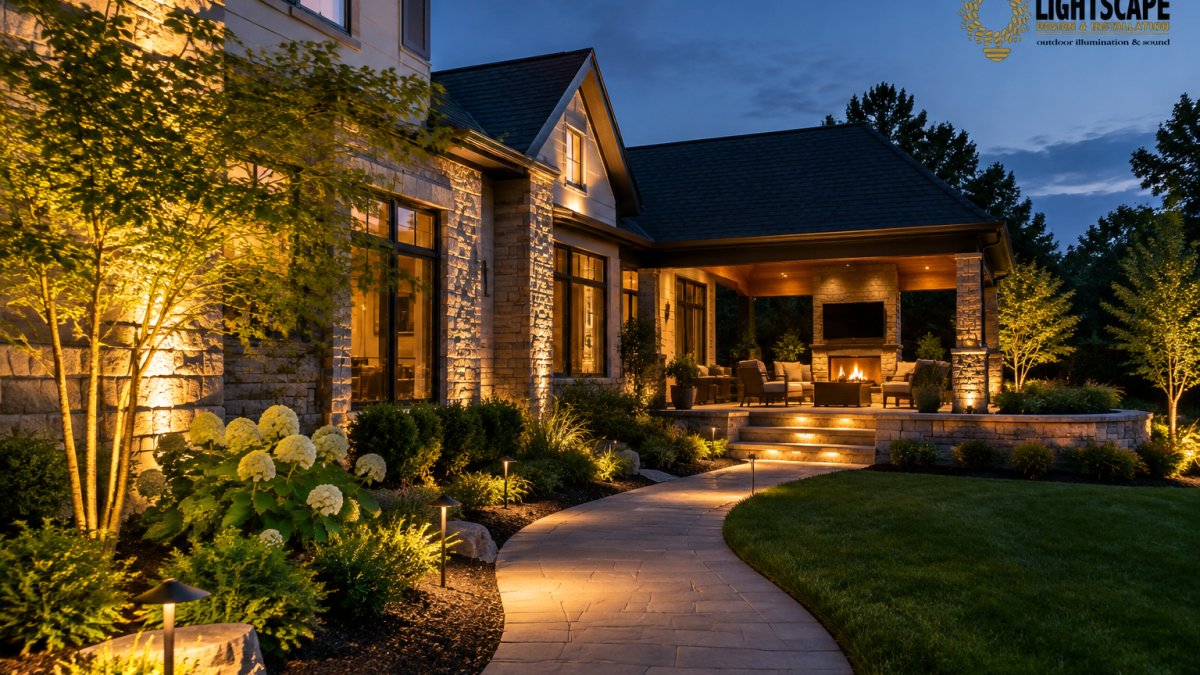
Outdoor pathway lighting is the backbone of a safe yard. It marks the route and keeps guests from wandering into beds or off a retaining wall.
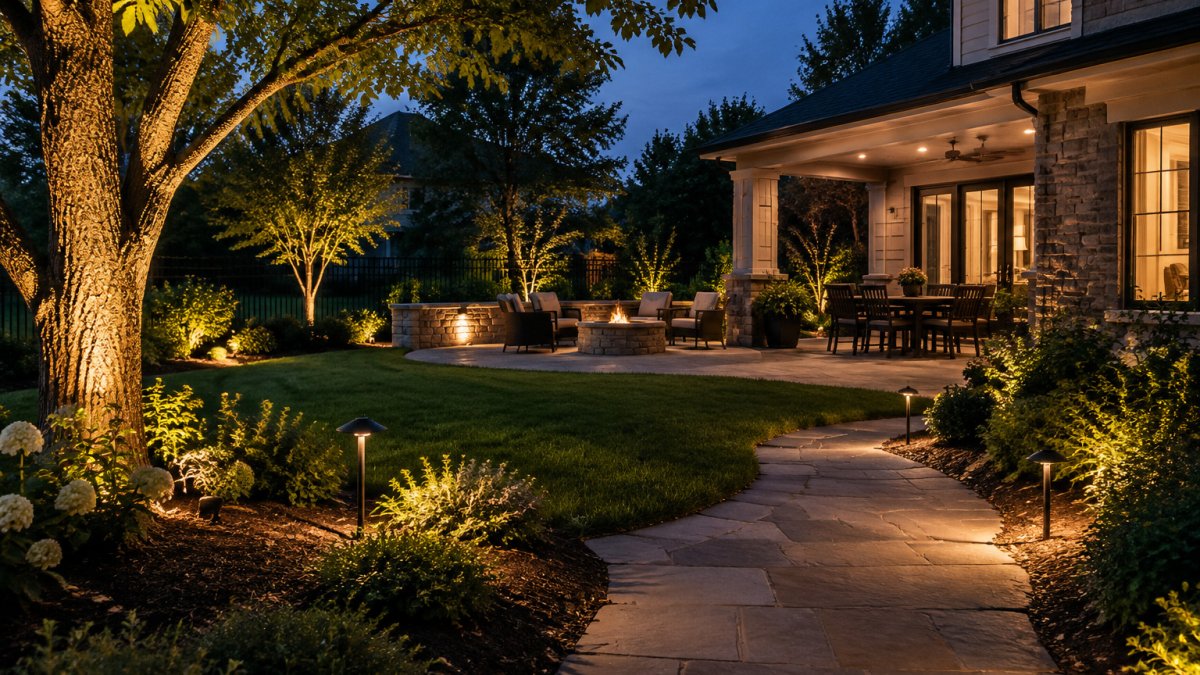
Path lights should sit low and aim down. The goal is a soft wash on the walking surface, not a bright cone that blinds anyone coming up the walk. Spacing matters more than count. Too few lights leave dark gaps. Too many turn a path into a runway.
Thoughtful fixture placement matters on every path. Our Pathway & Safety Lighting service focuses on deliberate placement, with customized wattages and beam spreads matched to each route.
Outdoor Step Lighting: Preventing Falls at Elevation Changes
Outdoor step lighting prevents the most common backyard injury: a fall at a step, ledge, or grade change. A single dark stair can end a cookout early.
Targeted light on each tread makes steps easier to see. Shielded fixtures are one way to light a step without glare.
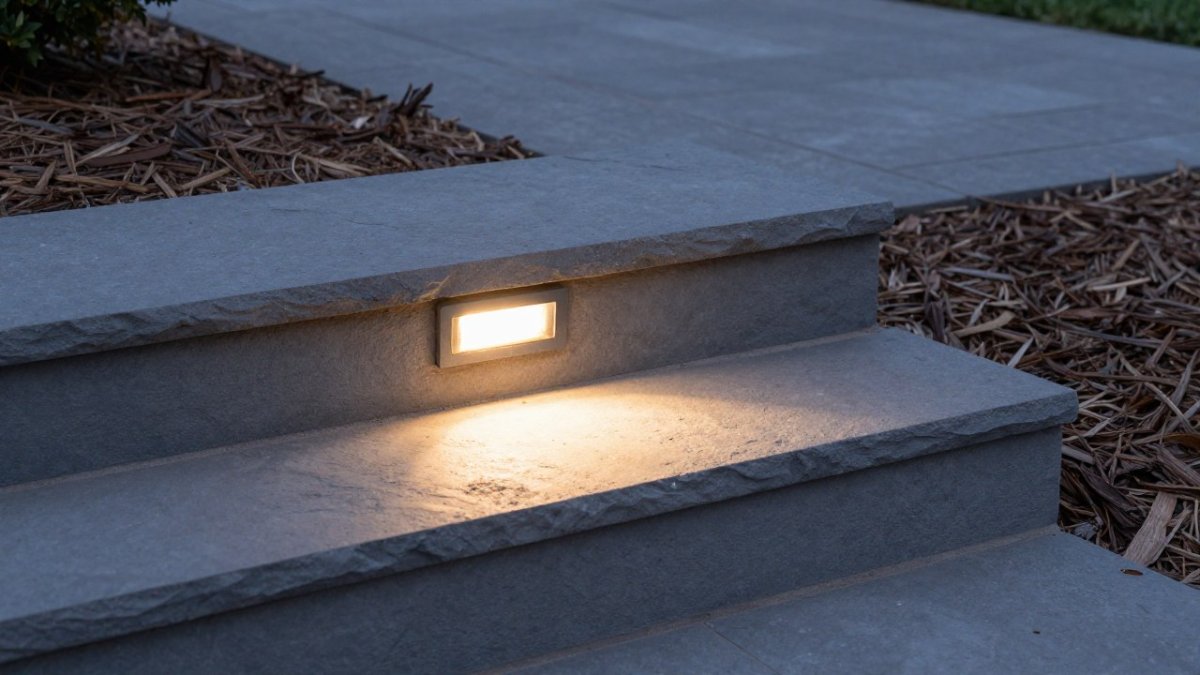
Watch out: a bright fixture aimed at the face of a step creates glare that is worse than darkness. The eye adjusts to the bright spot and the rest of the step goes black. Shielded, downward light solves it.
Steps deserve special care in homes with older adults or young children. A fall risk at a step is a real hazard, and light is the simplest fix.
Motion Sensor Outdoor Lights: Convenience and Security
Motion sensor outdoor lights turn on when something moves. They are handy at a side door, a garage, or a back gate, and they are the most common do-it-yourself addition homeowners make after a security concern.
Motion sensors work best as a supplement to steady lighting rather than the main plan. Pairing sensors with low-level light elsewhere helps keep the yard usable while adding a layer for late-night movement.
Controls Compared: Sensors, Timers, and Photocells
Most homeowners lump every control into "motion lights," but the three main types do different jobs:
- Motion sensors react to movement and stay off otherwise. They save energy and draw attention to activity, but they can be triggered by pets, windblown branches, and passing cars, and the sudden brightness can be jarring.
- Timers turn lights on and off on a schedule. They make a house look occupied at predictable hours, which is useful when you are away, but they do not respond to what is actually happening in the yard.
- Photocells switch lights on at dusk and off at dawn. They are the simplest way to keep path and step lighting running every night without thinking about it, and they pair well with a timer for late-night shutoff.
A common pattern in lighting design is a photocell for steady safety layers with motion sensors reserved for specific points.
Energy Use and Upkeep
Integrated LED fixtures draw far less power than the halogen and incandescent fixtures they replace, and because the LED is built into the fixture rather than sold as a replaceable bulb, output and color stay consistent over the system's life. Pairing LEDs with a photocell or timer means the lights run only when they are needed, which keeps energy use modest without sacrificing coverage.
Maintenance is mostly about keeping the system aimed and clear. Fixtures shift, mulch rises, and shrubs grow into the beam path over a season. Periodic checks to re-aim fixtures and trim growth away from lenses help the system keep doing its job. Lightscape offers long-term maintenance, and fixtures carry a 20-year limited warranty.
Watch out: a motion sensor aimed at a busy sidewalk or street will trigger constantly and annoy neighbors. Aim sensors at your own approach paths, not at public right-of-way.
The three main control types do different jobs, so here is how they compare.
| Control type | What it does | Key difference |
|---|---|---|
| Motion sensors | React to movement and stay off otherwise | Can be triggered by pets, branches, passing cars |
| Timers | Turn lights on and off on a schedule | Make a house look occupied at predictable hours |
| Photocells | Switch lights on at dusk and off at dawn | Simplest way to run path and step lighting nightly |
Landscape Lighting for Home Security: Layering Light for Deterrence
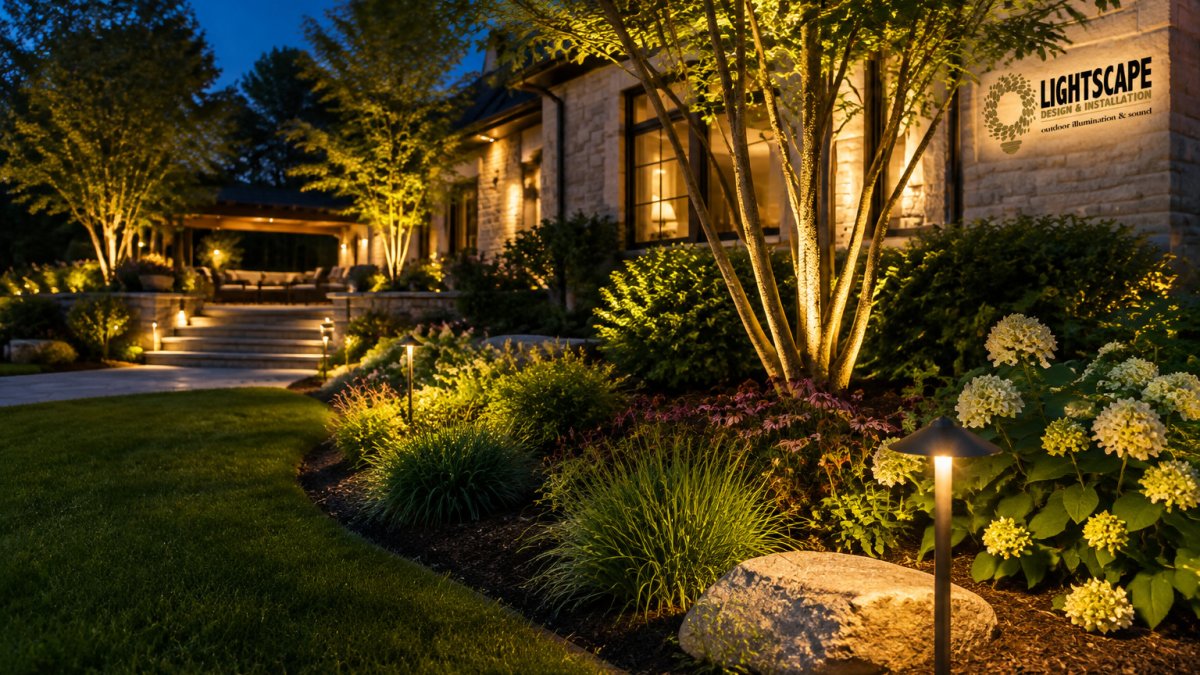
Landscape lighting for home security works by layering. Three layers do the job: low path light, mid-level shrub and wall light, and tall tree uplight.
Each layer does something different:
- Path light keeps walkways safe.
- Wall and shrub light removes hiding spots near the house.
- Tree uplight adds height and makes the property read as occupied.
A layered yard is harder to approach unseen. It also looks better than a single floodlight blasting the lawn. Security and curb appeal pull in the same direction when the design is done well.
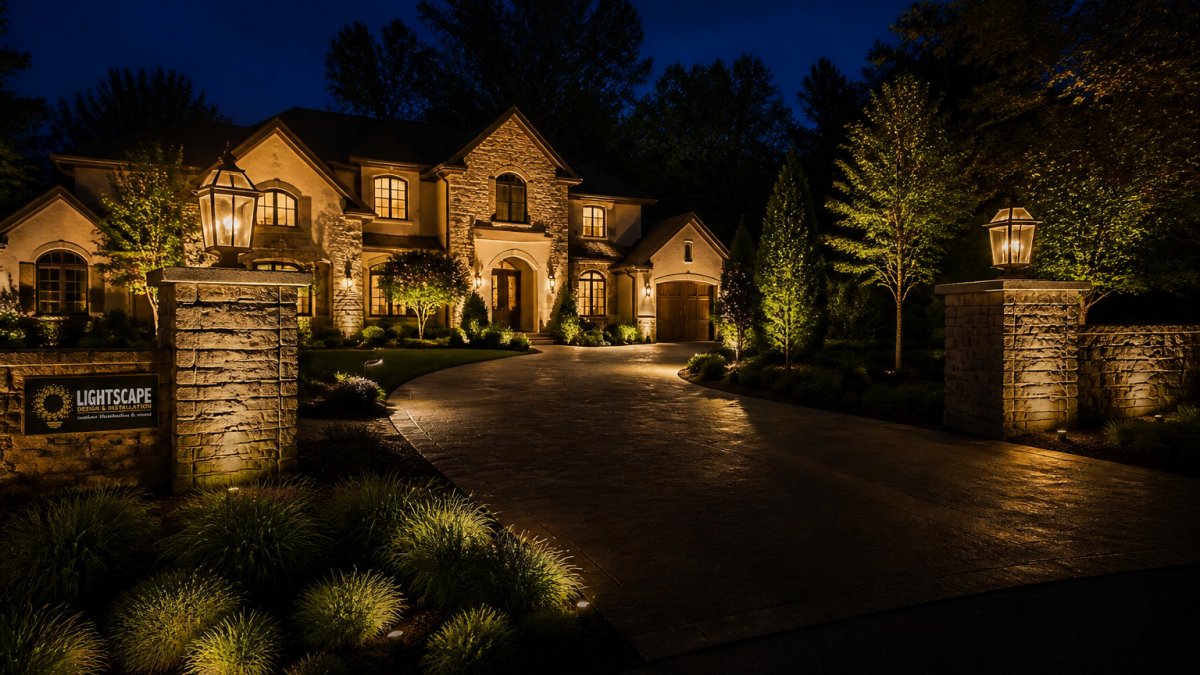
We build this layering with USA-made fixtures and integrated LED technology, so the color stays consistent from the path to the tallest tree. Consistent color is what makes a lit yard look intentional rather than patchy.
A Backyard-Specific Lighting Plan for Patios, Decks, and Pools
Every backyard has its own risk map. A plan should follow how the family actually uses the space.
Start with the high-traffic zones. Light the route from the house to the patio. Light the patio edge so no one steps off into a bed. Light the pool deck so wet feet can see the coping. For pool areas, low-voltage waterproof fixtures and glare-free placement keep the zone safer, and our guide on landscape lighting for pools walks through the details.
Decks need light on the stairs and the rail, not just overhead. String lights look festive but leave the steps dark.
If your patio gets most of its use in warmer months, seasonal design still pays off. Our guide on outdoor lighting for seasonal patio use shows how to plan fixtures that earn their keep all year.
Watch out: a light placed at the pool edge and aimed across the water creates glare on the surface. Aim fixtures away from the water and shield them.
Avoiding the Downsides: Glare, Light Pollution, and Overlighting
More light is not better light. Overlighting causes glare, washes out the stars, and can bother neighbors. It also makes a yard look harsh instead of welcoming.
Three habits keep light in check:
- Shield every fixture so the source stays hidden.
- Aim light down and onto surfaces, never out at eye level.
- Use warm, consistent color across the whole system.
Glare from bright, unshielded fixtures can ruin night vision and make a yard feel unsafe rather than calm. Our guide on avoiding harsh outdoor lighting glare covers shielding and aiming in detail.
Light pollution matters too. A yard that spills light into neighbors' windows is a nuisance. Purposeful, controlled light protects the view for everyone.
Schedule a Nighttime Lighting Demonstration
Reading about light only goes so far. Seeing it on your own property is the real test.
A consultation can include a nighttime walkthrough of the yard to identify hazards such as dark steps, unlit paths, and pool edges.
Lightscape handles design, installation, and final aiming, and fixtures are backed by a 20-year limited warranty. We are licensed, bonded, and insured, and we are locally owned and operated.
A complimentary on-site consultation is the easiest first step. You can book a professional outdoor lighting consultation and learn what to expect, how to prepare, and why expert design matters.
A dark backyard limits how you use your property and adds real risk at every step. Lightscape Design & Installation designs and installs custom landscape and architectural lighting built around how you actually live outside. Our USA-made fixtures, integrated LED technology, and consistent light color deliver a yard that is safer and better looking after sunset. Get started with Lightscape Design & Installation and see your property in a whole new light.
Frequently Asked Questions
Do exterior lights deter burglars?
Exterior lights can deter burglars by increasing visibility and eliminating dark spots where intruders might hide. However, lighting alone is not a guarantee. Research on crime deterrence is mixed, and bright, glaring lights can sometimes backfire by creating shadows or annoying neighbors. The most effective approach is layered landscape lighting for home security combined with locks, alarms, and good sightlines. Motion sensor outdoor lights add an unpredictable element that makes a property less appealing to trespassers.
What is the rule of thumb for outdoor lighting?
A common rule of thumb is to light what matters and avoid overlighting. Focus on pathways, steps, entrances, patios, and dark corners rather than flooding the entire yard. Use lower-wattage fixtures with shielded beams to reduce glare, and aim for consistent color temperature across all fixtures. For backyard safety, place lights so they illuminate walking surfaces without shining into windows or eyes. Professional design helps balance safety, ambiance, and energy efficiency.
Is there a downside to LED lights?
LED lights have few downsides, but poor-quality LEDs can flicker, shift color over time, or produce harsh blue-white light that causes glare and light pollution. Integrated LED fixtures from reputable manufacturers avoid replaceable bulbs and maintain consistent color. The main consideration is choosing the right color temperature and beam spread for each location. Well-designed LED lighting is energy-efficient, long-lasting, and safe when installed correctly.
Where should outdoor lights be placed for safety?
Place outdoor lights along walkways, at step edges, near driveways, entrances, patios, decks, and pool areas. Focus on high-traffic areas and any change in elevation. Use path lights for guidance, step lights for stairs, and floodlights or motion-activated lights for security coverage. Avoid placing lights where they shine directly into eyes or neighboring properties. A professional lighting plan maps fixture placement to eliminate dark spots while preserving curb appeal.