 blog
7 Signs Architectural Facade Lighting Is Worth the Investment
Last Updated: October 25, 2026
Quick Summary
Facade lighting is worth it when the design, aiming, and controls are funded alongside the fixtures, and when you value the nightly experience of the property more than a speculative resale bump. It is not worth it when the budget stops at the hardware or the elevation has nothing to say.
- Facade lighting is design work, not decoration, and the plan matters more than the fixtures.
- Match the technique to the surface: grazing reveals texture where wall washing would flatten it.
- Integrated LED fixtures carry a 20-year limited fixture warranty with no bulbs to replace.
- Ask how a system is zoned and controlled before comparing operating costs.
- Skip it if you plan to sell within a year or the elevation has no features worth highlighting.
Table of Contents
- The Real Question: Is Facade Lighting Worth It?
- What Facade Lighting Actually Does for a Property
- Types of Facade Lighting and How They Change a Building
- Building Facade Lighting Design: Placement, Beam Angles, and Color
- LED Facade Lighting: Efficiency, Longevity, and Operating Costs
- Weighing the Costs Against the Benefits
- Facade Lighting Maintenance and What It Takes to Keep It Looking Right
- Schedule a Nighttime Lighting Demonstration
- Frequently Asked Questions
The Real Question: Is Facade Lighting Worth It?
Most property owners ask whether architectural facade lighting is worth it after they've already seen a neighbor's home glowing at dusk and felt that quiet pang of envy. Here's the short answer: it's worth it when the light is designed for the building, and a waste when it's bought as a kit. At Lightscape Design & Installation, we've walked hundreds of St. Louis-area properties at night, and the difference between a facade that looks intentional and one that looks accidental almost never comes down to the fixtures. It comes down to the plan.
Below, we'll break down what facade lighting actually does, which techniques suit which architecture, and where the real costs and paybacks sit. You'll also find the honest cases where we tell homeowners to skip it.
Facade lighting is the practice of illuminating a building's exterior surfaces, features, and entries with controlled, layered light rather than a single flood of brightness. It's design work, not decoration.
What Facade Lighting Actually Does for a Property
Two things, mainly: it changes how a building reads after dark, and it changes how safe that building feels to approach. Both matter more than most people expect.
Aesthetic Impact and Nighttime Identity
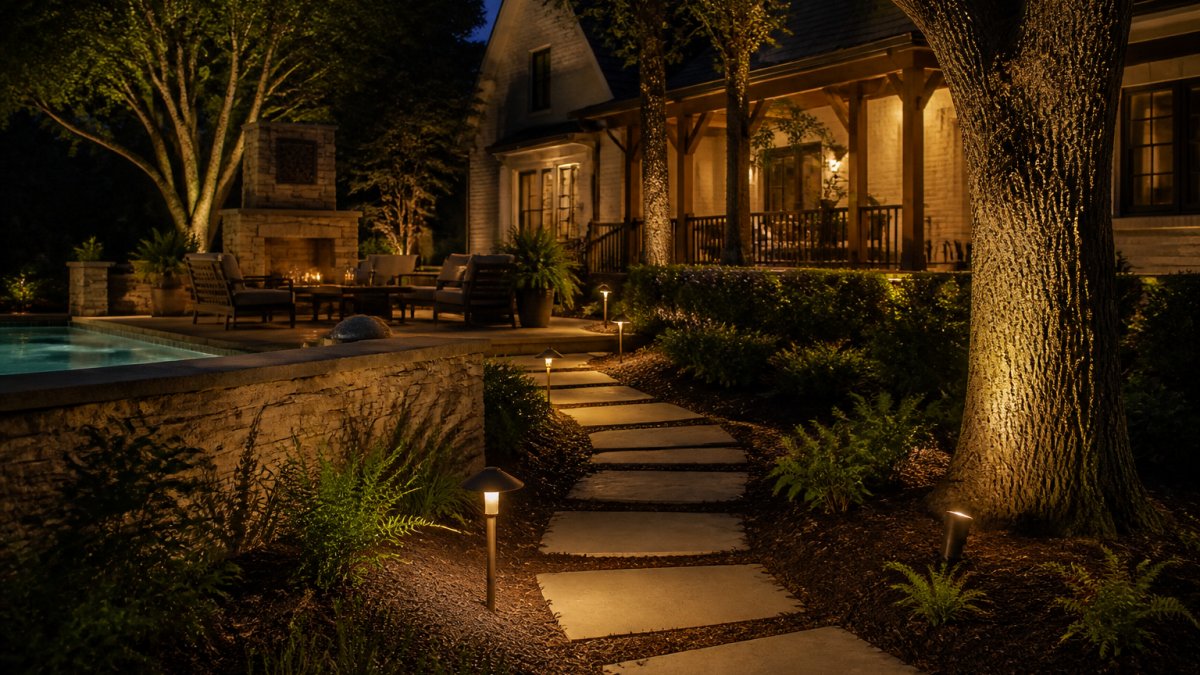
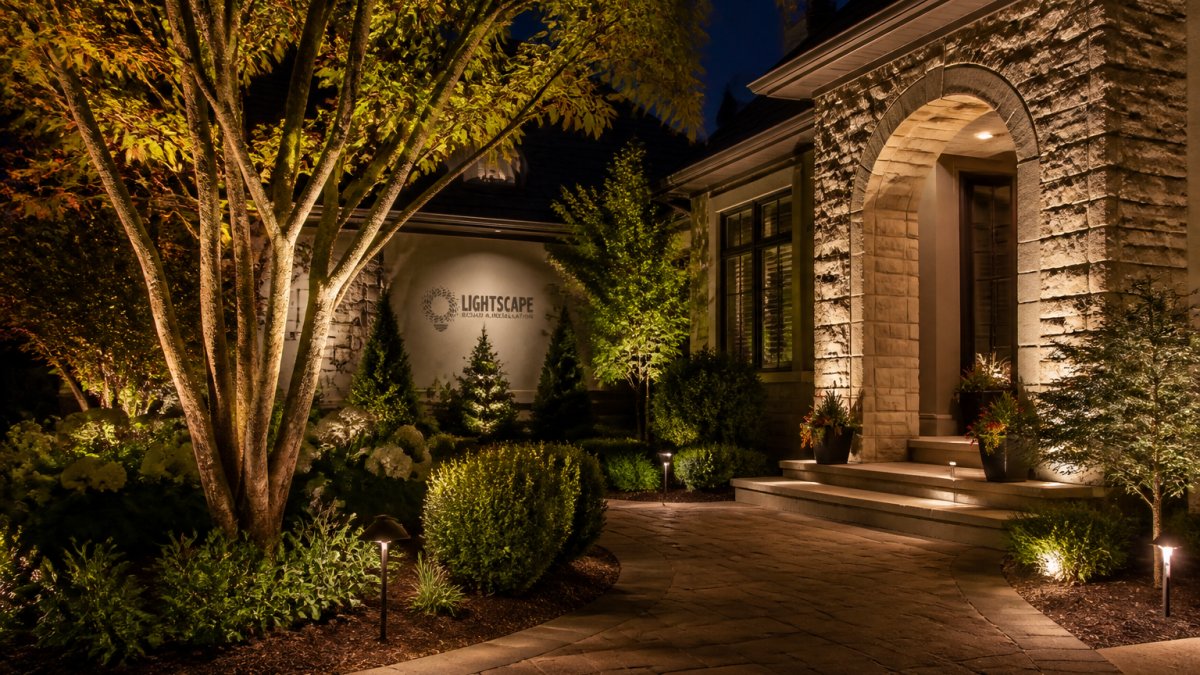
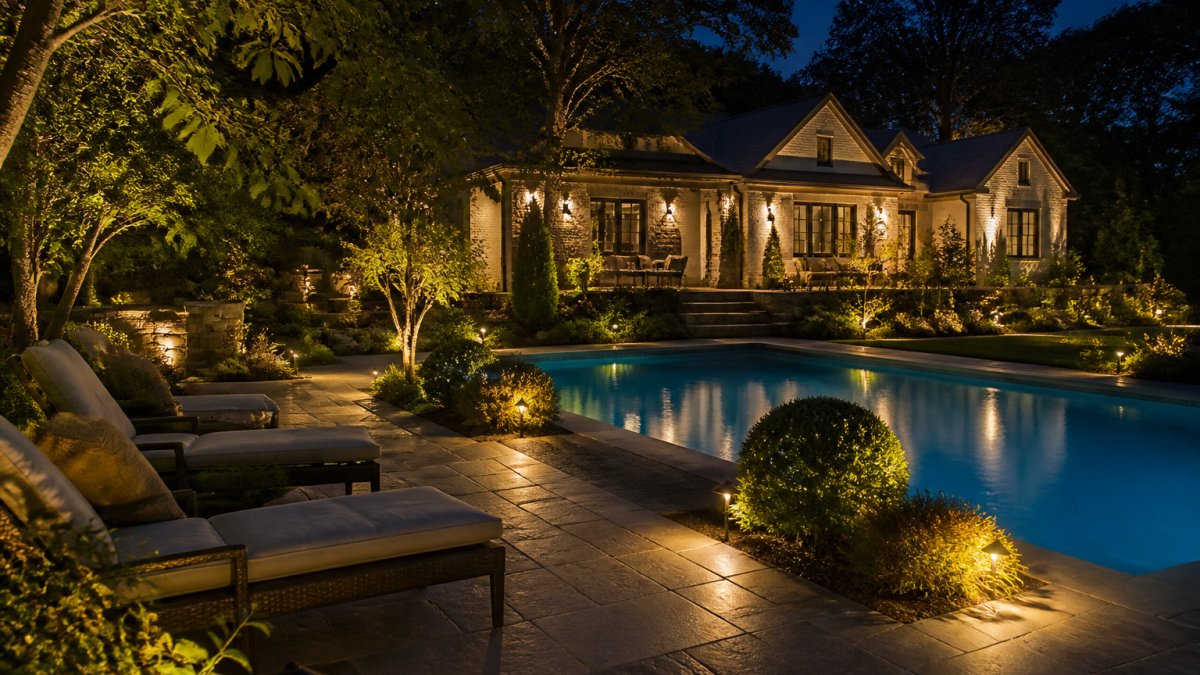
Daylight shows a building's shape. Darkness erases it. Facade lighting restores that shape with shadow, depth, and warmth, so the architecture you paid for stays visible after sunset. A well-lit entry, a grazed stone wall, a softly uplit tree: these create a nighttime identity that reads as cared-for and deliberate.
Safety, Visibility, and Security
Good exterior lighting also does quiet security work. Even, glare-free light along walks and entries helps guests and family see steps, grade changes, and doorways. It removes the dark pockets where people hesitate. The key word is controlled. A single blinding floodlight creates glare and shadows at once, which is the opposite of what you want. The Illuminating Engineering Society publishes guidance on outdoor lighting practice if you want to see how professionals think about this.
Types of Facade Lighting and How They Change a Building
The types of facade lighting fall into a handful of techniques, and each one solves a different problem. Choosing well is mostly about matching the technique to the surface.
| Technique | What It Does | Best For |
|---|---|---|
| Wall washing | Even, broad light across a flat surface | Brick, stucco, siding |
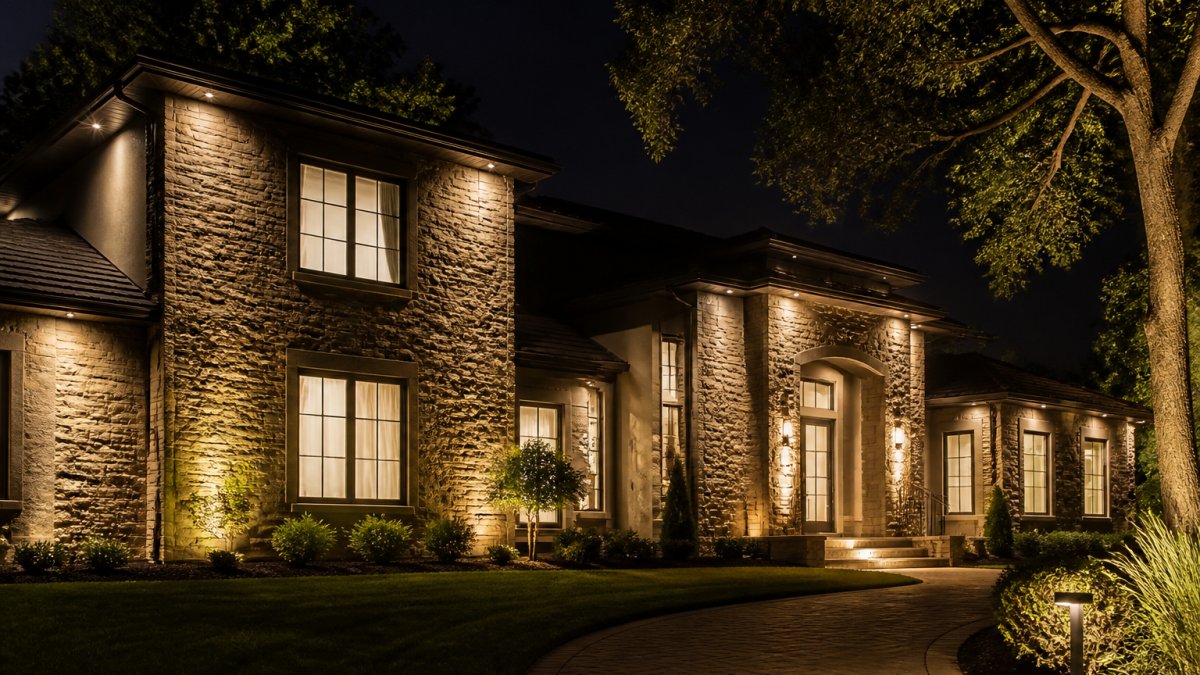
| Grazing | Skims texture with angled light | Stone, brick, wood grain |
| Uplighting | Throws light upward from the base | Columns, trees, tall walls |
| Downlighting | Washes light downward from above | Entries, soffits, signage |
| Accent lighting | Isolates one feature | Arches, statues, gables |
A common mistake is using wall washing where grazing belongs. Flat light on textured stone hides the very thing you're trying to show. Angled light reveals it.
Building Facade Lighting Design: Placement, Beam Angles, and Color
Building facade lighting design is where the investment is won or lost. Placement decides what the eye finds first. Beam angles decide whether texture appears or disappears. Color temperature decides whether the whole scene feels warm and natural or cold and clinical.
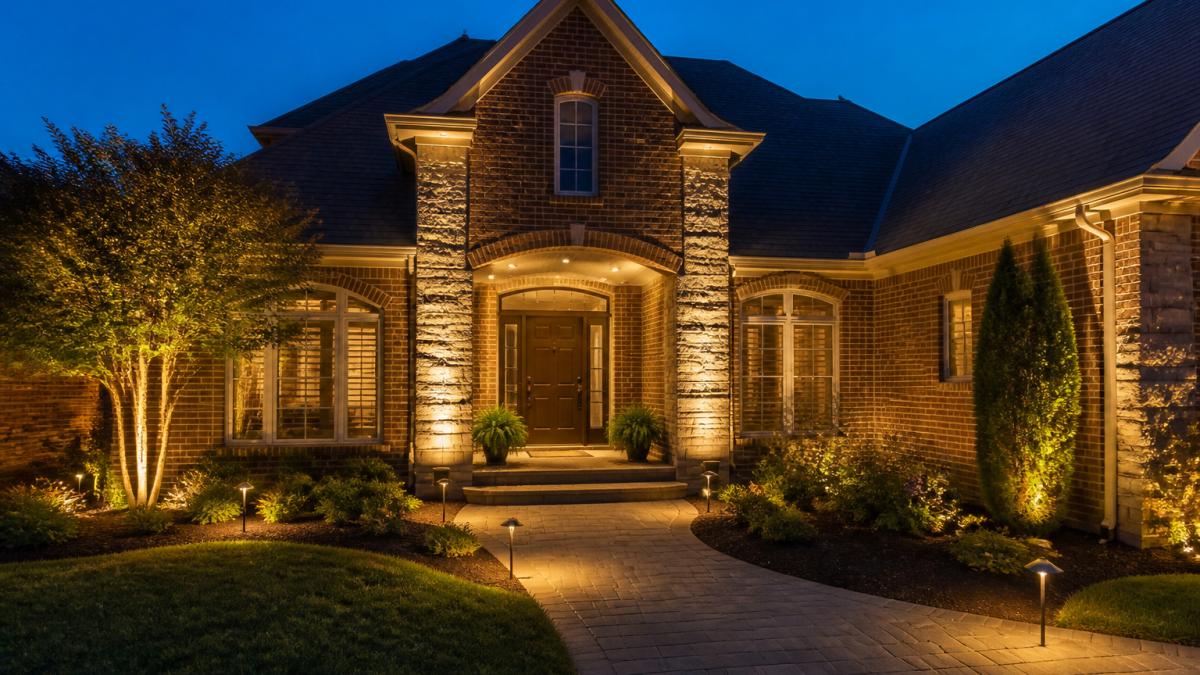
We keep color temperature consistent across a whole system so the house doesn't read as a patchwork of warm and cool patches. We also customize wattages and beam spreads per fixture, because a column and a tree canopy need very different light. For a deeper look at layering and placement, see our guide to residential architectural lighting design tips.
Watch out: over-illumination is the fastest way to make a beautiful home look like a parking lot. Restraint is a design decision, not a compromise.
LED Facade Lighting: Efficiency, Longevity, and Operating Costs
LED facade lighting wins on operating costs for a simple reason: it converts most of its energy into light rather than heat. Older incandescent and halogen sources shed a large share of their input as heat, so you pay for watts that never become illumination.
What actually drives your operating cost. Electricity use for a facade system comes down to three things: total connected wattage, hours of nightly runtime, and how well the system is zoned and controlled. A facade run at full brightness from dusk to dawn costs more to operate than the same fixtures dimmed and zoned to run at lower levels after, say, late evening. Customized wattages and beam spreads let us put light only where it is needed, which trims connected load without dimming the effect. Consistent light color across the system also means you aren't over-lighting one area to compensate for a fixture that reads too cool or too warm.
Longevity and maintenance. Our systems use integrated LED technology with no bulbs to replace. That removes the annual relamping ritual, the mismatched color as fixtures age at different rates, and the ladder work every season. If you're weighing the technology itself, our guide on why choose LED landscape lighting covers the details, and the U.S. Department of Energy explains how LED efficiency compares with older lighting types.
Request a Lighting Consultation Today →
The trade-offs worth naming. Efficiency is not the only environmental consideration. Poorly aimed or oversized fixtures cause glare, spill light onto neighbors, and wash out the night sky, problems that waste the very energy you're trying to save. Dark-sky-conscious design means shielding, aiming away from sightlines, and using only the light the architecture needs.
Weighing the Costs Against the Benefits
This is the section most articles skip, because the honest answer is a framework rather than a number. Facade lighting is a design-and-installation project, so total cost is driven by four variables: fixture count, architecture and access, wiring and transformer runs, and controls.
Rather than publish a flat price, it helps to understand what you are actually buying in each cost bucket:
| Cost bucket | What drives it | Where owners overspend |
|---|---|---|
| Fixtures | Count, housing material, beam and wattage options | Buying a kit with fixed beams that can't be aimed |
| Design and aiming | Number of techniques layered, feature count | Skipping design and paying twice to fix it |
| Wiring and transformers | Run length, voltage drop, load calculation | Undersized transformer that limits future additions |
| Controls | Timers, zones, dimming, smart integration | No zoning, so the whole facade runs at one level |
| Maintenance | Access difficulty, fixture quality, service plan | Deferred cleaning and re-aiming until the system looks tired |
The benefit side of the ledger. The returns that are real and observable are extended evening use of outdoor spaces, stronger curb appeal, safer approach and entry visibility, and a home that reads as finished rather than half-lit. These are quality-of-life and presentation returns, and they compound over the years you stay.
What can and cannot be substantiated about resale. Exterior lighting is frequently cited among the upgrades buyers notice, and the National Association of Realtors has discussed curb appeal and exterior presentation in its consumer research.
When facade lighting is not worth it. A balanced answer names the cases where we tell homeowners to wait or skip it:
- You plan to sell within a year and won't recoup the design effort in enjoyment.
- The elevation has no features worth highlighting, a blank wall lit well is still a blank wall.
- What you actually need is bright security lighting, not design lighting; those are different tools with different goals.
- The budget only covers fixtures, not proper design, aiming, and control, a half-planned system usually costs more to correct later.
- Neighbors, wildlife, or a dark-sky-sensitive setting make spill light a genuine concern you can't mitigate.
- The building sits far from any viewing angle, so the light would rarely be seen.
A simple payback lens. Instead of a single number, think in terms of cost per illuminated feature per year of service. Our overview of the cost of professional outdoor lighting explains what drives the figure in more detail.
Facade Lighting Maintenance and What It Takes to Keep It Looking Right
Facade lighting maintenance is lighter than most people fear, but it isn't zero. Fixtures collect dust, pollen, and spider webs. Aim can drift after storms. Transformer connections deserve an annual look.
With integrated LED fixtures, there's no bulb replacement on the calendar. What remains is cleaning, checking aim, and seasonal prep. We walk clients through all of it in our landscape lighting maintenance tips. A system that's aimed correctly on day one stays beautiful far longer with a little attention each year.
Schedule a Nighttime Lighting Demonstration
The only way to know whether facade lighting is worth it for your property is to see it on your property, after dark. A daytime conversation can't show you how your stone, brick, or trees will actually respond to light.
Lightscape Design & Installation offers a complimentary on-site consultation and nighttime demonstration. We'll show you how layered, glare-conscious light changes your home's nighttime identity, and we'll answer the cost question honestly once we've seen the space. Our team is licensed, bonded, and insured, and we stand behind every system with a 20-year limited fixture warranty.
Get started with Lightscape Design & Installation and see your property the way it was meant to look after sunset. Schedule your consultation and we'll bring the demonstration to your driveway.
Frequently Asked Questions
How much maintenance does architectural facade lighting require?
Facade lighting maintenance is minimal when the system is designed and installed correctly. Integrated LED fixtures have no bulbs to replace, so routine work is mostly occasional cleaning of lenses and tightening or re-aiming fixtures after storms or landscaping changes. A yearly check keeps beam angles and color consistent. Fixtures from quality manufacturers last decades, and a strong warranty covers defects. The bigger maintenance risk comes from bargain fixtures that fail early or drift in color, which is why professional-grade hardware matters more than the initial price.
How do you light a building facade without creating glare?
Glare control starts with fixture selection and placement. Shielded and adjustable fixtures direct light onto the wall rather than into eyes or windows, and beam angles are chosen to match the feature being lit. Mounting height, aiming, and wattage all affect spill. A professional design also limits over-illumination so the facade reads with depth and shadow instead of a flat wash. The goal is that passersby notice the building, not the light source.
Can facade lighting improve a property's appearance and safety?
Yes, on both counts. Well-placed facade lighting highlights architectural features, improves nighttime curb appeal, and gives a building a clear identity after dark. It also improves visibility at entrances, walkways, and parking areas, which helps guests and customers move safely. For businesses, that combination supports first impressions and security. For homeowners, it extends the usable evening hours outdoors. The key is purposeful placement rather than flooding the property with light.
Is LED facade lighting worth the higher upfront cost?
LED facade lighting usually costs more upfront than older technologies, but it uses less energy, lasts far longer, and holds its color consistency over time. Integrated LED fixtures have no replaceable bulbs, which removes a recurring maintenance expense. Lower operating costs and fewer service calls typically narrow the gap over the life of the system. When you compare total cost of ownership rather than sticker price, LED is the practical choice for most residential and commercial facades.