 Ultimate guide
The Homeowner's Guide to Outdoor Lighting Solutions
Last Updated: November 17, 2026
Quick Summary
Outdoor lighting solutions are professionally designed and installed lighting systems that extend how a property functions after dark, turning a yard, patio, or facade into usable space for evenings and entertaining. The landscape stays the same; what changes is the way homeowners live in it after dark.
- Three layers do most of the work: uplighting, path lighting, and architectural wash.
- Buy fixtures first and the transformer last, or you'll usually undersize the heart of the system.
- Integrated LED engines are sealed and factory-matched, with no socket corrosion or color shift.
- Plan zones during design, because retrofitting zoning usually means new wire runs.
- Clean fixture lenses twice a year to restore output and prevent haze.
Table of Contents
- Why Outdoor Lighting Solutions Change How You Use Your Property
- Landscape Lighting Design: Building Layers Instead of Bright Spots
- Choosing the Best Low Voltage Landscape Lighting for Your Yard
- The Best Outdoor Lights for the Front of House
- Waterproof Outdoor Lights: Ratings, Durability, and Climate
- Energy Efficiency, Operating Costs, and Light Pollution
- Installation Planning, Controls, and Long-Term Maintenance
- Scheduling a Nighttime Lighting Demonstration
- Frequently Asked Questions
Why Outdoor Lighting Solutions Change How You Use Your Property
Outdoor lighting solutions are professionally designed and installed lighting systems that extend how a property functions after dark, turning a yard, patio, or facade into usable space for evenings and entertaining.
A patio that sat unused by 8 p.m. becomes the best room in the house. A front walk that felt like a hazard becomes a welcome.
Most people come to us with the same worry: won't lighting just look artificial? It won't if it's designed around the architecture and the plantings rather than aimed at them.
Landscape Lighting Design: Building Layers Instead of Bright Spots
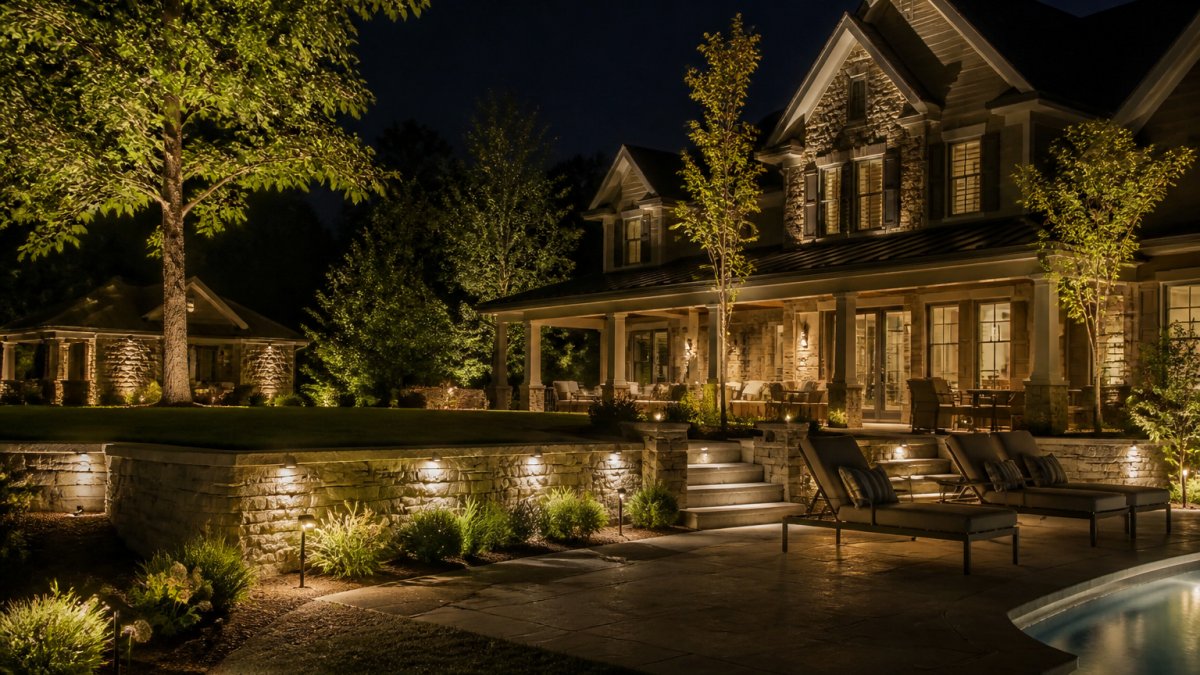
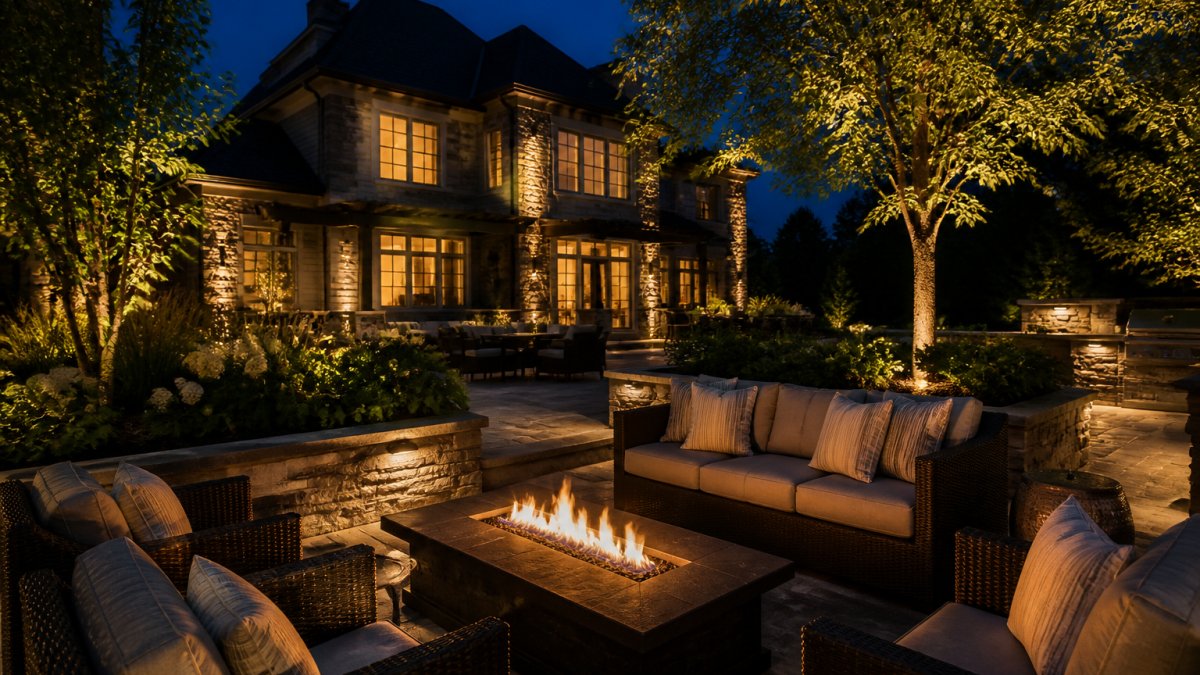
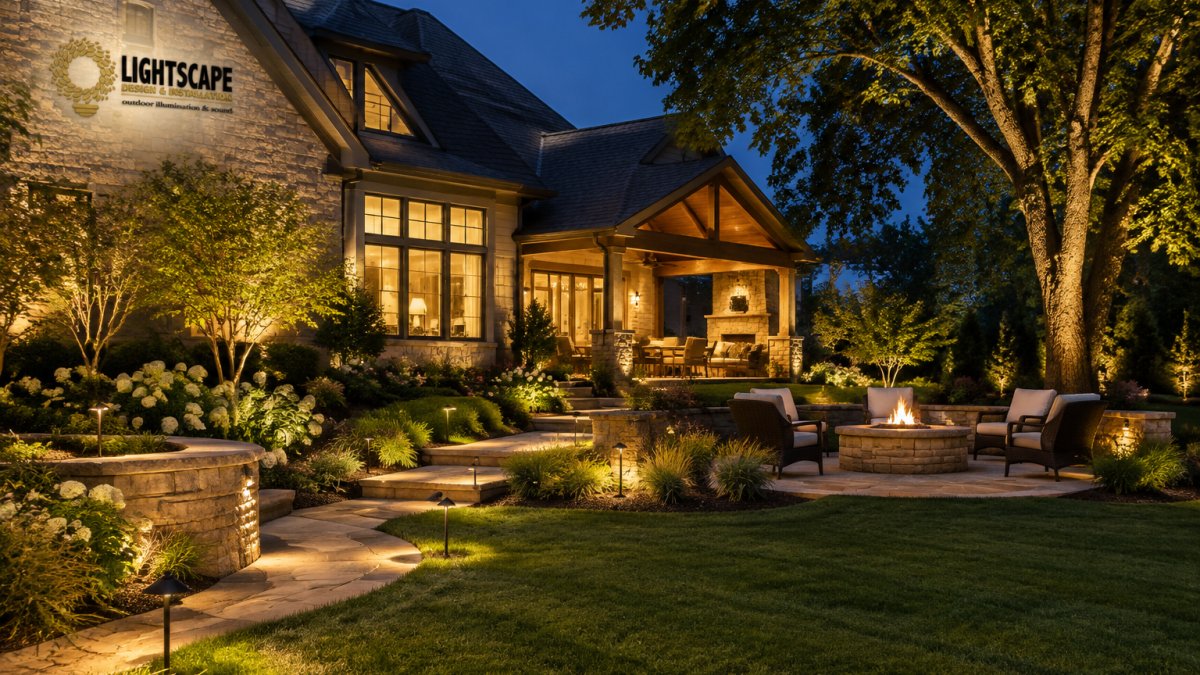
Landscape lighting design is the practice of combining several lighting techniques at different heights and intensities so the eye reads depth rather than glare. The goal is contrast, not coverage. Three layers do most of the work.
Uplighting, Path Lighting, and Architectural Wash Compared
Each technique solves a different problem, and the pros and cons are real:
- Uplighting (tree and facade): dramatic, defines height, best on mature oaks and stone. Downside: placement errors create hot spots on trunks.
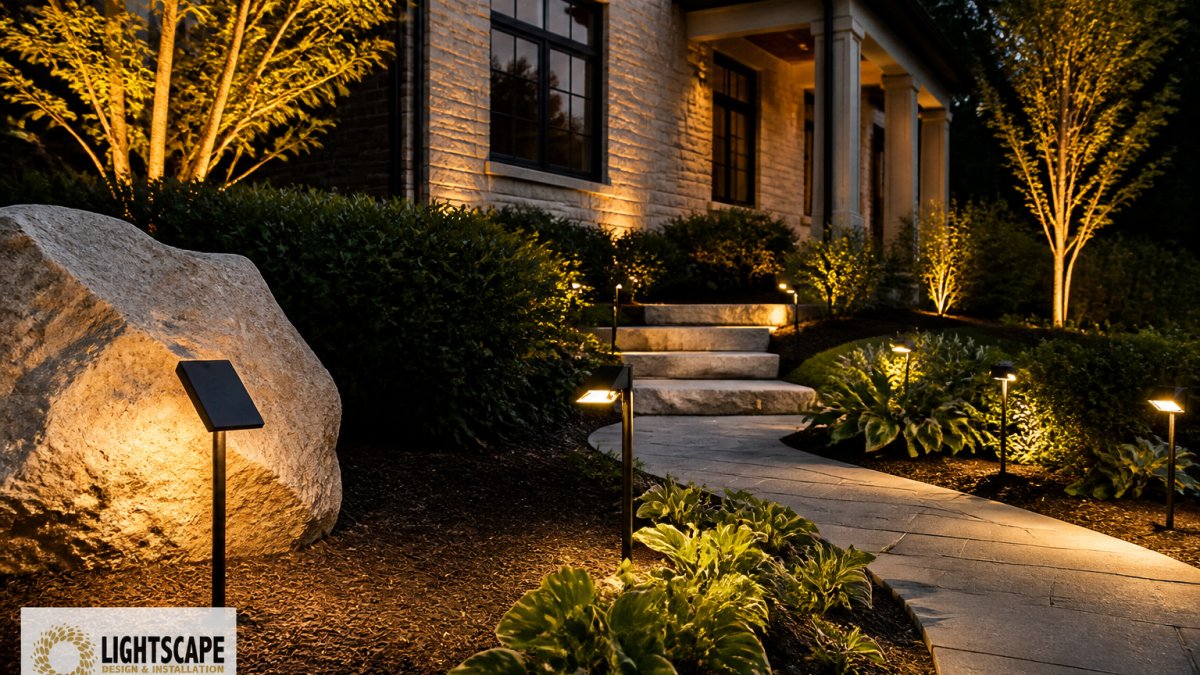
- Path lighting: safe footing, guides guests, low profile. Downside: too many fixtures turns a walk into a runway.
- Architectural wash: even, soft grazing across brick or siding. Downside: needs precise aiming to avoid scalloping.
If you want to go deeper on garden-bed layering specifically, our guide on layering light in garden beds for depth and drama covers fixture heights and spacing in detail.
Choosing the Best Low Voltage Landscape Lighting for Your Yard
The best low voltage landscape lighting is a system, not a fixture: matched fixtures, a correctly sized transformer, and wire sized for the run length. Buy the fixtures first and the transformer last, and you'll usually undersize the heart of the system.
Low-voltage systems run on a stepped-down feed, which makes them safer to service and easier to expand than line-voltage setups.
What Separates Professional-Grade Fixtures from Big-Box Kits
Professional-grade fixtures are built to be installed and maintained as a system, with integrated LED technology and consistent color across the set. Lower-cost kits often rely on replaceable bulbs and connectors that can degrade over time.
Our low voltage landscape lighting buyer's guide breaks down fixture types, transformer sizing, and wire gauge planning if you're comparing options.
The Best Outdoor Lights for the Front of House
The best outdoor lights for the front of house combine three elements: warm entryway lighting at the door, uplighting on one or two facade features, and low path lighting to the walk. Restraint beats quantity every time.
Wall-mounted sconces flanking the door should sit slightly above eye level and cast light downward, not outward.
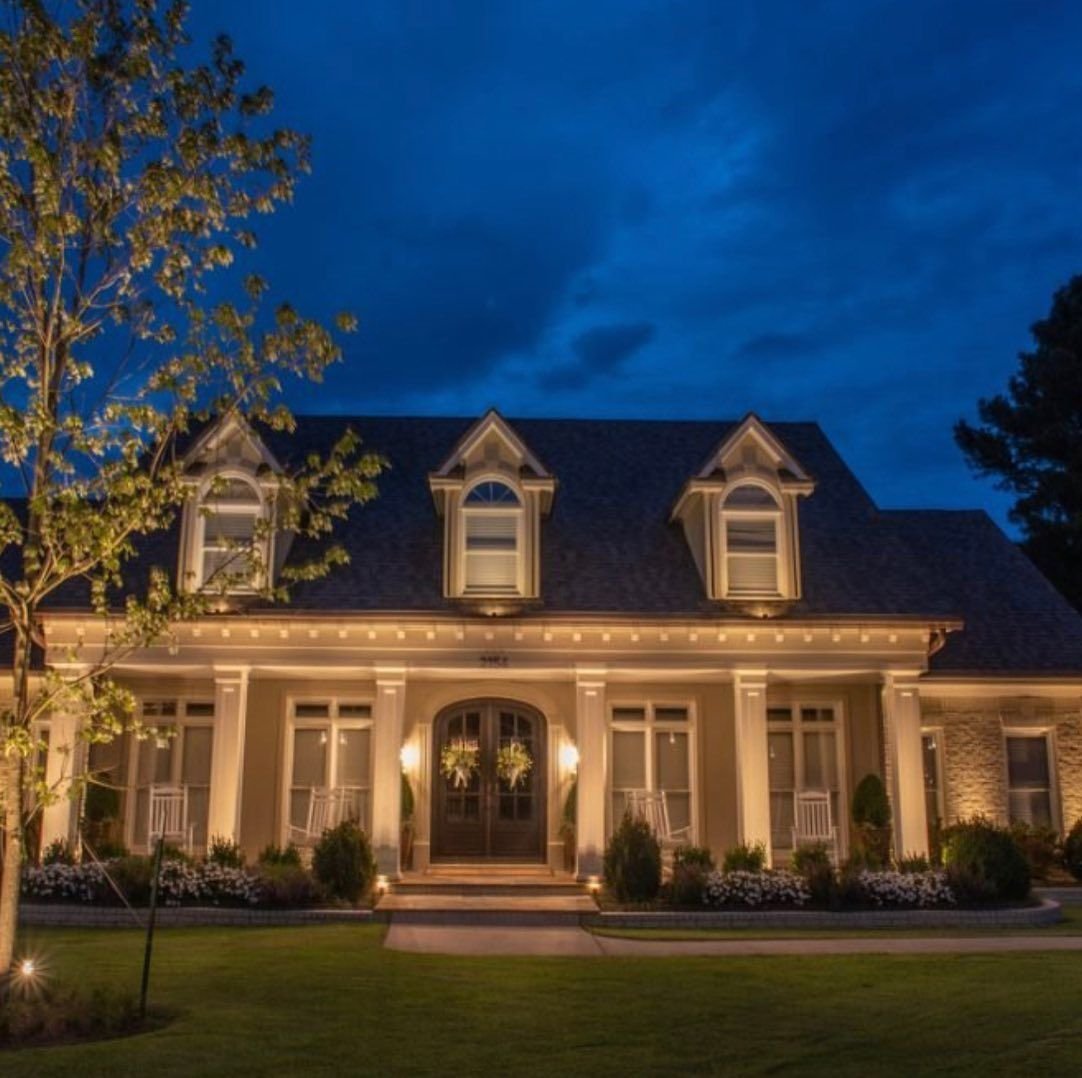
The front of the house is often judged from the street at a glance, which is why restrained, well-aimed fixtures tend to work better than scattered ones.
Waterproof Outdoor Lights: Ratings, Durability, and Climate
Waterproof outdoor lights are fixtures rated to resist moisture intrusion through sealed housings, gasketed lenses, and potted connections. In the Midwest, the real test is freeze-thaw cycling and summer humidity, not rain alone.
Look for fixtures with integrated LED engines rather than replaceable bulbs, because every bulb socket is a place water and corrosion get in. Our durable outdoor lighting fixtures comparison covers materials and weather resistance side by side.
Watch out: a fixture rated for wet locations still fails if the connection is buried in a loose wire nut.
Energy Efficiency, Operating Costs, and Light Pollution
Energy efficiency in outdoor lighting is mostly a design decision, not a bulb decision. A system with fewer, better-aimed fixtures running integrated LED engines will use less power and look better than a dense grid of fixtures running the same technology. That is the angle most buying guides skip: they compare lamp types, but the biggest variable is how many fixtures you install and how long they run.
Comparing LED, Halogen, and Solar in Practice
- Integrated LED engines: sealed, factory-matched, and rated for tens of thousands of hours of use. Because there is no replaceable bulb or socket, there is no socket corrosion and no color shift as bulbs age. Output and color stay consistent across the set, which is why professional systems specify integrated engines rather than bulbs.
- Halogen: warmer color and low fixture cost, but far less efficient, hotter to the touch, and short-lived.
- Solar: no wiring and easy placement, but output depends on sun exposure and battery condition. In a shaded yard or through a cloudy stretch, solar fixtures dim or drop out, and batteries typically need replacement long before an integrated LED engine reaches the end of its rated life.
Estimating Operating Costs
Operating cost is watts times hours times your electric rate. A low-voltage LED system draws a small fraction of what an equivalent halogen layout would, and because integrated engines hold their output, you are not adding fixtures over time to compensate for dimming bulbs. The larger savings usually come from controls: zoning and timers that run only the scenes you need cut run time substantially compared with a single all-on schedule.
Light Pollution, Glare, and Neighbor-Friendly Design
Light pollution is wasted light, light aimed up, sideways, or into a neighbor's window. Shielded, downward-aimed fixtures keep light on the property, which is both courteous and increasingly expected.
Three choices do most of the work:
- Shielding: use fixtures with hoods, louvers, or shields so the source is hidden from view and light lands where it is aimed.
- Color temperature: a warm, consistent color across the system reads as residential rather than commercial and reduces the harsh blue-white glare that neighbors notice most.
- Aiming and spill control: point uplights at the canopy or facade, not the viewer's eye, and check sightlines from the street and from neighboring windows before finalizing.
Glare control is where professional aiming earns its keep. A fixture pointed at a tree should light the canopy, not the viewer's eye, and a system designed with shielding and consistent color from the start avoids the retrofit work that unshielded kit fixtures usually require.
Installation Planning, Controls, and Long-Term Maintenance
Installation planning decides whether a system lasts. The parts that fail first are almost never the fixtures, they are the transformer, the connections, and the wire runs. Planning those three before the first fixture goes in the ground is what separates a system that still looks right in year ten from one that flickers after the first hard freeze.
Low-Voltage vs. Line-Voltage Systems
Most residential landscape and architectural lighting runs on low voltage, stepped down from household current by a transformer. Low voltage is safer to service, easier to expand, and better suited to the small, aimable fixtures that landscape design depends on. Line voltage is typically reserved for wall-mounted sconces, porch lights, and post lights tied into the home's existing circuits. The two can coexist on one property, but they are planned separately.
Transformer Sizing and Voltage Drop
Transformer sizing is about total connected load plus headroom for future fixtures, not just today's count. Undersize it and the system runs at its limit; oversize it carelessly and you pay for capacity you never use. Voltage drop is the companion problem: long wire runs lose brightness at the far end unless wire gauge and transformer taps are planned together.
Wiring, Connections, and Electrical Safety
Buried conduit protects runs that cross walkways, driveways, and bed edges, and connections should sit above grade wherever possible so they are serviceable. Sealed, gel-filled connectors are the difference between a system that lasts and one that corrodes after the first wet season. The line-voltage side, dedicated circuits, GFCI protection, and panel work, is not a DIY shortcut. A licensed installer handles that portion correctly, and local permitting requirements vary by municipality, so confirm what your jurisdiction requires before work begins.
Controls and Zoning
Controls have improved dramatically. Low-voltage transformers with integrated timers, photocells, and app-based zoning let you run separate scenes for entertaining, security, and everyday use. Zoning also extends fixture life by running only what you need, and it lets you dim or shut off areas that would otherwise spill light toward a neighbor. Plan zones during design, not after installation, retrofitting zoning usually means new wire runs.
Long-Term Maintenance
Maintenance is simple but not optional. Clean lenses seasonally to restore output and prevent haze. Our landscape lighting maintenance tips walk through transformer care and seasonal prep step by step.
| Task | Frequency | Why It Matters |
|---|---|---|
| Clean fixture lenses | Twice a year | Restores output, prevents haze |
| Inspect connections | After first freeze | Catches corrosion early |
| Re-aim fixtures | Annually | Trees and plants grow |
| Check transformer | Seasonally | Confirms load and timers |
Watch out: a fixture rated for wet locations still fails if the connection is buried in a loose wire nut, sealed connectors and above-grade junctions matter more than the fixture rating alone.
Scheduling a Nighttime Lighting Demonstration
A nighttime demonstration is the only honest way to judge an outdoor lighting design, because light behaves differently after dark than it does on a plan. A nighttime demonstration gives you the chance to see the effect on your property before committing.
Before the visit, note the features you want highlighted, the areas you use most after dark, and any glare concerns from neighbors. If you'd like to understand how a professional consultation works and how to prepare, our guide to booking a professional outdoor lighting consultation covers it.
The gap between a lit yard and a designed one comes down to layering, fixture quality, and aiming, and those are hard to get right from a box.
Frequently Asked Questions
What is the best solution for outdoor lighting?
The best outdoor lighting solutions combine layered techniques rather than one fixture type: tree uplighting for height, path lighting for safety, and architectural wash for the home's facade. Low-voltage LED systems with integrated diodes, consistent color temperature, and weather-rated housings hold up best over time. Start with a design plan that maps each layer to a purpose, then choose fixtures that match your home's materials and architecture.
What is the 5'7" lighting rule?
The 5'7" rule is a rough guideline for wall sconces and porch lights: mount the fixture so the center sits around eye level, roughly 5 feet 7 inches from the ground, so light lands on faces rather than blinding visitors. It is a starting point, not a fixed requirement. Two-story entries, tall doors, and architectural features often call for different heights, which is why a site walkthrough matters before fixtures are ordered.
Where should landscape lights be placed?
Place lights where they reveal something worth seeing: tree trunks and canopies, stone walls, steps, bed edges, and architectural details. Keep path lights low and shielded so they light the walkway, not the viewer's eyes. Space fixtures unevenly to avoid a runway look, and aim uplights from the base of trunks outward. A professional landscape lighting design maps placement before installation so every fixture earns its spot.
How do you choose waterproof outdoor lights?
Look for fixtures rated for wet locations and built from corrosion-resistant materials such as copper, brass, or powder-coated aluminum. Sealed housings, gasketed lenses, and properly rated connections matter more than a single IP number. In a climate with freeze-thaw cycles and summer storms, fixtures that shed water and resist UV fading last longer. Ask how the warranty handles moisture failures before you buy.
Is professional outdoor lighting installation worth it?
Professional installation pays off in aiming, wiring, and longevity. A trained installer positions each fixture for glare control, sizes the transformer correctly, and buries connections so they survive freeze-thaw cycles. The result is a system that looks intentional instead of improvised.
What are the best outdoor lights for the front of a house?
The front of a house benefits from a mix: wall-mounted sconces at the entry, uplighting on trees or columns, and low path lights along the walkway. Match fixture finish to door hardware and trim, and keep color temperature consistent across every fixture so the facade reads as one design. Avoid bright floodlights aimed at the street; shielded, downward-directed light flatters the architecture and keeps neighbors comfortable.